Nepal floods: Terrifying videos show homes, buildings and bridges swallowed by raging waters
Source Entity
MAHIMA SHARMA
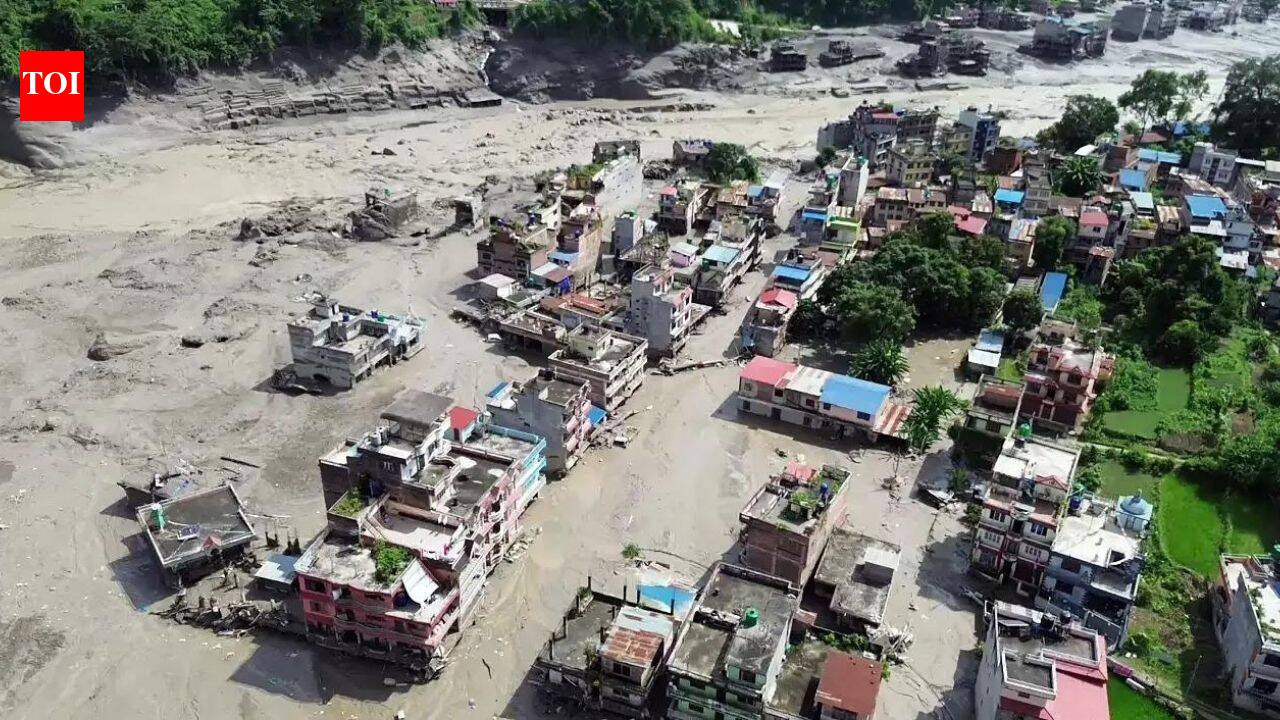
A massive flash flood triggered by a potential ice-rock avalanche in the Nepal-Tibet border region has caused widespread destruction and casualties. Authorities in India have issued high-alert warnings for border states as downstream river levels rise.
The Himalayan Crisis: Analyzing the August 2026 Nepal Flash Floods
On Wednesday, August 26, 2026, the Rasuwa district of Nepal became the epicenter of a catastrophic environmental event. Massive flash floods, characterized by a violent surge of water, sediment, and boulders, swept through the Bhote Koshi and Trishuli river valleys. The destruction has been widespread, with rescue operations utilizing heavy earthmoving equipment to reach submerged homes in districts like Nuwakot, highlighting the extreme difficulty of disaster response in rugged, high-altitude terrain.
Scientific Investigation: The Trigger Mechanism
Scientists from the International Centre for Integrated Mountain Development (ICIMOD), in collaboration with institutions from Nepal and China, are currently investigating the origins of this disaster. The leading hypothesis points toward a high-altitude ice-rock avalanche. Such events occur when destabilized masses of ice and rock collapse, suddenly displacing water in glacial lakes or creating a dam-break effect, which releases a massive, high-velocity wall of water and debris into downstream valleys.
Regional Vulnerability and Geological Instability
The Hindu Kush Himalaya (HKH) region is notoriously dynamic. The constant tectonic shifting of the Himalayan range, combined with the presence of unstable glacial lakes, creates a perpetual state of environmental risk. The geography of the border region between Nepal and Tibet serves as a conduit for these disasters; as the Trishuli river absorbs the flow from the Bhote Koshi, any upstream disturbance in Tibet translates into immediate, life-threatening surges for communities in Nepal.
Transboundary Implications for India
The impact of this disaster is not confined to Nepal’s borders. The flash flood has triggered high-alert protocols across the Indian states of Uttar Pradesh, Bihar, and Uttarakhand. As the Trishuli river feeds into the Gandak river system, authorities are bracing for significant rises in water levels. The potential opening of barrage gates in Nepal, necessitated by the flood volume, further complicates the hydrological situation for the Ghaghara, Rapti, and Kosi rivers, threatening low-lying regions in northern India.
Humanitarian Toll and Future Outlook
The human cost of this tragedy is escalating, with reports of dozens of fatalities and nearly 400 individuals, including 105 Indian tourists, reported missing. This event underscores the urgent need for enhanced early-warning systems and transboundary data sharing between Nepal, China, and India. As climate change continues to impact the stability of high-altitude glaciers, the frequency of such 'glacial lake outburst floods' (GLOFs) or ice-rock avalanches may increase, necessitating a more integrated regional approach to disaster management and climate adaptation.
Multiple Citing Sources