Nepal Floods: 32-Member Kolkata Group Among Many From West Bengal Untraceable
Source Entity
NDTV News Search Records Found 1000
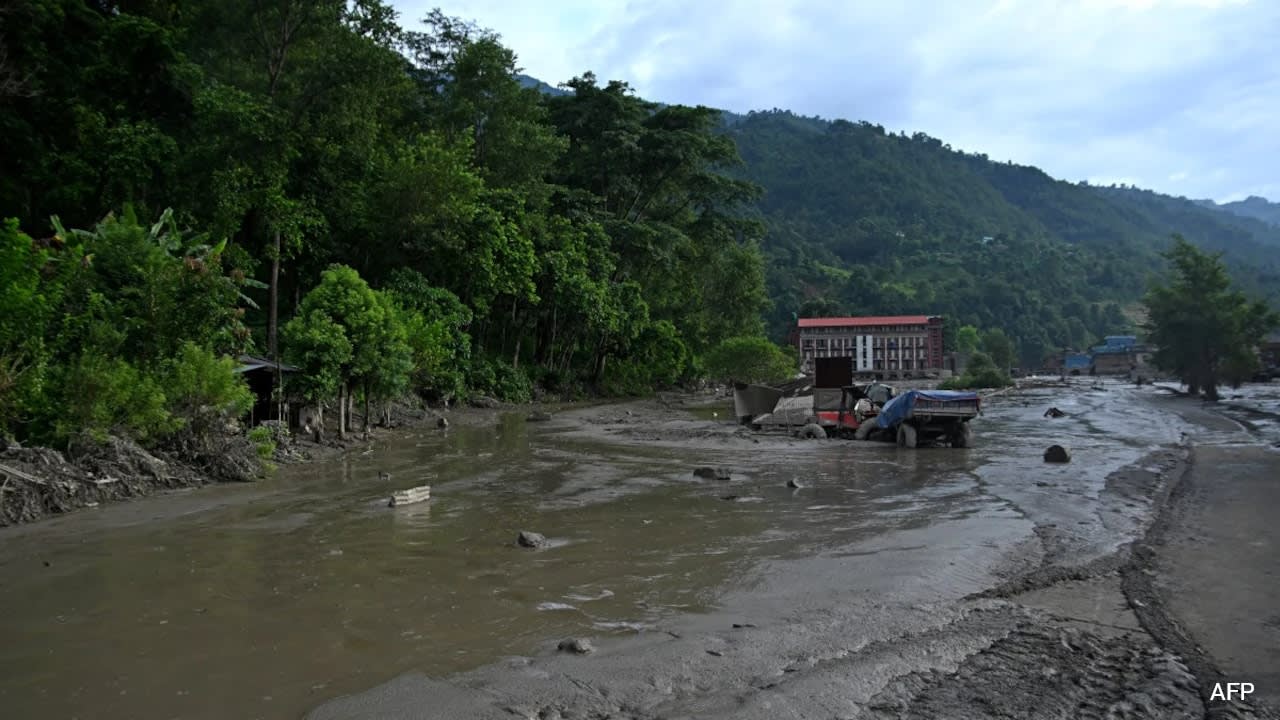
Devastating flash floods in Nepal's Rasuwa district, potentially triggered by an ice-rock avalanche, have resulted in over 100 deaths and 750 missing persons. International teams are investigating the disaster as rescue efforts continue for those trapped in submerged regions.
The Tragic Aftermath of Nepal's Flash Floods
On Wednesday, August 26, 2026, a catastrophic natural disaster struck Nepal’s Rasuwa district, sending torrents of water, sediment, and heavy boulders surging through the Bhote Koshi and Trishuli river systems. The scale of the destruction is staggering, with reports confirming over 100 fatalities and more than 750 individuals currently listed as missing. Among those untraceable are members of a 32-person group from Kolkata, highlighting the widespread impact on both locals and visitors in the region.
Scientific Investigation into the Trigger
Experts from the International Centre for Integrated Mountain Development (ICIMOD), working alongside institutions in Nepal and China, have initiated an urgent investigation into the root cause of the deluge. Preliminary theories suggest that an ice-rock avalanche from a high-altitude area near the Nepal-Tibet border may have acted as the catalyst for the flash flood. This hypothesis underscores the inherent instability of the Hindu Kush Himalaya (HKH) region, where rapidly shifting geological conditions pose a constant threat to downstream communities.
The Vulnerability of the Himalayan Landscape
The geography of Nepal makes it exceptionally susceptible to such events. The region is defined by steep, unstable terrain and an abundance of glacial lakes that can fail suddenly. When these natural dams are compromised by seismic activity or climate-induced instability—such as an ice-rock avalanche—the resulting discharge of water and debris is often unstoppable. The events of August 26 are a stark reminder that the Himalaya is a dynamic, constantly moving environment that requires sophisticated monitoring and disaster mitigation strategies.
Humanitarian Crisis and Rescue Operations
In the immediate wake of the disaster, the priority has shifted to search and rescue. Visual reports show rescuers utilizing heavy earthmoving equipment to reach submerged houses along the Trishuli River in the Nuwakot district. The difficulty of navigating terrain choked with mud and boulders has hampered rescue efforts, leaving hundreds of families in a state of uncertainty as they await news of their missing loved ones.
Broader Implications and Future Trends
This tragedy highlights a growing global concern regarding the safety of populations living in high-altitude mountain corridors. As climate change continues to impact the stability of glacial regions, the frequency of such flash floods may increase. International collaboration, led by organizations like ICIMOD, is essential for developing early-warning systems that can detect ice-rock movements before they manifest as downstream catastrophes. Moving forward, the focus must be on integrating real-time geological monitoring with better infrastructure resilience to protect vulnerable mountain communities from the inevitable movements of the Himalaya.
Multiple Citing Sources
Verification Required?