Nepal flash floods trigger alert across border districts of Uttar Pradesh, Bihar
Source Entity
Latest News: Todays Latest News Headlines from India & World | Hindustan Times | Hindustan Times
Nepal faces a humanitarian crisis following a devastating ice-rock avalanche-induced flood, while concurrently, a village in India's Rae Bareli district remains tense after the desecration of an Ambedkar statue. Authorities are actively engaged in rescue operations in Nepal and investigative efforts in India to maintain stability.
Crisis in the Himalayas: Analyzing the Nepal Flash Floods
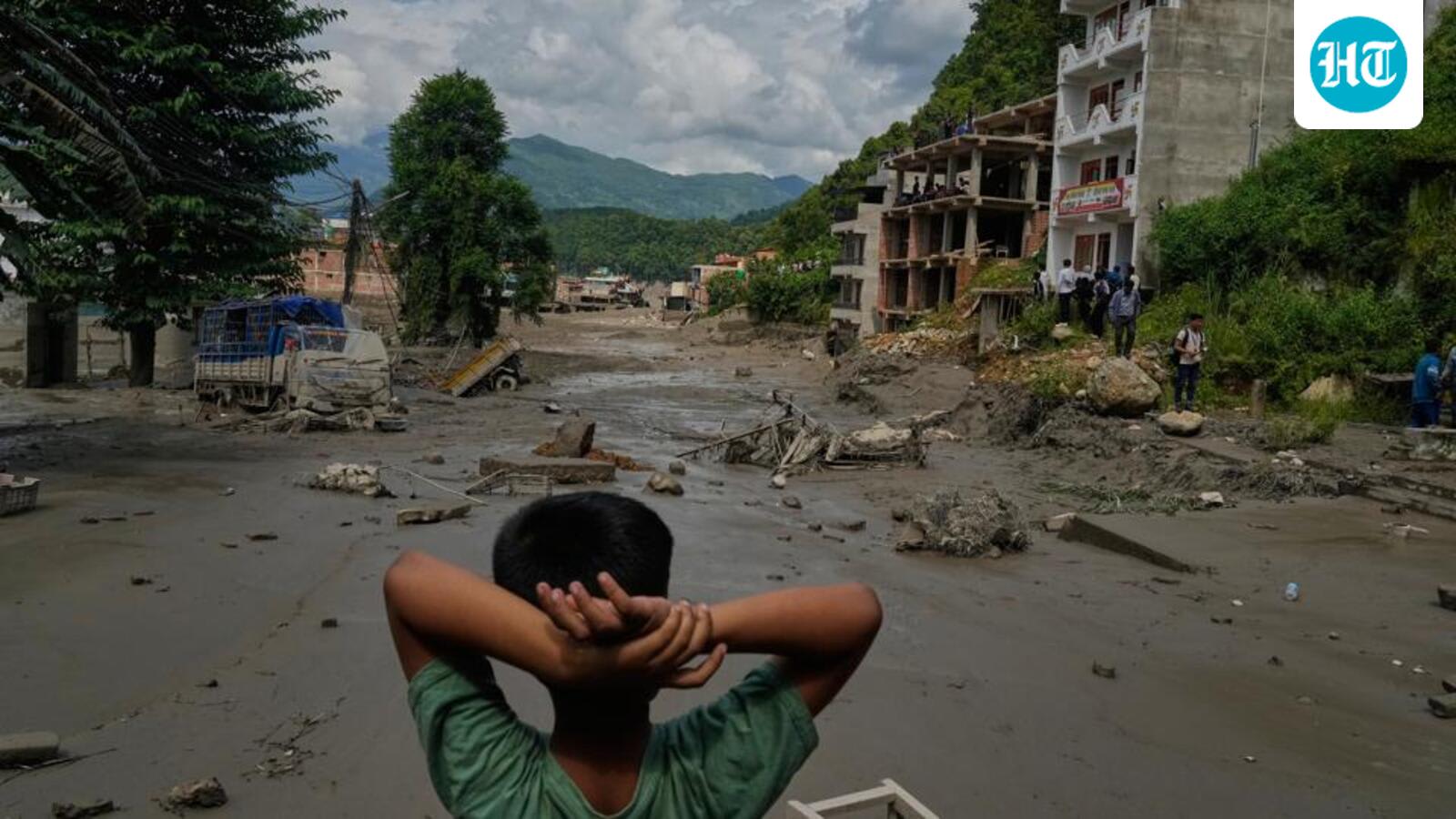
On Wednesday, August 26, 2026, the northern region of Nepal was struck by catastrophic flash floods that sent torrents of water, sediment, and heavy boulders surging through the Bhote Koshi and Trishuli rivers. The scale of the destruction in the Rasuwa and Nuwakot districts has necessitated urgent rescue efforts, with visuals showing earthmovers clearing debris to reach submerged residences. This event highlights the extreme geological volatility of the Hindu Kush Himalaya (HKH) region, where high-altitude dynamics directly threaten downstream communities.
Scientific Investigation into the Trigger
Experts from the International Centre for Integrated Mountain Development (ICIMOD), working alongside partner institutions in Nepal and China, are currently investigating the precise mechanism of the disaster. Initial findings point toward an ice-rock avalanche originating from a high-altitude area on the Nepal-Tibet border. Such events are increasingly scrutinized by the global scientific community as climate-induced instability alters the structural integrity of glacial regions, turning static mountain landscapes into dynamic hazards.
The Geopolitical and Environmental Context
The transboundary nature of this catastrophe underscores the necessity for regional cooperation between Nepal and China. ICIMOD, as a premier intergovernmental institution, plays a critical role in monitoring these risks. The tragedy serves as a grim reminder that the HKH region, often called the 'Third Pole,' is undergoing rapid environmental shifts that transcend national borders, requiring integrated early-warning systems to protect vulnerable populations living along river corridors.
Social Unrest in Rae Bareli: Addressing Communal Tensions
In a separate incident on August 25, 2026, the village of Baburiha in the Raebareli district of India experienced significant social friction following the desecration of a statue of Dr. B.R. Ambedkar. The act, which involved smearing mud and soot on the statue under the cover of darkness, sparked immediate outrage among local residents who view the figure as a symbol of social justice and equality. The incident highlights the ongoing challenges in maintaining communal harmony and respecting cultural icons in rural settings.
Law Enforcement Response and Community Stability
Local authorities, including the Additional Superintendent of Police (ASP) and the Circle Officer (CO) of Unchahar, arrived promptly to engage with the aggrieved villagers. By assuring the public of a swift investigation and deploying police personnel as a precautionary measure, the administration successfully prevented the situation from escalating into widespread violence. This rapid administrative response is vital in mitigating the potential for localized unrest to destabilize regional peace.
Conclusion: Assessing Vulnerability Across Regions
While the disaster in Nepal represents a physical vulnerability to natural forces, the incident in Rae Bareli highlights a social vulnerability to acts of intolerance. Both events demand robust institutional intervention—whether through climate science and engineering in the Himalayas or through rigorous law enforcement and community mediation in rural India. Addressing these disparate crises requires a focus on systemic resilience, ensuring that both the environment and the social fabric are protected against unforeseen shocks.
Multiple Citing Sources
Verification Required?