Nepal flash flood: scariest videos of disaster| death toll rises, hundreds of tourists missing|Tibet
Source Entity
Latest News: Todays Latest News Headlines from India & World | Hindustan Times | Hindustan Times
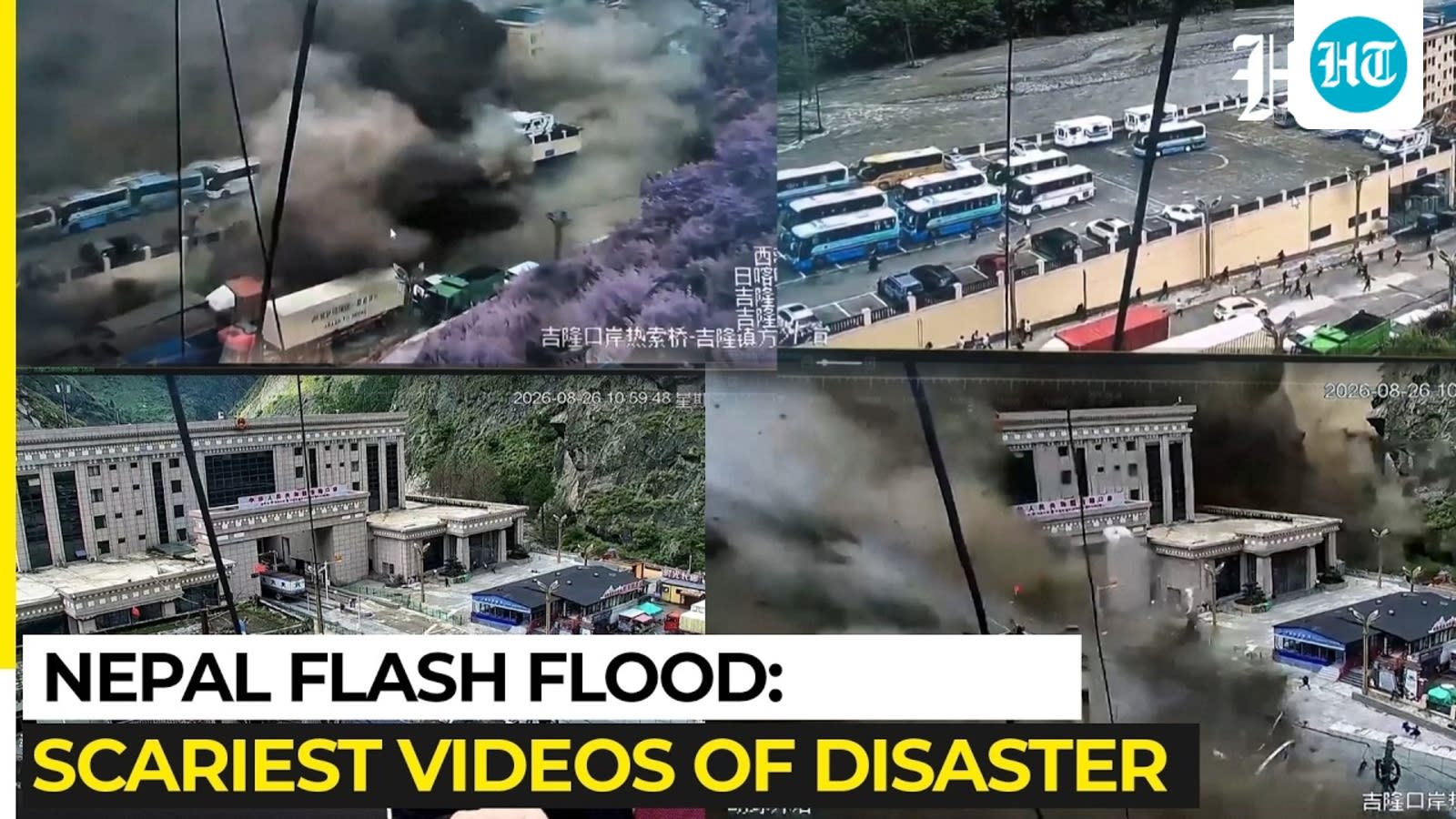
Nepal is currently reeling from devastating flash floods potentially caused by a glacial ice-rock avalanche in the Himalayas. Meanwhile, in India, tensions rose in a Rae Bareli village following the desecration of an Ambedkar statue, prompting a police investigation.
Environmental Catastrophe in the Himalayas
On Wednesday, August 26, 2026, Nepal faced a severe natural disaster as massive flash floods and mudslides tore through the Rasuwa district. The catastrophe, which originated downstream from the Tibet border, sent torrents of water, sediment, and boulders surging through the Bhote Koshi and Trishuli rivers. This event has left communities submerged and triggered urgent rescue operations, as evidenced by reports of individuals being pulled from floodwaters in Nepal’s northern regions.
Scientific Investigation into the Trigger
Scientists from the International Centre for Integrated Mountain Development (ICIMOD), working alongside institutions in Nepal and China, are currently investigating the specific cause of this disaster. Preliminary theories suggest that an ice-rock avalanche from a high-altitude area may have triggered the sudden deluge. This underscores the inherent instability of the Hindu Kush Himalaya (HKH) region, where rapidly changing climatic conditions often lead to the catastrophic failure of glacial features.
The Vulnerability of the HKH Region
The Hindu Kush Himalaya is uniquely prone to such disasters due to its volatile topography and the presence of numerous glacial lakes. ICIMOD, as an intergovernmental institution, serves as a critical monitor for these risks. The dynamic nature of the Himalayas means that even minor environmental shifts can lead to massive downstream consequences, threatening infrastructure and human settlements that reside along the river corridors like the Trishuli.
Social Unrest in Rae Bareli
In a separate but notable event, communal tension flared in Baburiha village, located in the Rae Bareli district of India. On the night of August 25, 2026, unidentified individuals smeared mud and soot on a statue of Dr. B.R. Ambedkar. This act of vandalism sparked immediate outrage among local residents, who viewed it as a direct affront to their values and historical figures.
Law Enforcement and Community Response
Local authorities, including the Additional Superintendent of Police and the Circle Officer of Unchahar, responded swiftly to the situation. By engaging directly with the angry villagers and promising a thorough investigation, police successfully de-escalated the immediate threat of violence. Security forces have been deployed in the area as a precautionary measure to maintain order while the search for the perpetrators continues.
Comparative Analysis and Conclusion
While the events in Nepal and India differ drastically in nature—one being a geophysical emergency and the other a social incident—both highlight the fragility of stability in the region. Whether dealing with the uncontrollable forces of nature in the high Himalayas or the complexities of social harmony in rural India, the necessity for proactive management and rapid institutional response remains the common thread. As investigations continue, both regions face the challenge of recovery and the prevention of future incidents.
Multiple Citing Sources
Verification Required?