Tougher than Everest rescues: Inside Nepal's biggest airlift
Source Entity
VISHANT AGARWALA
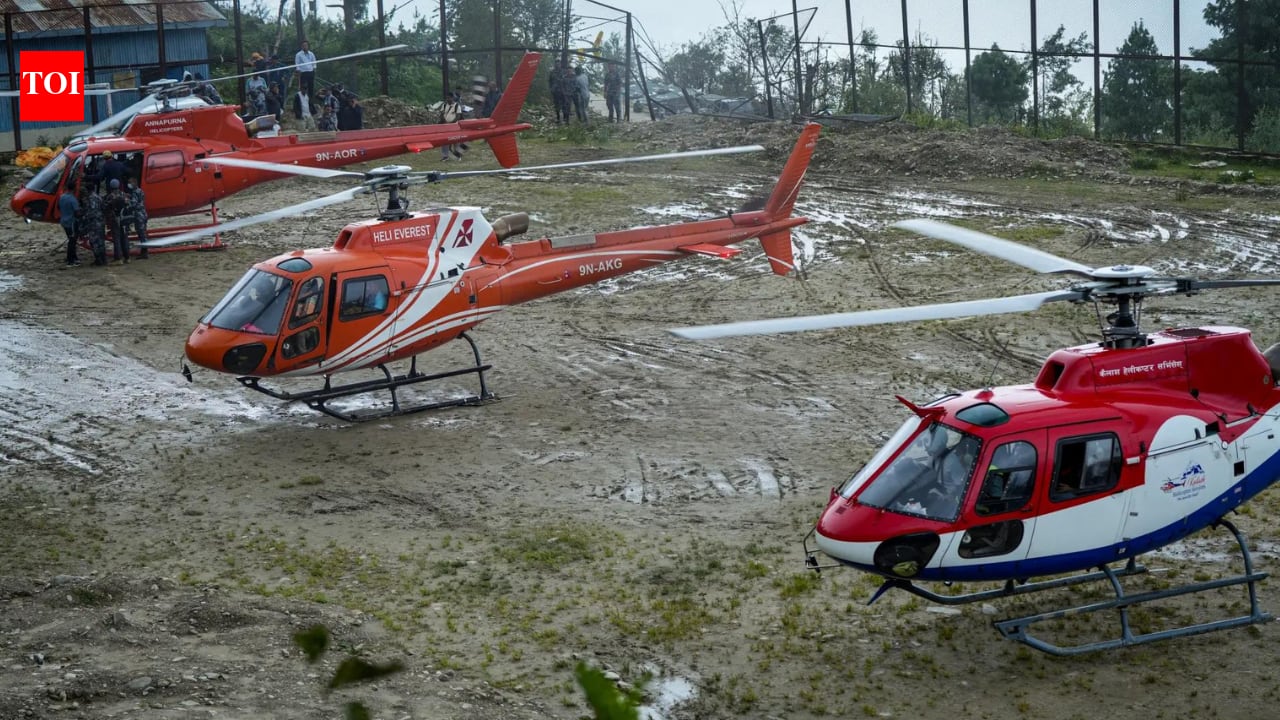
Following devastating floods in Nepal, an unprecedented aerial rescue operation saved over 4,000 people. Pilots navigated extreme conditions, describing the mission as more complex than high-altitude flying in the Everest season.
The Unprecedented Aerial Rescue in Nepal
The catastrophic floods triggered by the Bhote Koshi-Trishuli river systems on August 26 left a trail of destruction across the Rasuwa and Nuwakot districts of Nepal. With critical infrastructure, including major roads and bridges, completely severed by the deluge, the region faced total isolation. In this dire emergency, helicopters transformed from luxury transport into the primary lifeline, facilitating what officials have categorized as potentially the largest rescue operation in the nation's history.
The Scale of the Operation
More than 4,000 individuals were airlifted to safety through hundreds of individual sorties. The logistical intensity of this operation was immense, requiring constant coordination in a confined, high-risk environment. The epicenter of the crisis, centered around Trishuli Bazaar, necessitated a rapid response to prevent further loss of life as mudslides and rising waters threatened survivors who had been cut off from all ground access.
Challenges of the 'Narrow Gorge' Environment
Pilots involved in the mission, including Nepal’s first female helicopter Captain Priya Adhikari, noted that the conditions were remarkably more dangerous than standard Everest-season flying. The flight path through a narrow gorge created a bottleneck, at times forcing up to 20 helicopters to navigate the same airspace simultaneously. This level of congestion required extreme precision and constant communication to avoid mid-air collisions while conducting life-saving extractions.
Complicating Factors and Operational Hazards
Beyond the geographical constraints, the aircrews faced a litany of operational hazards. Pilots reported significant issues with inaccurate or incorrect coordinates, which often led them to landing zones that were entirely buried under thick, unstable mud. Furthermore, the presence of unauthorized drones in the rescue corridor and the proliferation of false rescue alerts created unnecessary strain on an already exhausted fleet of pilots and support staff.
Historical and Future Implications
This operation serves as a stark reminder of Nepal's vulnerability to climate-induced disasters. The success of Captain Adhikari and her peers highlights the vital need for robust aerial disaster response capabilities in mountainous regions. As Nepal continues to face the growing threat of monsoon-related flooding and landslides, the lessons learned from the Bhote Koshi-Trishuli rescue—specifically regarding air traffic management and ground-to-air communication in remote areas—will likely reshape future emergency protocols.
Conclusion
The courage displayed by the pilots during the August 26 flood response was instrumental in preventing a much higher death toll. By successfully managing the complexities of a crowded, narrow gorge and overcoming the chaos of inaccurate data, the air teams proved that specialized aerial intervention is the most effective tool in Nepal’s disaster management arsenal. The mission remains a testament to the resilience of the local rescue services in the face of extreme topographical and environmental challenges.