What we know so far
Source Entity
BBC News
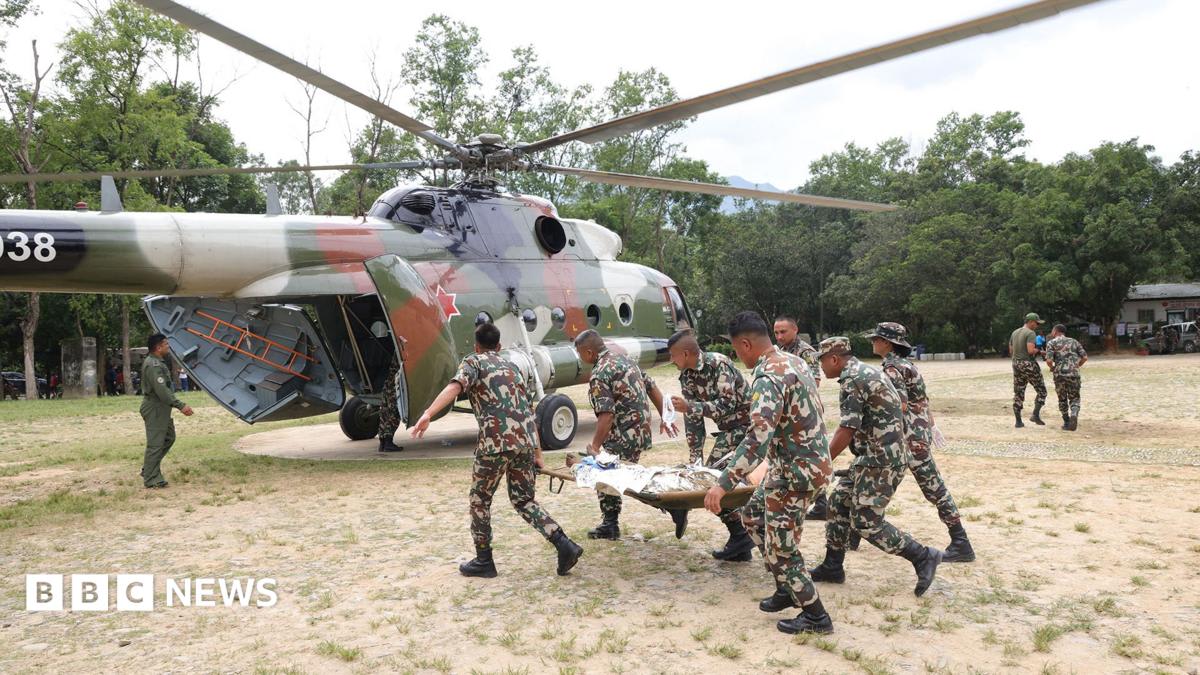
A catastrophic flash flood caused by a suspected ice-rock avalanche has devastated regions along the Nepal-Tibet border. Scientists are currently investigating the role of climate change in this disaster, as search and rescue operations continue in the affected districts.
The Nepal-Tibet Border Disaster: Unpacking a High-Altitude Catastrophe
On Wednesday, August 26, 2026, a catastrophic flash flood swept through Nepal’s Rasuwa district, sending torrents of water, sediment, and massive boulders cascading through the Bhote Koshi and Trishuli rivers. This event, which has left hundreds feared dead, highlights the extreme environmental volatility of the Hindu Kush Himalaya (HKH) region. As rescuers utilize heavy earthmoving equipment to reach submerged homes in the Nuwakot district, the scale of the destruction underscores the profound vulnerability of mountain communities to sudden geological shifts.
Scientific Investigation: Beyond Seismic Activity
Initial confusion regarding the cause of the disaster led to speculation about seismic activity. However, the United States Geological Survey (USGS) clarified on Thursday that no earthquake occurred. Instead, advanced analysis of satellite imagery and long-period seismic waves confirmed that the event was a massive glacial collapse and debris flow. This distinction is critical, as it shifts the focus from tectonic movement to the instability of high-altitude cryospheric features.
The Role of Glacial Instability
Experts, including those from the International Centre for Integrated Mountain Development (ICIMOD), are investigating whether an ice-rock avalanche triggered this event. The process involves a massive chunk of ice detaching from a mountain, which then acts as a catalyst, pulling down vast amounts of rock and debris. This phenomenon creates a "domino effect" of destruction, turning mountain streams into lethal slurry flows that move with terrifying speed and destructive force.
Climate Change and the Hindu Kush Himalaya
While the investigation is ongoing, the broader context of climate change cannot be ignored. The Hindu Kush Himalaya is experiencing accelerated glacier melt due to rising global temperatures. Experts like Simon Cook from the University of Dundee emphasize that climate change likely exacerbates these conditions by thawing permafrost and destabilizing mountain slopes. As the region warms, the structural integrity of glaciers is increasingly compromised, making high-altitude disasters more frequent and unpredictable.
Regional Cooperation and Future Risks
This tragedy has prompted a collaborative effort between ICIMOD and partner institutions in Nepal and China to piece together the sequence of events. The transboundary nature of the flood, originating in Tibet and impacting Nepal, illustrates the urgent need for integrated, regional early warning systems. Because these rivers cross international borders, the data-sharing between these nations is not just a scientific necessity but a humanitarian imperative to protect downstream populations.
Conclusion: A Call for Resilient Infrastructure
Looking forward, the disaster serves as a grim warning for the future of Himalayan settlements. As the climate continues to shift, traditional risk assessment models may no longer suffice. Protecting these communities will require a combination of enhanced satellite monitoring, rigorous geological study of glacial lakes, and the development of more resilient infrastructure. The ongoing rescue operations are the immediate priority, but the long-term challenge lies in adapting to a landscape that is becoming increasingly perilous.
Multiple Citing Sources