Andhra Pradesh adopts four-pronged strategy to support agriculture amid 51% rainfall deficit
Source Entity
India Latest News: Top National Headlines Today & Breaking News | The Hindu
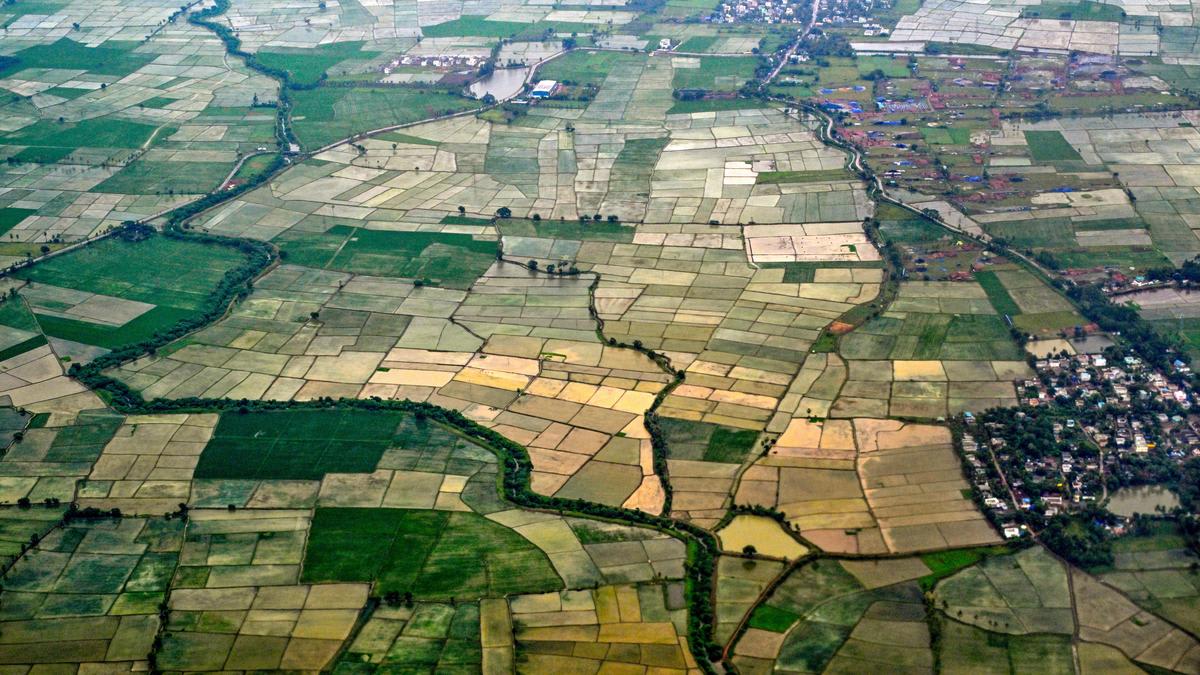
Andhra Pradesh is battling a severe 51% monsoon rainfall deficit, threatening the livelihoods of 62% of its population. The state has implemented a proactive four-pronged strategy, including risk-grading rural agricultural centers, to mitigate the impact on the Kharif-2026 season.
Andhra Pradesh Battles Severe Monsoon Deficit
Andhra Pradesh is currently navigating a precarious agricultural crisis as the state reports a staggering 51% deficit in rainfall during the Kharif-2026 season. Agriculture Director Manazir Jeelani Samoon has highlighted the gravity of the situation, noting that all 28 districts in the state are facing deficient precipitation, with three classified under the 'large-deficit' category. This performance stands in stark contrast to the national average monsoon deficit of 13% recorded between June and August, underscoring the localized intensity of the climate challenge currently facing the region.
The Socio-Economic Stakes
The urgency of this meteorological crisis is magnified by the state's socio-economic structure, where agriculture remains the primary lifeline for approximately 62% of the population. When rainfall fails to meet the threshold required for standard crop cycles, the ripple effects are felt across the entire rural economy, threatening food security and the economic stability of millions of smallholder farmers. Protecting these livelihoods has transitioned from a routine administrative duty to the primary priority for the state government.
The Failure of Conventional Weather Patterns
Despite the formation of seven distinct low-pressure systems over the Bay of Bengal and Gangetic West Bengal during the first three months of the Southwest monsoon, the expected relief has failed to materialize. Real-time data from the Directorate of Economics and Statistics (DES) indicates that these systems have only produced localized, light showers. Even the most recent weather event, active as of late August, has failed to deliver significant rainfall, with no recorded instances of precipitation exceeding 25 mm in a single session, further exacerbating the moisture stress in the soil.
Proactive Mitigation and Risk Management
In anticipation of such climate volatility, the Agriculture Department initiated a strategic response as early as February 2026. By leveraging expert data from the India Meteorological Department (IMD) and the Central Research Institute for Dryland Agriculture (CRIDA), the state has implemented a four-pronged response strategy. A central pillar of this effort involves the risk-grading of 8,489 Rythu Seva Kendrams—the state’s critical agricultural outreach hubs—to ensure that resources are deployed where they are most urgently needed.
Future Implications and Outlook
As the monsoon season progresses, the outlook remains challenging, with limited forecasts for significant rainfall in the near term. The state’s reliance on these proactive measures underscores a shift toward data-driven climate adaptation. Moving forward, the effectiveness of the Rythu Seva Kendrams in providing support to drought-affected farmers will be the ultimate test of the state’s resilience strategy. The continued monitoring of these climatic trends is essential to preventing long-term damage to the Kharif season output and safeguarding the state’s agricultural future.
Verification Required?