Someone hacked the Switch 2 by using an old game and AI
Source Entity
Jay Peters
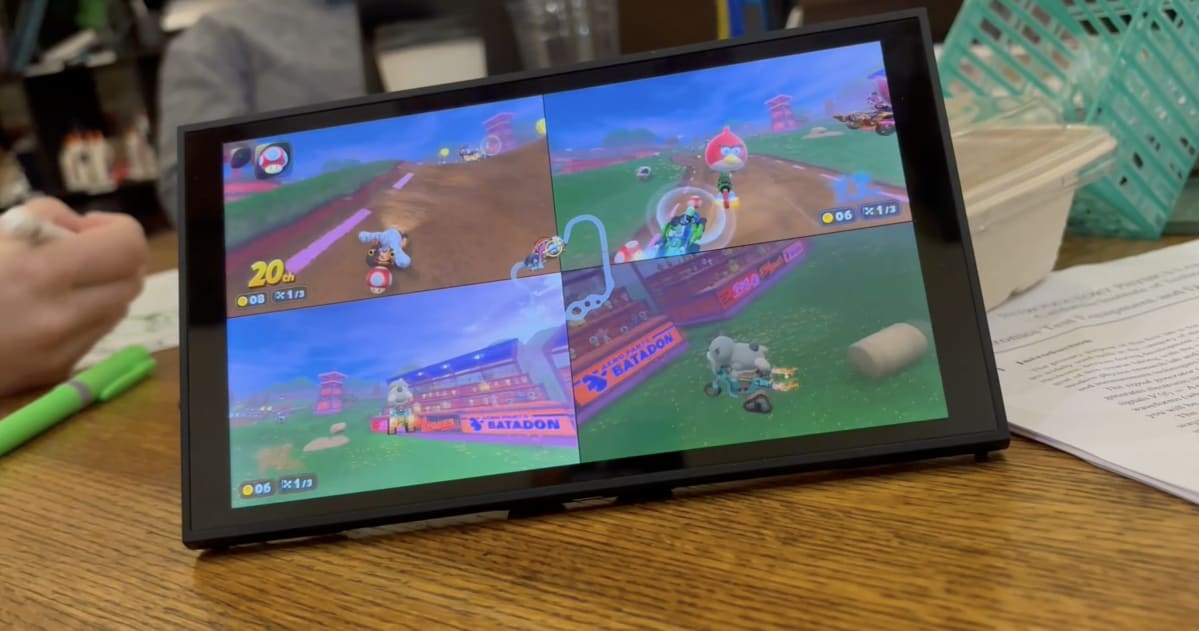
A modder has successfully achieved a tethered jailbreak of the unreleased Nintendo Switch 2 using an exploit in the game SmileBASIC 4. Assisted by OpenAI's Codex, the hack allows for homebrew execution and game modding, signaling early security challenges for the hardware.
The Security Breach of the Nintendo Switch 2
In a significant development for the gaming hardware community, security researcher Sammy Hajhamid, known online as "pepsipu," has reportedly achieved a software-only, tethered jailbreak for the Nintendo Switch 2. This exploit, dubbed "ns2jb," represents a major milestone in console security research, as it provides "userland" access to the system. By leveraging an integer overflow vulnerability within the SmileBASIC 4 interpreter—a long-standing programming environment on Nintendo hardware—researchers have gained the ability to run homebrew applications, reverse engineer software, and interact with the console's peripherals via Memory-Mapped I/O (MMIO).
The Role of Artificial Intelligence in Exploitation
One of the most notable aspects of this breach is the integration of generative AI in the discovery process. Hajhamid utilized OpenAI’s Codex to assist in probing the SmileBASIC language interpreter. By creating a custom harness capable of sending USB commands to the system, the AI helped identify the necessary entry points to bypass standard security protocols. This highlights a growing trend where machine learning models are being repurposed to accelerate the identification of vulnerabilities in complex software environments, a development that could fundamentally alter the landscape of cybersecurity and hardware modding.
Technical Mechanics of the 'ns2jb' Exploit
Technically, the jailbreak is categorized as a "tethered" exploit, meaning it is not persistent across power cycles. Users must initiate the hack from the SmileBASIC 4 software every time the console is booted. Furthermore, the process requires a connection to a macOS or Linux computer on the same network to execute a Node.js package, which facilitates the final stages of privileged system access. While this makes the exploit less convenient for casual users, it provides a robust sandbox for developers and modders to explore the console's architecture.
Implications for Game Modification
Evidence of the jailbreak's efficacy has already surfaced in the form of a modified version of Mario Kart World. The mod demonstrates the ability to inject custom assets into the game environment, featuring an eclectic mix of playable characters including Cinnamoroll, the red Angry Bird, Peter Griffin, and Steve from Minecraft. This capability proves that the "ns2jb" exploit goes beyond simple system access; it allows for deep-level game modification, which is a primary driver for the homebrew community.
Future Trends and Security Outlook
This incident underscores the persistent cat-and-mouse game between console manufacturers and the modding community. As Nintendo prepares its next-generation hardware, the existence of this exploit suggests that legacy software environments—like SmileBASIC—can act as unintended gateways to modern systems. Moving forward, manufacturers will likely increase scrutiny on third-party software environments that offer low-level system access. For the security community, the "ns2jb" hack serves as a case study in how AI-assisted vulnerability research can rapidly identify weaknesses in high-profile consumer electronics, potentially forcing a paradigm shift in how hardware security is validated before market release.