Northern Lights stun UK down to England's south coast
Source Entity
BBC News
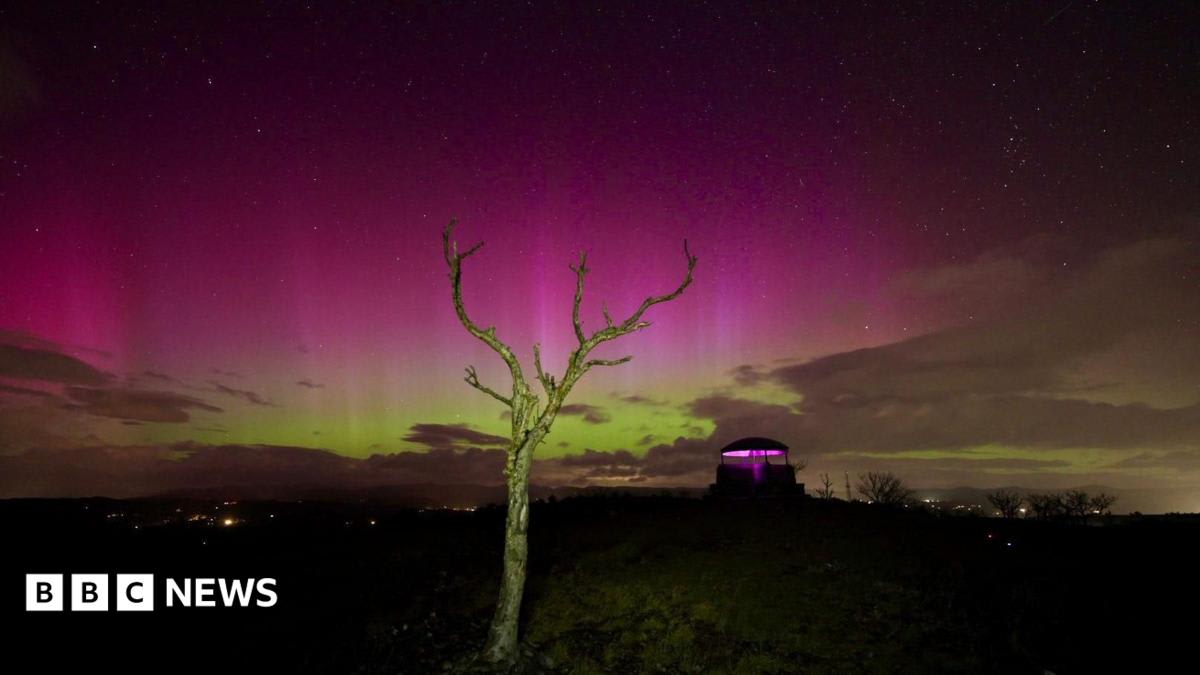
Strong solar activity caused the Northern Lights to be visible across the UK, reaching as far south as Devon and Kent. Sightings are expected to remain possible through Tuesday under clear conditions.
A Rare Celestial Display Over the British Isles
Residents across the United Kingdom were treated to a rare and spectacular visual event on Friday and Saturday evenings as the Northern Lights, or Aurora Borealis, illuminated the night sky. Typically confined to the high latitudes of the Arctic Circle and northern Scotland, the phenomenon extended its reach significantly further south than usual. Reports confirmed sightings in counties as distant as Devon, Hampshire, and Kent, marking an extraordinary atmospheric occurrence for those living in southern England.
The Science of Solar Activity
The core driver behind this stunning display is heightened solar activity. The Aurora Borealis occurs when charged particles from the sun—emitted during solar flares or coronal mass ejections—collide with the Earth's magnetosphere. These particles are funneled toward the magnetic poles, where they interact with gases in the upper atmosphere, such as oxygen and nitrogen. This interaction results in the vibrant, shifting curtains of green, pink, and purple light that characterize the auroral display.
Why This Event Was Exceptional
While the Northern Lights are a common feature of the night sky in regions like Scandinavia or northern Scotland, their visibility in southern England is an anomaly. The intensity of this specific solar activity was significant enough to push the auroral oval—the ring-shaped region where auroras are most frequently seen—far beyond its typical boundaries. This rare southward displacement allowed populations that usually experience zero auroral activity to witness the natural light show, highlighting the sheer magnitude of the recent solar disturbances.
Meteorological and Future Projections
According to the Met Office, the conditions that facilitated this event may persist for several days. As long as clear skies prevail, there remains a potential for further sightings across the UK until Tuesday. This window of opportunity depends entirely on the stability of the atmospheric conditions and the continued flux of solar particles interacting with the Earth's magnetic field. Observers have been encouraged to monitor local weather reports for the best viewing windows.
Broader Implications of Solar Weather
Beyond the aesthetic beauty of the Northern Lights, events of this nature serve as a potent reminder of our planet's vulnerability to space weather. While this instance resulted in a harmless and mesmerizing display, high levels of solar activity can pose risks to satellite communications, power grids, and GPS navigation systems. As we progress through the current solar cycle, experts continue to monitor these developments to better understand how increased solar output impacts both our climate and our modern technological infrastructure.
Conclusion
The visibility of the Northern Lights across southern England this past weekend was a unique intersection of high-energy solar physics and favorable terrestrial weather conditions. It provided a rare opportunity for the public to engage with space phenomena directly from their homes. As the event concludes, it remains a significant highlight of recent atmospheric activity, emphasizing the dynamic and often unpredictable nature of the relationship between our sun and Earth.