Om Prakash Mathur sworn in as 29th Governor of Keralam
Source Entity
India Latest News: Top National Headlines Today & Breaking News | The Hindu
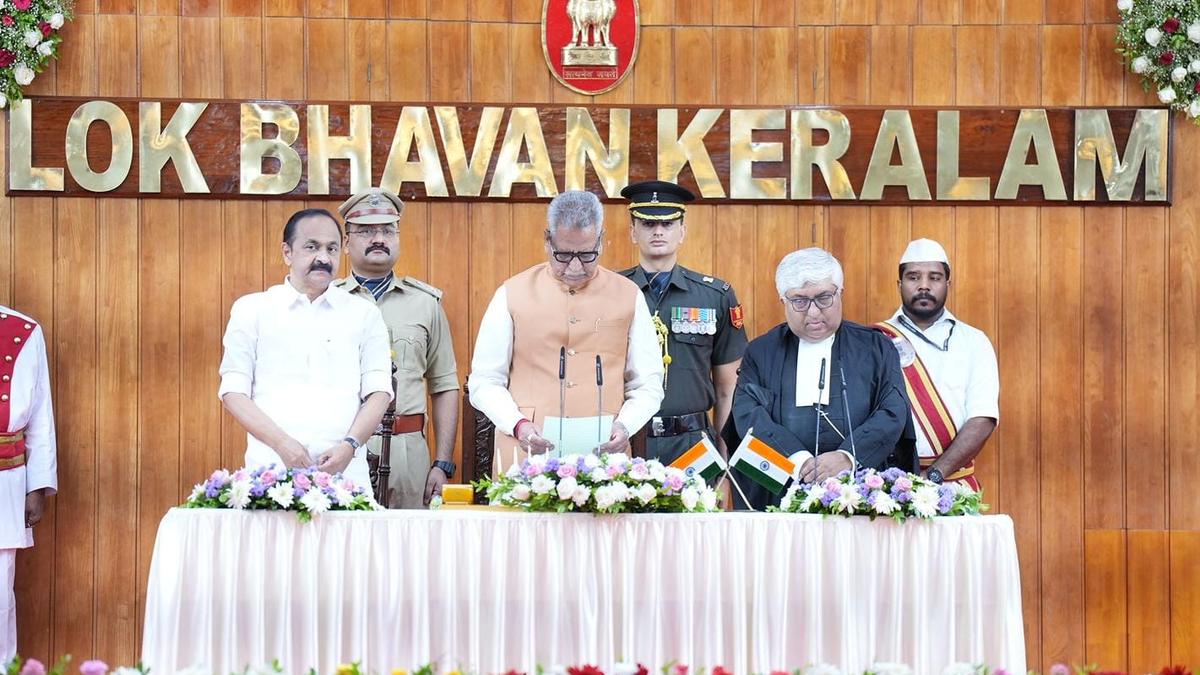
Om Prakash Mathur has been sworn in as the 29th Governor of Kerala, succeeding Rajendra Vishwanath Arlekar. The ceremony was attended by state officials, though notably, the Leader of the Opposition was absent.
Transition of Power in Kerala
On October 23, 2026, a significant political transition occurred in Thiruvananthapuram as Om Prakash Mathur was officially sworn in as the 29th Governor of Kerala. The solemn ceremony, held at the historic Lok Bhavan, marked a formal change in the gubernatorial leadership of the state. Kerala High Court Chief Justice Soumen Sen presided over the event, administering the oath of office to Mr. Mathur, thereby confirming his constitutional authority to act as the head of the state.
The Constitutional Process
The appointment of a Governor in India is a constitutional process rooted in Article 153 of the Indian Constitution, which mandates that there shall be a Governor for each state. The procedure followed at Lok Bhavan—where the appointment order issued by President Droupadi Murmu was read aloud—serves as a reminder of the federal structure of the Indian polity. By reading the warrant of appointment, the state officially recognized the Union government’s selection, transitioning the office from the outgoing incumbent to the newly appointed representative.
Notable Attendees and Political Dynamics
The swearing-in ceremony was attended by key figures in Kerala’s political landscape, including Chief Minister V.D. Satheesan, Speaker Thiruvanchoor Radhakrishnan, and various cabinet ministers. The presence of these officials underscores the necessity of maintaining a working relationship between the state government and the Raj Bhavan. However, the absence of the Leader of the Opposition, Pinarayi Vijayan, has drawn attention, potentially signaling ongoing political friction or specific stances held by the opposition regarding the appointment or the current political climate.
Historical Context and Succession
Mr. Mathur succeeds Rajendra Vishwanath Arlekar, who has vacated the position to assume the role of Governor of Tamil Nadu. This reshuffle is part of a broader pattern of gubernatorial rotations within the Indian political system, where experienced administrators are shifted between states to address evolving regional requirements. Mr. Arlekar’s move to Tamil Nadu highlights the fluidity of constitutional appointments, which are designed to ensure continuity in state-level governance while maintaining a connection to the central executive authority.
Broader Implications and Future Outlook
The role of the Governor in India remains a critical point of intersection between state governance and national oversight. As Mr. Mathur begins his tenure, his performance will be closely monitored by both the ruling party and the opposition. The Governor serves as the constitutional bridge between the state and the center; thus, his decisions regarding legislative bills, administrative oversight, and public discourse will likely shape the state’s political narrative in the coming years. His background and approach to the office will be tested as he navigates the complex socio-political landscape of Kerala.
Verification Required?