Ontario farmer used buried cotton briefs to gauge soil activity; he reported corn yields were 15 bushels per acre higher after red clover in 2012
Source Entity
Latest News: Todays Latest News Headlines from India & World | Hindustan Times | Hindustan Times
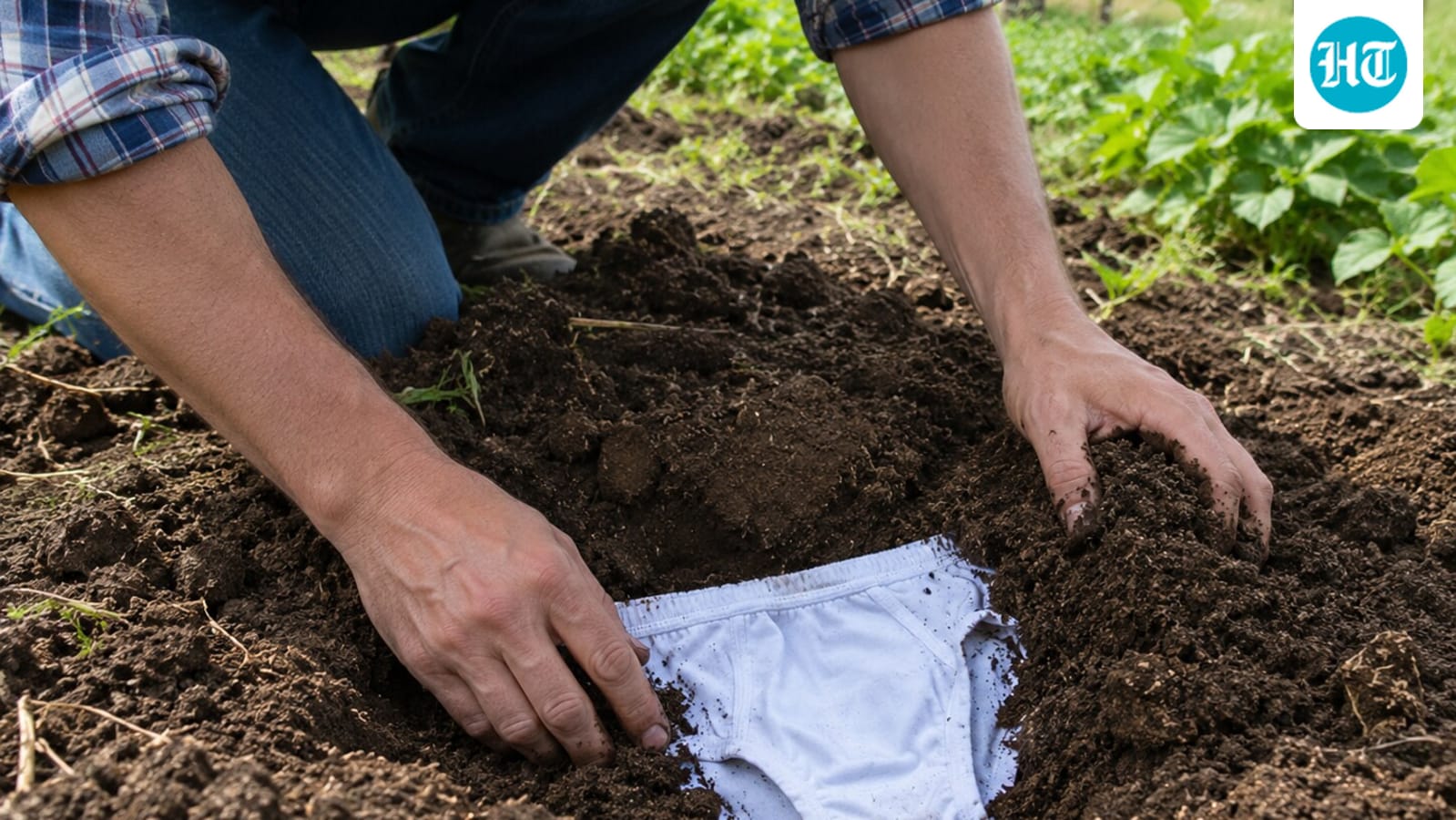
Ontario farmer Blake Vince utilized a 'Soil Your Undies' experiment to visually demonstrate soil health through cotton decomposition. This unconventional method highlights the critical role of microbial activity in improving crop yields and sustainable farming practices.
The Unconventional Science of Soil Health
The "Soil Your Undies" campaign, popularized by Ontario farmer Blake Vince, represents a creative intersection between citizen science and traditional agricultural methodology. By burying 100% white cotton briefs in the soil for approximately two months, farmers have developed a rudimentary but effective visual indicator of biological activity. The core premise is rooted in the decomposition process: in soil teeming with healthy, active microbial populations, cellulose-digesting organisms break down the cotton fabric rapidly. Conversely, soil with low microbial diversity or health will leave the fabric largely intact.
Microbial Activity as a Yield Driver
This experiment is not merely a novelty; it serves as a proxy for understanding the complex underground ecosystem that dictates crop success. Blake Vince’s own experiences underscore this connection, as he reported a significant increase in corn yields—specifically 15 bushels per acre higher—following the integration of red clover in 2012. This yield boost is directly attributed to the improved soil structure and nutrient cycling fostered by active microbes, which thrive in the hospitable environments provided by cover crops like red clover.
The Impact of No-Till and Cover Cropping
Reports from John Deere’s The Furrow provide empirical weight to these observations, noting that underwear buried in no-till fields integrated with cover crops in southwestern Ontario showed approximately 47% degradation. This high rate of decay compared to conventional, tilled fields highlights the detrimental impact of excessive mechanical soil disturbance. No-till systems, by leaving the soil structure intact and maintaining organic residues, create a stable environment that supports the robust microbial communities necessary for rapid cellulose breakdown.
Limitations and Scientific Context
While the "Soil Your Undies" test is a powerful educational tool, it is essential to contextualize it within broader soil science. Environmental variables such as moisture levels, soil temperature, and pH significantly influence the rate of decomposition. Therefore, while a heavily degraded pair of briefs indicates a thriving biological system, the test should be viewed as a qualitative snapshot rather than a precise quantitative metric. It acts as an accessible entry point for farmers to begin observing the "hidden" half of their operation.
Future Trends in Regenerative Agriculture
As the agricultural industry faces increasing pressure to adopt sustainable practices, the adoption of such simple monitoring tools signals a shift toward regenerative agriculture. By prioritizing soil biology over purely chemical interventions, farmers like Vince are demonstrating that long-term productivity is inextricably linked to the health of the soil microbiome. Moving forward, the integration of these visual tests with more advanced soil health metrics will likely become a standard practice for those seeking to optimize yields while minimizing synthetic inputs.
Conclusion
The legacy of the "Soil Your Undies" campaign lies in its ability to demystify complex soil science. By making the invisible visible, Blake Vince has empowered a generation of farmers to engage more deeply with the biological health of their land. Ultimately, the correlation between cotton decay and increased crop yields serves as a potent reminder that the most productive farms are those that treat their soil as a living, breathing ecosystem.
Verification Required?