Owaisi tells UP Muslims to lead. Congress asks: ‘What did you do in Telangana?
Source Entity
Sreenivas Janyala
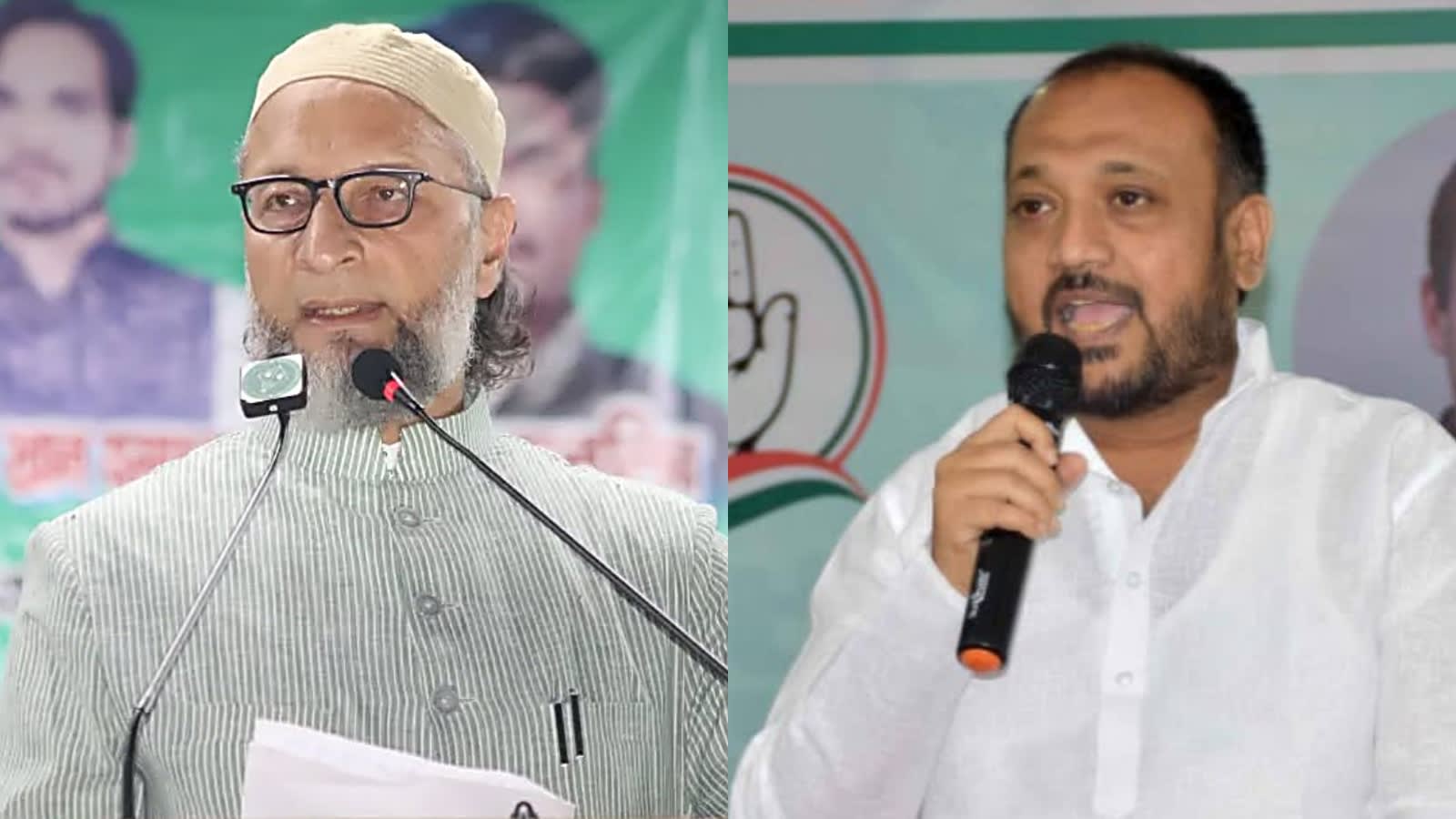
AIMIM chief Asaduddin Owaisi is facing criticism from the Telangana Congress for his political rhetoric in Uttar Pradesh while simultaneously challenging the Central government over border security issues with China. The discourse highlights a growing tension between Owaisi's national aspirations and his regional track record.
The Dual Fronts of Asaduddin Owaisi
Asaduddin Owaisi, the Hyderabad MP and leader of the All India Majlis-e-Ittehadul Muslimeen (AIMIM), is currently navigating a complex political landscape. His recent activities demonstrate a dual-track strategy: attempting to expand his party's influence in Uttar Pradesh by urging Muslims to cultivate internal leadership, while simultaneously acting as a vocal critic of the Union government regarding national security concerns along the Indo-China border.
The Uttar Pradesh Rhetoric and Congress Backlash
In Uttar Pradesh, Owaisi has aggressively campaigned for Muslim political autonomy, explicitly advising the community to move away from traditional reliance on the Nehru-Gandhi family or the Yadav-led parties. He argues that Muslims must foster their own indigenous leadership to effectively represent their interests. However, this narrative has triggered a sharp retort from the Telangana Congress. Leaders like Mohammed Waliullah Sameer have accused Owaisi of hypocrisy, suggesting that the 'leadership formula' he advocates for in Uttar Pradesh has been notably absent within his own stronghold of Hyderabad and the broader state of Telangana.
Analyzing the 'Leadership Formula' Critique
The criticism from the Telangana Congress centers on the internal structure of the AIMIM. By questioning how many independent Muslim leaders the party has actually nurtured outside of its traditional power pockets, the Congress is challenging the perceived insularity of Owaisi’s political model. This debate touches upon the broader tension in Indian politics between regional identity-based parties and national platforms that seek to consolidate diverse voter bases. The accusation of 'exporting' a formula that hasn't been tested at home highlights the difficulty of scaling regional political brands into national movements.
National Security and the Arunachal Standoff
Simultaneously, Owaisi has shifted his focus to the geopolitical sphere, demanding transparency from the Narendra Modi-led government regarding Chinese troop intrusions in Arunachal Pradesh. Citing statements from the Director of the Indo-Tibetan Border Police (ITBP) regarding ongoing face-offs, Owaisi has accused the central administration of maintaining opacity. His critique emphasizes a perceived contradiction between the government's diplomatic stance toward China and the reality of restricted patrolling and citizen movement on the ground.
Broader Implications and Future Trends
These events underscore the evolving role of the AIMIM in Indian parliamentary discourse. Owaisi’s strategy of simultaneously positioning himself as a champion of minority empowerment and a watchdog on national security is a high-stakes balancing act. By bringing border security into the conversation, he seeks to expand his relevance beyond communal politics. However, the pushback from the Congress suggests that his expansionist efforts will continue to face scrutiny regarding the consistency and efficacy of his party's internal governance.
Concluding Summary
In conclusion, Asaduddin Owaisi remains a polarizing yet influential figure whose national ambitions are being met with intense regional pushback. Whether addressing the socio-political dynamics of Uttar Pradesh or the strategic challenges in Arunachal Pradesh, Owaisi’s actions continue to provoke significant debate among political rivals. The intersection of these two fronts reveals a political climate where the credibility of one's local governance is increasingly being used as a benchmark for their national political advocacy.
Multiple Citing Sources