Pakistan Deployed Spies In "Desperate" Bid To Find S-400s, Says Air Marshal
Source Entity
NDTV News Search Records Found 1000
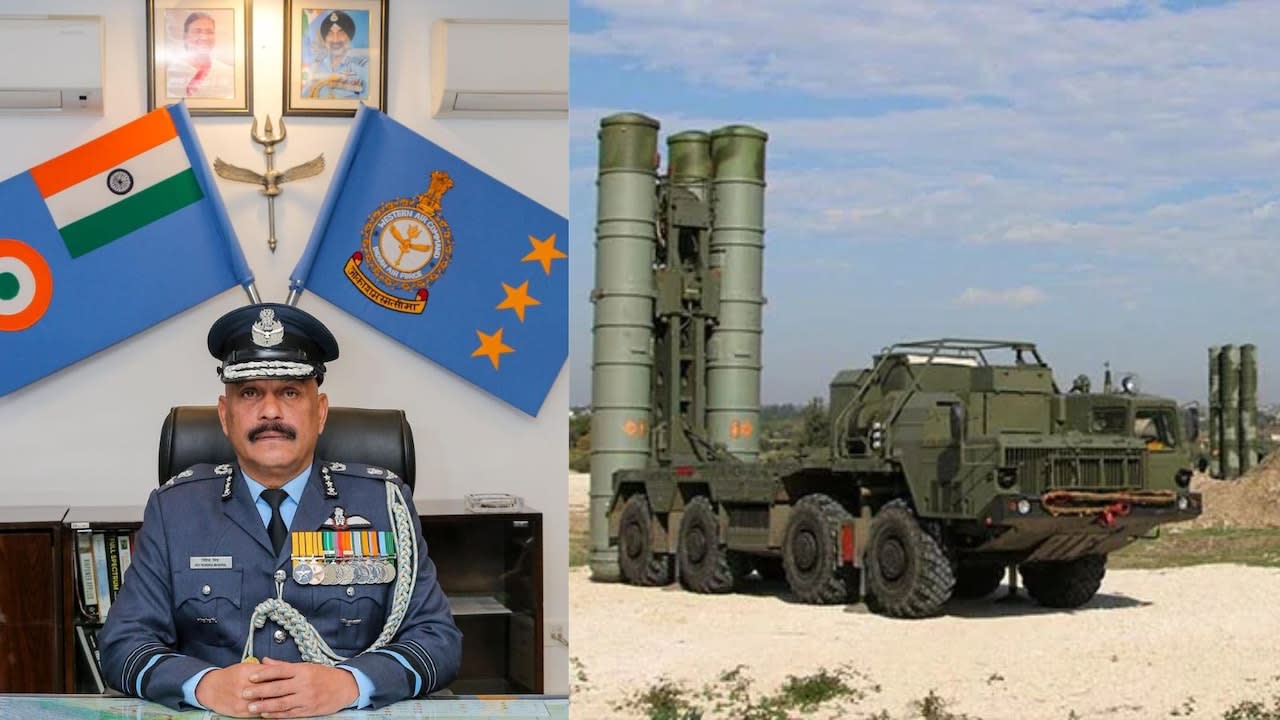
A senior Indian Air Marshal has revealed that Pakistan attempted to locate India's S-400 air defense systems through espionage and electronic warfare. The S-400, dubbed 'Sudarshan Chakra,' proved its strategic value during Operation Sindoor by intercepting a Pakistani aircraft at a distance of 300 kilometers.
The Strategic Significance of India's S-400 Deployment
Recent revelations from a high-ranking Indian Air Marshal have shed light on the intense clandestine efforts by Pakistan to compromise India’s premier air defense capability: the S-400 Triumf system. Known colloquially as India's "Sudarshan Chakra," this system represents a significant technological leap in South Asian military parity. The reported deployment of spies and the activation of sleeper cells by Pakistan underscore the perceived threat this system poses to regional air superiority and the desperation to neutralize its strategic advantage.
Espionage and Electronic Warfare Tactics
The intelligence-gathering operation reportedly undertaken by Pakistan went beyond traditional human intelligence (HUMINT). According to the claims, the effort involved satellite support and coordination with electronic warfare capabilities provided by external state actors. This multi-layered approach to locating the mobile S-400 batteries highlights the system's status as a high-value target. By attempting to pinpoint these assets, Pakistan sought to map potential vulnerabilities in India’s air defense umbrella, which currently serves as a critical deterrent against aerial incursions.
Operation Sindoor: A Proven Deterrent
The efficacy of the S-400 was brought into sharp focus during what has been identified as 'Operation Sindoor.' During this engagement, the system demonstrated its formidable long-range strike capability by successfully intercepting a large Pakistani aircraft at a distance exceeding 300 kilometers. This specific event serves as a tangible validation of the system's operational readiness and its ability to act as a force multiplier, effectively pushing the boundaries of India's defensive perimeter deeper into contested airspace.
Shifts in Regional Air Dominance
The acquisition and operationalization of the S-400 have fundamentally altered the regional security calculus. As India continues to integrate additional S-400 deliveries into its national air defense network, the ability of neighboring air forces to conduct operations with impunity is severely constrained. The "desperate" nature of the Pakistani espionage campaign reflects the strategic anxiety caused by the S-400’s "A2/AD" (Anti-Access/Area Denial) capabilities, which effectively turn the skies into a high-risk zone for hostile platforms.
Future Implications and Strategic Outlook
Looking forward, the reliance on advanced air defense systems like the S-400 will likely dictate the evolution of regional military doctrines. As India expands its defensive network, the focus will likely shift toward hardening these assets against electronic jamming and cyber-espionage. The revelation of these covert attempts to locate the "Sudarshan Chakra" serves as a reminder that in the modern era, the battle for air superiority begins long before a missile is launched, occurring instead in the shadows of intelligence and electronic reconnaissance.
Verification Required?