'We expect our sons to be killed,' father of teen shot dead in West Bank tells BBC
Source Entity
BBC News
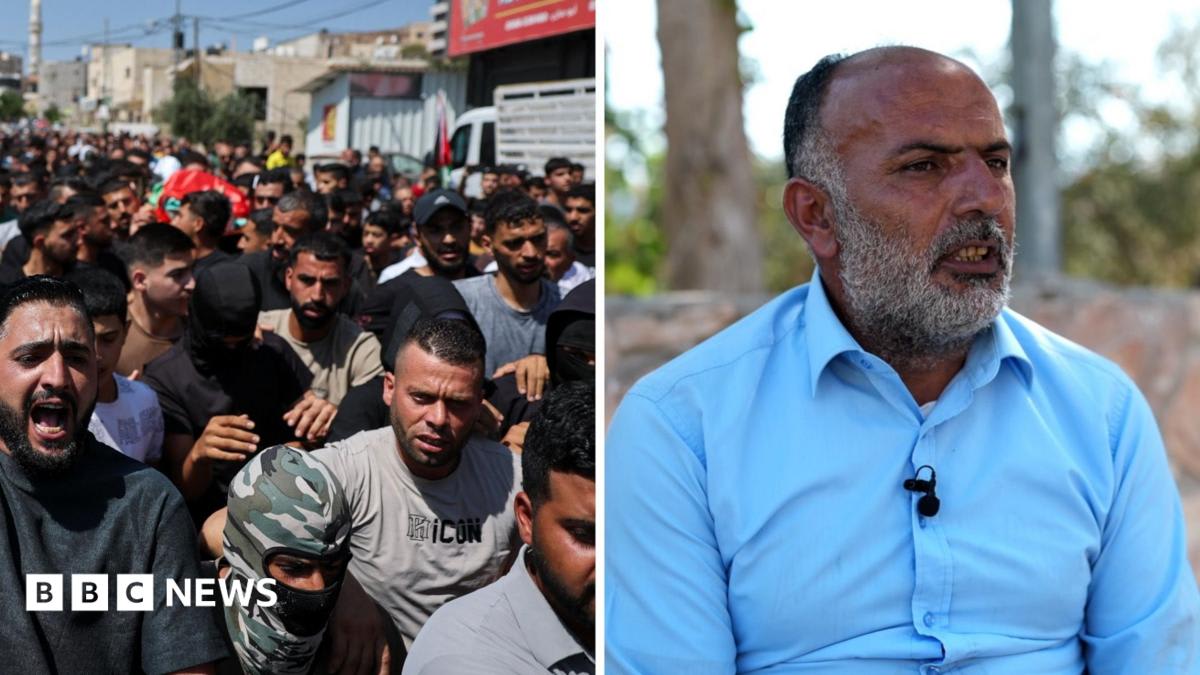
Two Palestinian teenagers, Omar al-Naasan and Khalil Abu Alia, were killed during a violent confrontation in the West Bank village of al-Mughayyir. The incident has intensified concerns over the rising frequency of settler-military incursions and the increasing toll on Palestinian youth.
Escalating Violence in the West Bank: The Deaths of Omar al-Naasan and Khalil Abu Alia
The recent deaths of two Palestinian teenagers, Omar al-Naasan and Khalil Abu Alia, in the village of al-Mughayyir, serve as a harrowing illustration of the deepening instability within the occupied West Bank. The dual loss of these young lives, occurring during an incursion involving both Israeli settlers and military personnel, highlights the precarious reality for Palestinian families living in the region. As families lay their children to rest, the incident has reignited international concerns regarding the cycle of violence that continues to plague the territory.
The Human Cost of Ongoing Conflict
For parents like Mohammed Al-Naasan, the death of his son is not an isolated tragedy but a reflection of a normalized climate of fear. His statement to the BBC—that parents expect their sons to return either injured or dead—underscores a psychological toll that extends far beyond the immediate physical casualties. This resignation to violence points to a systemic breakdown in safety and security for Palestinian civilians, who find themselves caught in a crossfire where the distinction between military operations and settler activity has become increasingly blurred.
Contextualizing the Incursions
Al-Mughayyir, located south of Nablus, has become a flashpoint for what the international community describes as near-daily attacks by Jewish settlers. The presence of both military units and settlers during these incidents creates a volatile environment where the rules of engagement are often unclear or inconsistently applied. The Israeli military has defended its actions by characterizing the victims as "instigators of a violent riot" and has stated that an internal review is currently underway to assess the circumstances of the shooting.
Broader Implications and Statistical Trends
This specific event must be viewed through the lens of a broader, year-long trend of escalating fatalities in the West Bank. According to United Nations data, over 80 Palestinians have been killed by a combination of Israeli security forces and settlers since the beginning of the year. This statistic is alarming, suggesting that 2023 is on track to be one of the deadliest periods in recent history for the Palestinian population in the territory. The frequency of these incidents suggests that the current security framework is failing to prevent the loss of civilian life.
Future Outlook and Accountability
Looking ahead, the situation remains highly fragile. The reliance on internal military reviews to investigate the deaths of civilians often draws criticism from human rights organizations, which argue that such mechanisms lack the necessary transparency and independence to ensure accountability. Without a significant shift in policy or a renewed focus on de-escalation, the trend of recurring violence is likely to continue, further entrenching the cycle of grief and retaliation that defines the current geopolitical landscape in the West Bank.