"I'm Happy, I Wasn't A Fan": Trump On Prince Harry, Meghan Leaving US
Source Entity
NDTV News Search Records Found 1000
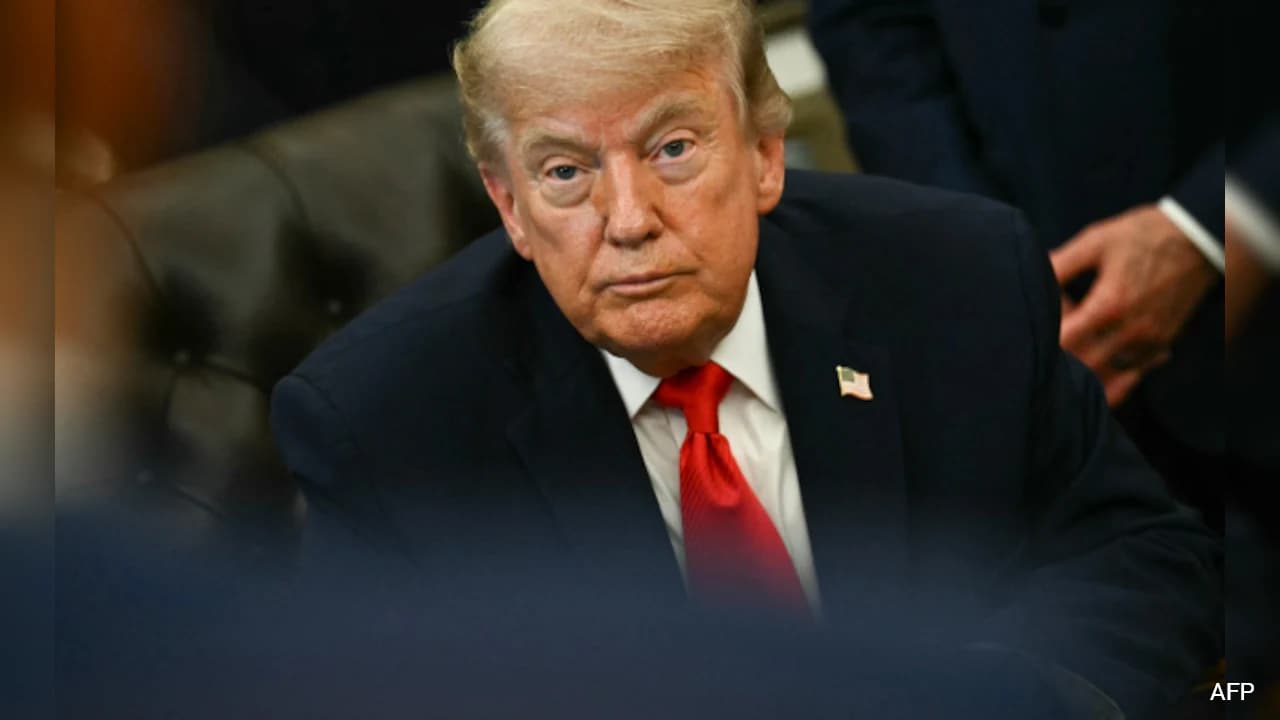
President Donald Trump has expressed satisfaction over Prince Harry and Meghan Markle's return to Britain from the United States. He criticized the couple for their treatment of the Royal Family, stating he would not have welcomed them back.
Assessing the Geopolitical and Social Implications of the Sussex Departure
President Donald Trump has publicly weighed in on the relocation of Prince Harry and Meghan Markle from the United States back to the United Kingdom. His comments, delivered from the Oval Office, reflect a broader pattern of political commentary regarding high-profile figures who navigate the complex intersection of American residency and British royal heritage. By stating he is "happy" about their departure and explicitly confirming he was "not a fan," Trump underscores a clear ideological divide regarding the couple's conduct and their public relationship with the British monarchy.
The Critique of Conduct and Allegiance
The core of Trump’s criticism rests on his perception of how the Duke and Duchess of Sussex have treated the Royal Family. Trump characterized their actions as "terribly disrespectful," a sentiment he has maintained consistently during his public remarks. This critique is significant because it highlights the friction between the couple's desire for privacy and their public challenges to royal institutional norms. Trump’s assertion that he "would not have taken them back" if he were in the position of the monarchy suggests a rigid view of traditional institutional loyalty that contrasts sharply with the couple's modern, independent approach.
Historical Context of Royal-Political Relations
Trump’s commentary is framed by his own personal history with the British establishment. He explicitly referenced his "very good relationship" with the late Queen Elizabeth II and his long-standing acquaintance with King Charles III. By positioning himself as a defender of these figures and their legacy, Trump leverages his personal diplomatic history to lend weight to his criticisms of Harry and Meghan. This creates a narrative where the couple's departure is not merely a logistical move, but a necessary correction for the perceived slights against the institution of the British throne.
The Impact of Six Years in the United States
The couple's return to Britain follows a six-year tenure in the United States, a period marked by significant media scrutiny and cultural debate. Their initial move to the U.S. was framed as a pursuit of independence and a desire to shield their children from the pressures of royal life. However, their eventual decision to seek a closer connection between their children and the Royal Family suggests a shift in their long-term strategy. Trump’s reaction reflects the polarizing nature of their presence in the U.S., where public opinion has often been split between those who support their independence and those who view their public statements as a breach of duty.
Future Trends and Institutional Stability
Looking forward, the return of Harry and Meghan to the UK represents a pivotal moment for the monarchy's public image. As the Royal Family navigates a new era under King Charles, the presence of the Sussexes—and the public discourse surrounding them—remains a factor in royal stability. Trump’s blunt assessment serves as a reminder that the couple's actions continue to be subject to international political scrutiny. The long-term success of their reintegration into the British sphere will likely depend on their ability to reconcile their private lives with the expectations of the institution they previously stepped away from.
Conclusion
Ultimately, President Trump’s remarks serve as a definitive statement on the perceived discord between the Sussexes and the British monarchy. By aligning himself with the traditional values of the Royal Family and openly criticizing the couple's past actions, Trump has cemented his role as a vocal observer of this international drama. As the couple transitions back to British life, the echoes of this debate are likely to persist, highlighting the ongoing tension between modern personal autonomy and traditional institutional legacy.
Verification Required?