'Police whose job is to provide security is making women feel threatened': Priyanka
Source Entity
PRIYANKA JAISWAL
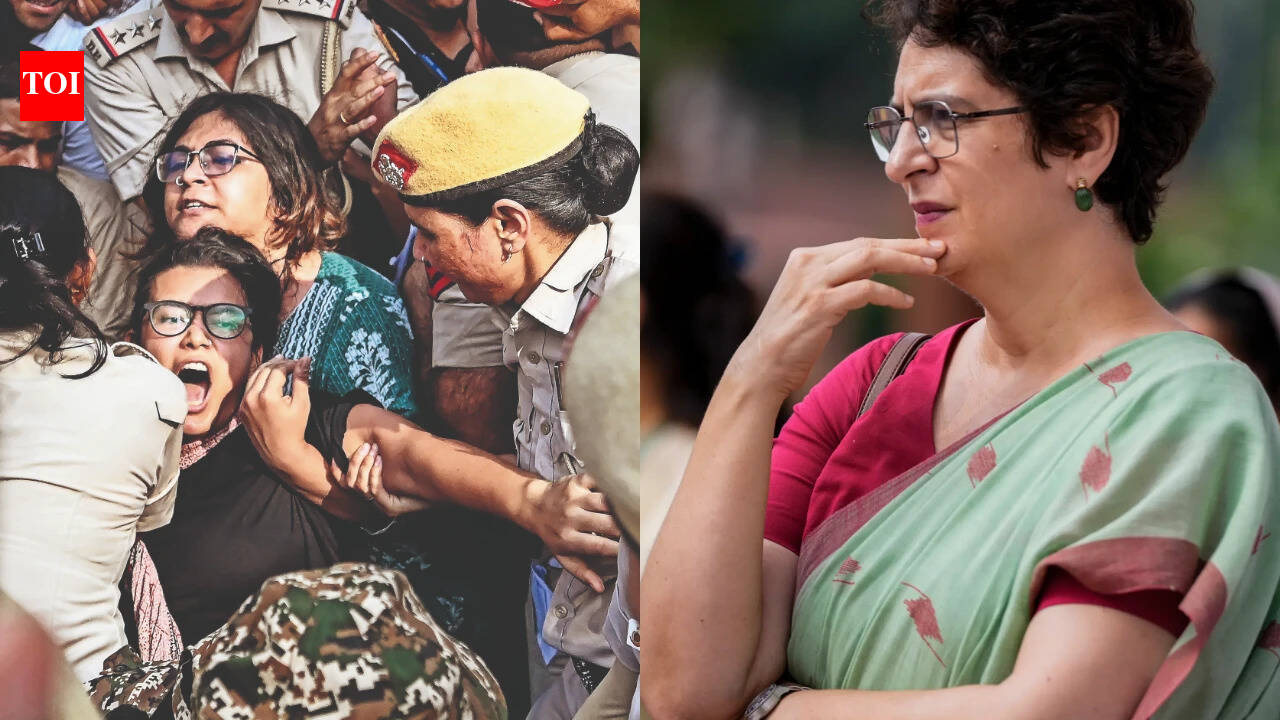
Priyanka Gandhi Vadra has criticized the Delhi Police over their conduct toward women protesters at Jantar Mantar. She alleged that the force, intended to provide security, has instead become a source of intimidation for women.
The Crisis of Trust: Priyanka Gandhi on Jantar Mantar
Recent statements made by Priyanka Gandhi Vadra regarding the incidents at Jantar Mantar have ignited a significant debate concerning the role of law enforcement in the context of public dissent. By asserting that the police, whose primary mandate is the protection of citizens, are instead fostering an environment of fear for women, Gandhi has brought the intersection of gender security and state authority to the forefront of national political discourse.
The Role of Law Enforcement in Democratic Protest
At the heart of this controversy lies the fundamental expectation that police forces act as neutral facilitators of democratic expression. When state agencies are perceived as instruments of intimidation, the resulting erosion of public trust can have long-term consequences for civil society. The Jantar Mantar location, historically a hub for peaceful agitation in the capital, serves as a litmus test for how the state manages public grievance. When the security apparatus is accused of threatening those it is sworn to protect, the legitimacy of the institutional response is immediately questioned.
Gendered Vulnerability in Public Spaces
Gandhi’s critique specifically highlights the gendered dimension of police interaction. For women, the presence of security forces is intended to act as a safeguard against harassment or violence. However, when the police themselves are accused of creating a threatening atmosphere, it exacerbates the systemic vulnerability that women face when engaging in public or political activities. This narrative suggests a failure in the sensitization and training of personnel tasked with managing sensitive protest sites.
Historical Context and Institutional Accountability
Historically, Jantar Mantar has been the site of numerous protests where police intervention has occasionally drawn sharp criticism from civil rights groups. The recurring nature of these complaints suggests a deeper issue regarding the rules of engagement and the accountability of the Delhi Police. The reliance on heavy-handed tactics often fails to address the underlying issues of the protesters, shifting the focus from the cause of the agitation to the conduct of the authorities themselves.
Future Implications and Policy Trends
Looking forward, this incident will likely pressure the administration to review its standard operating procedures for handling protests involving women. There is an increasing demand for gender-neutral or female-led policing units at protest sites to mitigate the risks of intimidation and ensure that the right to peaceful assembly is upheld without fear. As political rhetoric intensifies, the necessity for a transparent, non-partisan approach to public safety will become a critical metric for evaluating the effectiveness of the police force in a democratic setup.