'Will bury a dictator': Uddhav, Raj Thackeray lead Mumbai rally protest against SIR
Source Entity
AADRITA HALDER
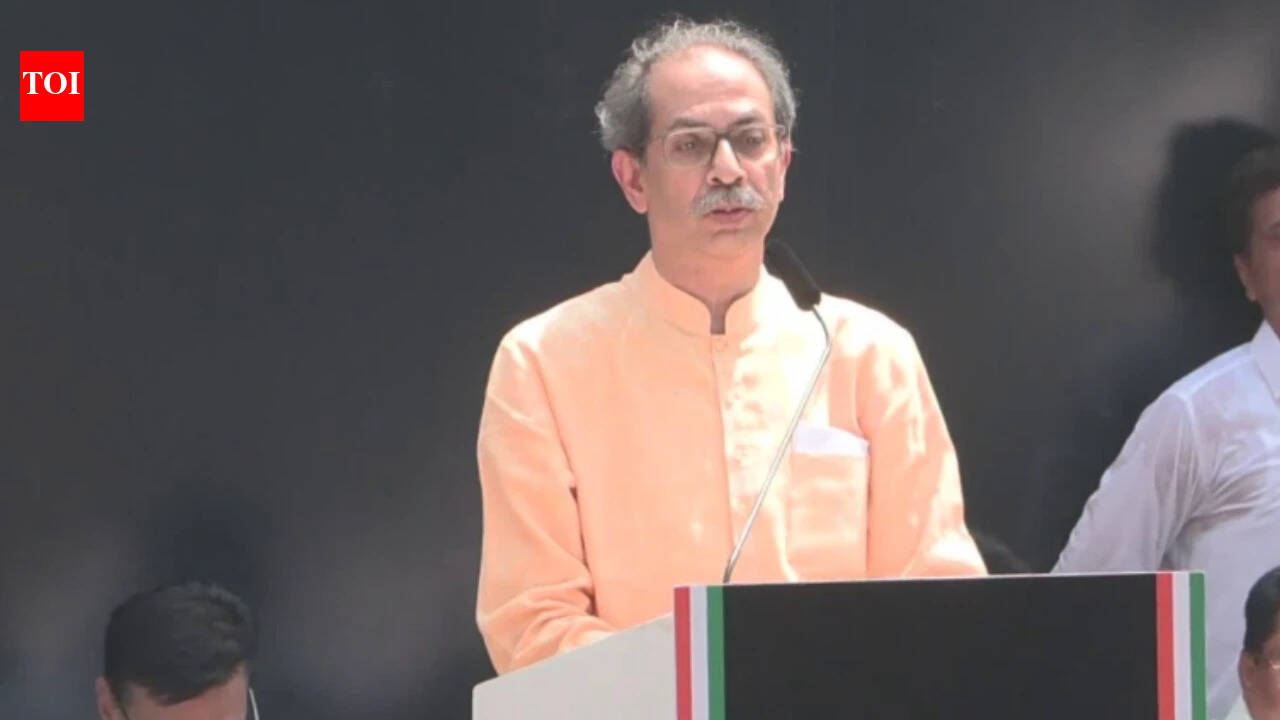
Shiv Sena (UBT) leader Uddhav Thackeray and MNS chief Raj Thackeray held a joint protest in Mumbai against Chief Election Commissioner Gyanesh Kumar. The leaders voiced strong opposition, framing the current political climate as a struggle against perceived dictatorial tendencies.
The Mumbai Protest: A Rare Unified Front
In a highly unusual display of political unity, Shiv Sena (UBT) chief Uddhav Thackeray and Maharashtra Navnirman Sena (MNS) chief Raj Thackeray joined forces in Mumbai this Sunday. The leaders led a protest march directed against the Chief Election Commissioner (CEC), Gyanesh Kumar, signaling a significant escalation in the tensions between regional political factions and the national electoral authority.
The Rhetoric of Resistance
The core of the protest focused on the sharp critique leveled by Uddhav Thackeray, who famously declared that the 'Make in India' initiative cannot serve as a cover for 'manufacturing a dictator.' This rhetoric underscores a deepening anxiety among opposition leaders regarding the concentration of power and the integrity of democratic institutions. By linking economic slogans to governance concerns, the leaders aimed to mobilize public sentiment against what they characterize as an authoritarian shift in the current administrative landscape.
Institutional Scrutiny and Electoral Tensions
The protest specifically targets the leadership of the Election Commission of India, represented by CEC Gyanesh Kumar. Such public demonstrations against the head of an constitutional body are indicative of a volatile political environment where the neutrality and operational transparency of election oversight are under intense public and political scrutiny. The demand for the cancellation of certain unspecified actions or policies suggests a breakdown in the traditional consensus between political parties and the electoral watchdog.
Broader Implications for Maharashtra Politics
Beyond the national implications, the joint appearance of the Thackeray cousins is a milestone in Maharashtra's fractured political history. Historically divided by ideology and organizational rivalry, their collaboration suggests that the current political discourse has reached a point of urgency that supersedes past grievances. This alliance could potentially reshape the electoral arithmetic in the state, providing a more cohesive voice for the opposition as they navigate upcoming challenges.
Future Trends and Democratic Stability
The trend of utilizing public rallies to challenge institutional appointments or actions points toward an increasingly polarized future. As political parties continue to bring their grievances from the legislative floor to the streets, the pressure on constitutional bodies to maintain absolute impartiality will only intensify. Whether this protest leads to substantive policy changes or remains a symbolic act of defiance, it highlights the fragility of institutional trust in the current Indian political climate.
Conclusion
The Mumbai rally led by Uddhav and Raj Thackeray serves as a potent reminder of the power of political theater in democracy. By centering their protest on the personage of the Chief Election Commissioner, the opposition has signaled that the battle for India's democratic framework is moving into a new, more confrontational phase. The coming months will determine if this unified opposition can sustain its momentum or if the rally was merely a temporary alignment of interests.