Profiling TorchNeuron (Part 1): System-level profiling on AWS Trainium.
Source Entity
Hugging Face - Blog
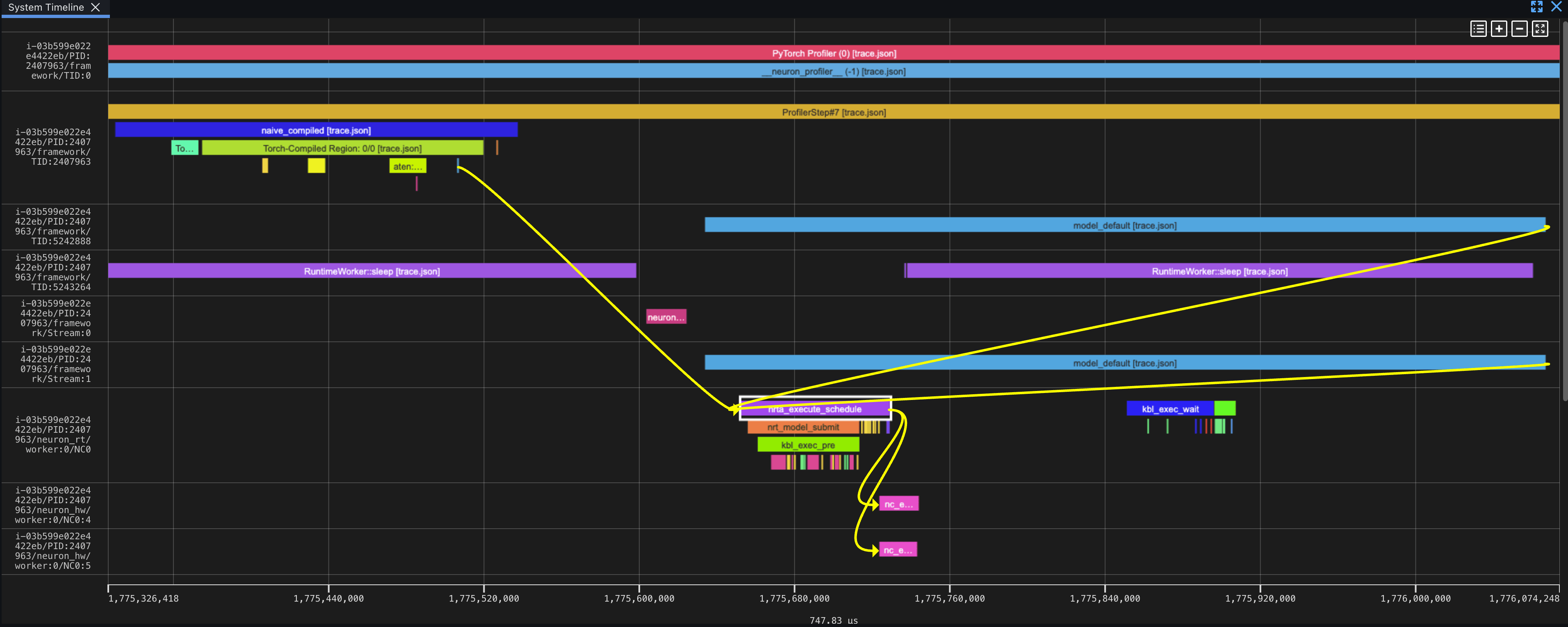
This guide introduces system-level profiling on AWS Trainium using TorchNeuron. It provides ML practitioners with the tools to identify performance bottlenecks in deep learning inference workflows.
Understanding System-Level Profiling on AWS Trainium
In the rapidly evolving field of machine learning, the ability to optimize model performance is a critical skill. While many practitioners possess an intuitive grasp of how to accelerate models, there is a significant knowledge gap regarding the systematic analysis of performance bottlenecks. The introduction of 'Profiling TorchNeuron (Part 1)' seeks to bridge this divide by providing a structured methodology for identifying exactly where latency originates during inference.
The Role of Specialized Hardware
AWS Trainium stands as a purpose-built AI chip designed specifically to handle the rigors of deep learning training and inference. Unlike general-purpose hardware, Trainium is engineered to maximize throughput and minimize power consumption for large-scale neural network workloads. By focusing on this hardware, the guide acknowledges that modern AI performance is no longer just about software algorithms, but about the tight integration between specialized silicon and the underlying software stack.
TorchNeuron: Bridging PyTorch and Silicon
At the heart of this optimization effort is TorchNeuron, an open-source native PyTorch backend. Its primary value proposition lies in its ability to support standard PyTorch workflows—including eager execution and torch.compile—without requiring extensive code refactoring. This low barrier to entry is essential for teams looking to migrate existing infrastructure to more efficient hardware without disrupting their established development pipelines.
Granular Control with NKI
Beyond standard API support, TorchNeuron integrates with the Neuron Kernel Interface (NKI). This integration is a pivotal feature for advanced practitioners, as it allows for the creation of custom operators. By utilizing NKI, developers can extract maximum performance from Trainium by tailoring operations specifically to the chip's architecture, thereby addressing unique workload requirements that standard libraries might overlook.
The Path Toward Optimized Inference
Systematic profiling, as presented in this guide, is the first step toward building production-grade AI systems. By teaching practitioners how to start from scratch, the series demystifies the 'black box' of inference latency. As AI models continue to grow in complexity, the ability to pinpoint whether a delay is caused by data movement, compute constraints, or kernel overhead will remain a foundational requirement for any machine learning engineer.
Conclusion
In summary, the transition from intuitive guessing to data-driven performance analysis is essential for the future of scalable AI. By leveraging AWS Trainium and the comprehensive toolset provided by TorchNeuron, practitioners can ensure their models are not just functional, but highly efficient. This systematic approach represents a necessary evolution in how we build and deploy the next generation of deep learning applications.