Pune woman dies after temporary structure at Dahi Handi event collapses
Source Entity
The Indian Express
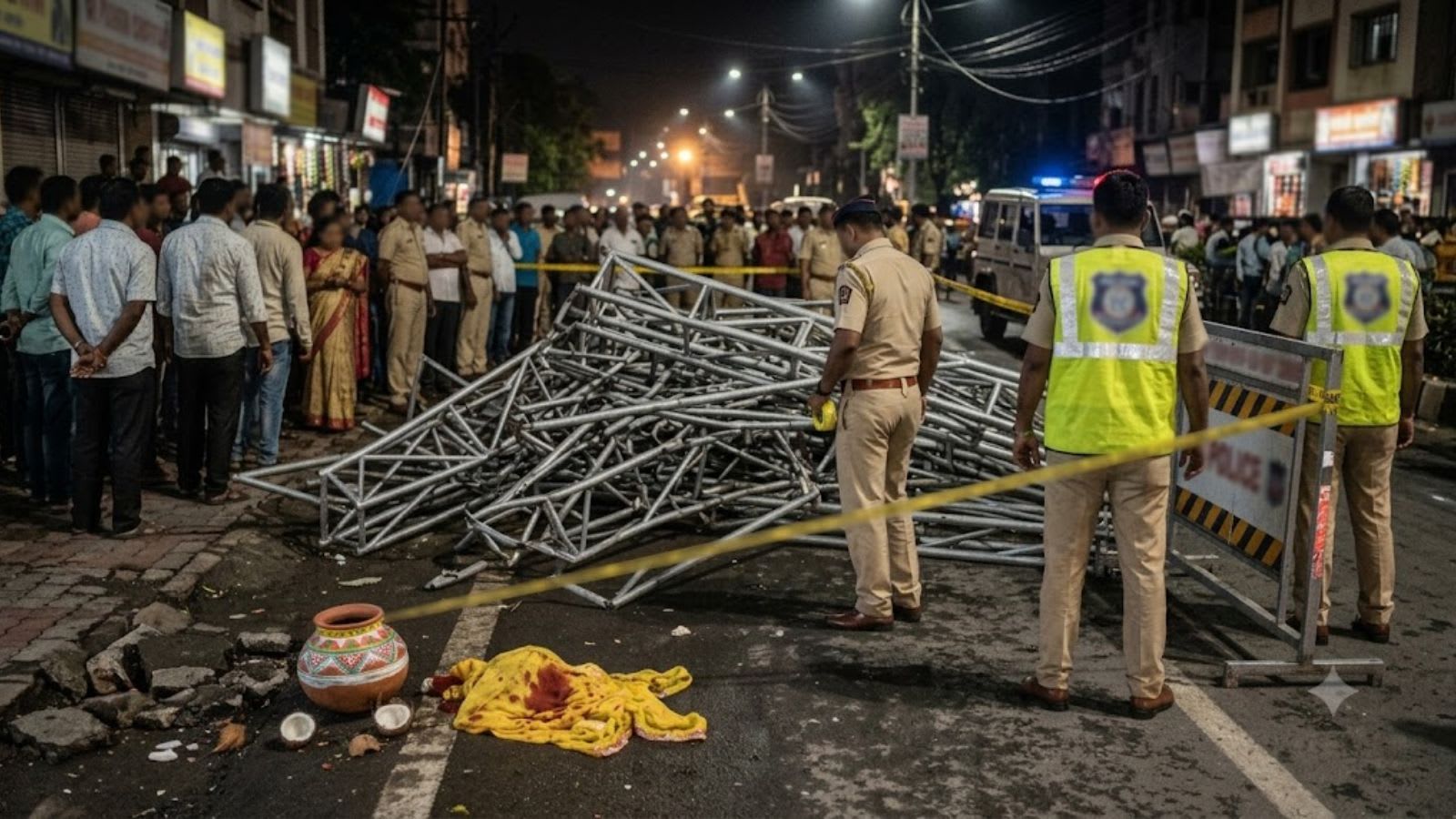
A 45-year-old woman, Salma Salauddin Pathan, died in Pune after a metallic structure used for Dahi Handi celebrations collapsed on her. Local police are investigating the incident, which occurred during the dismantling of the structure following the Janmashtami festivities.
Tragic Structural Collapse During Dahi Handi Celebrations in Pune
A somber incident occurred in the Pimpri Chinchwad area of Pune this past Friday night, where a 45-year-old woman, identified as Salma Salauddin Pathan, lost her life following the collapse of a temporary metallic structure. The structure had been erected to facilitate Dahi Handi celebrations, a vibrant and widely celebrated aspect of the Janmashtami festival in Maharashtra. While these events are traditionally marked by communal joy and athletic fervor, this tragic occurrence highlights the significant safety risks associated with the assembly and dismantling of large-scale temporary infrastructure in public spaces.
The Incident Details
According to official statements from the Pimpri Chinchwad police, the incident took place around 10:00 PM. The victim, a resident of Juni Sangvi, was standing in the immediate vicinity of the structure when the accident occurred. Deputy Commissioner of Police (Zone 1) Sandeep Atole reported that workers were in the process of taking down the metal truss when a section unexpectedly gave way. The resulting impact caused critical head injuries to Pathan, who was subsequently rushed to a nearby hospital, where medical professionals ultimately pronounced her dead.
Safety Protocols and Urban Risks
This incident brings into sharp focus the urgent need for rigorous safety audits during the planning and execution of public festivals. Dahi Handi events often involve the construction of complex, high-reaching metallic scaffolding to support the human pyramids that define the tradition. However, the period of dismantling is often treated with less procedural scrutiny than the construction phase. The collapse of a truss during the breakdown phase suggests a potential failure in load-bearing management or a lack of secure perimeter control to protect bystanders from falling debris.
Broader Implications for Public Safety
In densely populated urban centers like Pune, the use of temporary structures in public thoroughfares is common during major religious and cultural festivals. The reliance on heavy metal trusses requires not only expert engineering but also strict adherence to site safety protocols, including the establishment of clear exclusion zones. The death of Salma Salauddin Pathan serves as a grim reminder that bystander safety must be prioritized during every phase of event management, particularly when heavy machinery or structural components are being manipulated in proximity to the public.
Future Trends and Regulatory Needs
Looking forward, it is likely that local municipal and police authorities will face mounting pressure to introduce more stringent permitting processes for temporary festive structures. This could include mandatory structural integrity certifications, the presence of safety engineers during both assembly and dismantling, and the enforcement of stricter cordoning requirements to prevent public access near hazardous zones. As festivals continue to grow in scale, the intersection of cultural celebration and public infrastructure safety must be managed with a focus on preventative measures to ensure that such avoidable tragedies do not recur.
Conclusion
While the Dahi Handi tradition remains a cornerstone of cultural identity in Maharashtra, the tragic loss of life in Pimpri Chinchwad underscores a critical vulnerability in how temporary event infrastructure is handled. The ongoing police investigation into the collapse will be vital in determining whether procedural lapses or mechanical failure contributed to this outcome. Ultimately, the preservation of life must be the guiding principle in the management of all public celebrations, necessitating a proactive shift toward safer, more regulated festive environments.