Rahul Gandhi attacks government, RSS over students’ protest in Lok Sabha
Source Entity
India Latest News: Top National Headlines Today & Breaking News | The Hindu
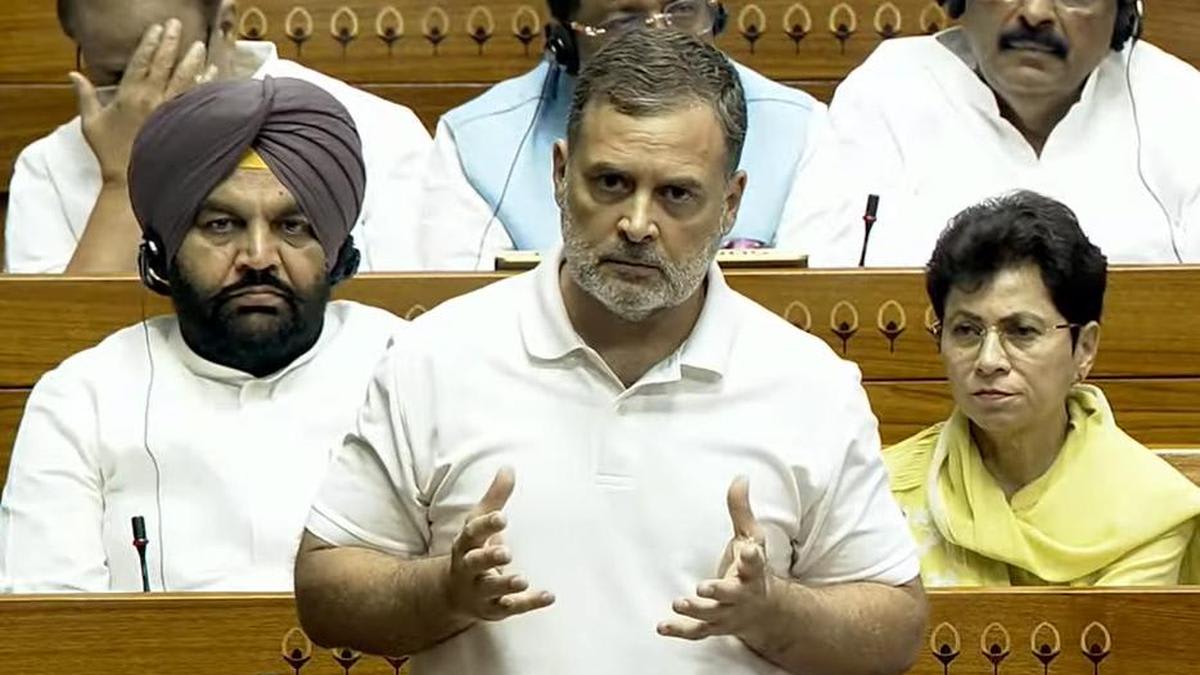
Rahul Gandhi's accusation that Amit Shah ordered police to fire on students has sparked a major standoff in the Lok Sabha. The BJP has demanded an apology, asserting that such operational decisions are handled by local authorities, not government ministers.
Parliamentary Standoff: Rahul Gandhi’s Allegations and the Government’s Rebuttal
The Core Allegation
During the recent Lok Sabha session focused on the anti-paper leak Bill, Leader of the Opposition Rahul Gandhi leveled a grave accusation against Union Home Minister Amit Shah. Gandhi claimed that the Home Minister personally ordered the use of force, specifically the use of pellet guns, against students participating in a protest march to Parliament on July 20. This explosive charge has significantly heightened tensions between the Treasury benches and the Opposition, bringing the conduct of law enforcement during student protests to the center of national political discourse.
The Government’s Defense
In response, Parliamentary Affairs Minister Kiren Rijiju launched a sharp critique of Gandhi’s remarks, labeling them as both misleading and unparliamentary. Rijiju emphasized that the government was deeply dissatisfied, primarily because he felt Gandhi failed to address the substance of the anti-paper leak legislation. More importantly, the government clarified the administrative chain of command, asserting that ministers do not issue orders for police firing. According to Rijiju, such operational decisions lie strictly within the jurisdiction of the magistrate or Sub-Divisional Magistrate (SDM) present at the protest site.
Evidence and Escalation
The controversy is further fueled by a reported entry in the Parliament Street police station’s diary, which allegedly confirms the use of pellet guns during the crackdown on the July 20 protest. This documentation has emboldened the Opposition to continue its offensive against the Narendra Modi-led administration. The protests, which originated from concerns over paper leaks and were marked by significant student agitation at Jantar Mantar, have become a focal point for the Opposition to challenge the government's handling of civil unrest.
The Institutional Conflict
This event highlights a deeper institutional friction regarding the separation of political oversight and law enforcement operations. By demanding an apology, the BJP seeks to protect the Home Ministry from direct accountability for tactical field decisions, arguing that Gandhi’s claims misrepresent the constitutional and legal framework governing police conduct. Conversely, the Congress party maintains its stance, refusing to retract the allegations and focusing on the human impact of the crackdown on students.
Broader Implications and Future Trends
This confrontation marks a significant escalation in the ongoing monsoon session of Parliament. As the government attempts to push through critical legislation like the anti-paper leak Bill, the political atmosphere remains fragile. Future trends suggest that the Opposition will likely continue to leverage such incidents to scrutinize the government's policy on public dissent. Meanwhile, the ruling party is expected to continue its strategy of demanding proof for every allegation, setting the stage for a prolonged period of legislative gridlock and intense parliamentary scrutiny regarding the balance of power between elected officials and administrative authorities.
Verification Required?