Roman emperor's headless torso sells for $34.26m, up from $7.36m in 2010
Source Entity
TOI LIFESTYLE DESK
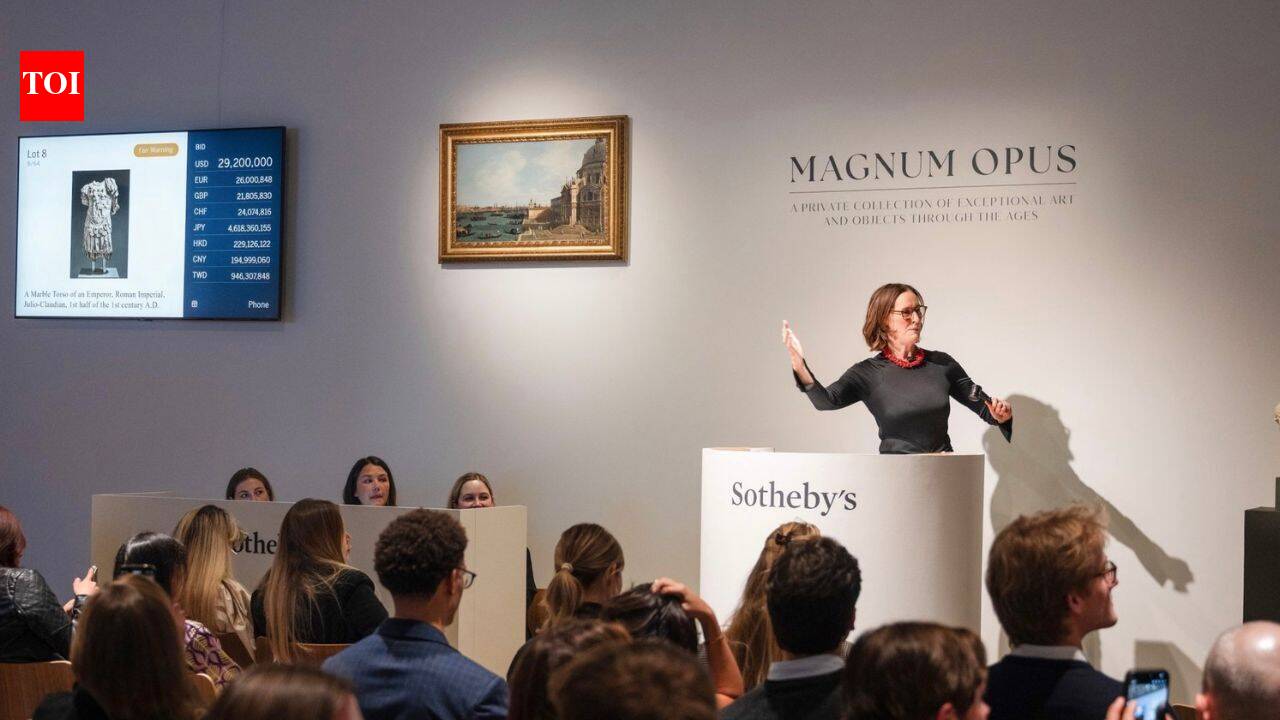
A 2,000-year-old marble torso of a Roman emperor sold for a record-breaking $34.26 million at Sotheby's. This significant increase from its $7.36 million 2010 valuation highlights the growing global market for high-end antiquities.
A Landmark Sale in the Antiquities Market
The recent auction of a nearly 2,000-year-old headless marble torso of a Roman emperor at Sotheby's New York has sent shockwaves through the art world. Fetching a staggering $34.26 million, the sculpture not only shattered expectations but also set a new benchmark for Roman antiquities sold at public auction. This event, occurring during the prestigious Magnum Opus evening auction on October 21, 2026, underscores the intense competition among elite collectors for artifacts of immense historical and cultural significance.
Historical Context and Artistic Significance
This marble torso is more than a mere relic; it represents the pinnacle of Roman imperial iconography. Historically, such sculptures were commissioned to immortalize the military honor and divine connection of the ruling elite. By stripping away the head, the focus remains entirely on the masterful craftsmanship of the musculature and the intricate detailing of the imperial regalia or armor. The piece serves as a physical bridge to an era where art was a primary vehicle for political propaganda and the deification of leadership.
Provenance and Institutional Validation
One of the primary drivers of this sculpture's value is its impeccable provenance and its history of public display. Following its initial sale in 2010 for $7.36 million, the piece was not sequestered in a private vault but was instead showcased in several major museums across the United States. This institutional validation is crucial in the world of antiquities; it provides a level of legitimacy and academic exposure that significantly bolsters the market value of an item when it eventually returns to the auction block.
Market Dynamics and Investor Appetite
The leap in value from $7.36 million to $34.26 million in just over 15 years reflects a broader trend in the high-end art market: the increasing scarcity and desirability of top-tier ancient antiquities. According to reports, five dedicated collectors competed for the torso, demonstrating that despite economic fluctuations, there remains a robust appetite for rare, historically significant assets. This competitive bidding war serves as a barometer for the health of the antiquities sector.
Future Implications for the Art World
This record-breaking sale will likely encourage other private owners of high-quality Roman art to bring their pieces to market. It reinforces the status of Roman antiquities as blue-chip investments, comparable to contemporary masterpieces. However, it also raises questions regarding the future of public access to such items. As prices continue to climb, the ability of public museums to acquire or even borrow such treasures becomes increasingly complex, potentially shifting these icons further into the realm of exclusive private ownership.
Conclusion
The sale of this Roman torso is a watershed moment in the history of the art market. By transcending its previous valuation by such a wide margin, the piece has cemented its place as a trophy asset. As it moves into its next chapter, the sculpture remains a testament to the enduring fascination with the Roman Empire and the timeless power of classical art to command global attention and record-breaking financial commitment.