Watch: Russia strikes Ukraine with a 3,000 kg bomb amid escalating conflict
Source Entity
TOI DEFENCE DESK
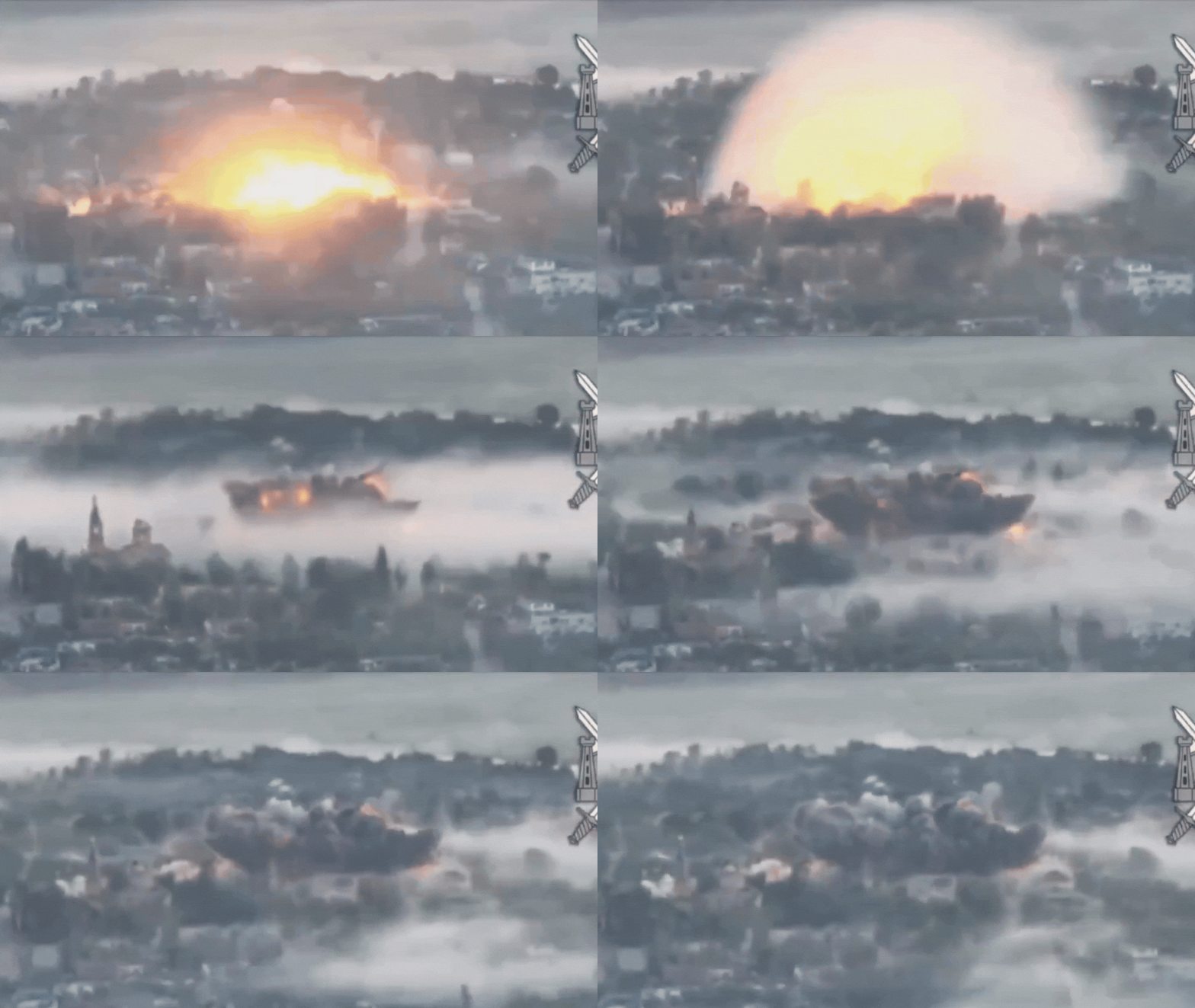
Russia has deployed a massive 3,000 kg FAB-3000 glide bomb in Ukraine's Zaporizhzhia region, signaling a tactical escalation. In response, Ukraine has intensified drone and maritime attacks deep within Russian territory, while European nations are forming a new air-defense coalition to counter ballistic missile threats.
Analysis of Escalating Kinetic Warfare: The FAB-3000 and the European Strategic Response
The Tactical Shift: Russia's Deployment of Heavy Munitions
The recent release of footage showing a FAB-3000 glide bomb strike in the Zaporizhzhia region marks a significant escalation in the intensity of Russian aerial bombardments. The FAB-3000 is one of the largest non-nuclear bombs in the Russian arsenal, and its conversion into a 'glide bomb'—adding aerodynamic wings and GPS guidance—allows Russian aircraft to release these massive payloads from a distance, staying outside the immediate reach of many Ukrainian short-to-medium range air defense systems. This tactical shift indicates a move toward 'saturation' and 'destruction' strategies, where the sheer kinetic energy and blast radius of a 3,000 kg munition are used to demolish fortified Ukrainian positions that are otherwise resistant to standard artillery.
Ukrainian Asymmetric Response: Deep-Strike Operations
In direct contrast to Russia's reliance on heavy, static-target destruction, Ukrainian forces have intensified their use of asymmetric warfare. By ramping up drone and maritime attacks deep inside Russian territory, Kyiv is attempting to shift the cost of the war back onto the Russian mainland. These operations target logistics hubs, oil refineries, and naval assets, aiming to disrupt the Russian supply chain and force the Kremlin to divert air defense resources away from the front lines in Zaporizhzhia and Donbas. This 'deep-strike' strategy is a calculated effort to degrade Russia's economic and military capacity while demonstrating that Russian borders are not impenetrable.
European Strategic Realignment and Air Defense
The announcement of a European air-defense coalition to develop a ballistic missile defense system reflects a growing recognition among EU nations that the conflict has broader security implications for the entire continent. The use of heavy glide bombs and ballistic missiles by Russia has exposed gaps in current regional defense architectures. By pooling resources and technology, European nations are moving toward a more integrated defense posture, reducing reliance on a single provider and ensuring that the airspace of neighboring states is protected against the very types of munitions currently being deployed in Ukraine. This coalition represents a pivot from temporary aid to long-term strategic infrastructure.
Symbolic Resolve: France and the European Front
France's celebration of its national day, coupled with a showcase of military strength, serves as a potent diplomatic signal. Beyond the ceremonial aspects, the emphasis on support for Ukraine during these celebrations underscores France's role as a leading military power within the EU. By linking national pride with the defense of Ukrainian sovereignty, France is reinforcing the narrative that the conflict is not merely a regional dispute but a struggle for European stability. This symbolic gesture provides the political cover necessary to continue supplying high-end weaponry and supporting the aforementioned air-defense coalitions.
The Cycle of Retaliation and Future Trends
The current environment is characterized by a dangerous 'tit-for-tat' cycle. Russia's vow of retaliation against Ukrainian deep-strikes, paired with the deployment of the FAB-3000, suggests that the threshold for what constitutes an 'acceptable' escalation is continuously shifting. Looking forward, we can expect an arms race in precision-guided munitions and electronic warfare. Russia will likely continue to iterate on its glide-bomb technology to bypass defenses, while Ukraine will likely seek more sophisticated long-range capabilities to maintain its pressure on Russian soil.
Conclusion: A Precarious Equilibrium
Ultimately, the events in Zaporizhzhia and the subsequent international reactions highlight a conflict that is evolving in complexity. The interplay between Russia's massive firepower, Ukraine's agile asymmetric strikes, and Europe's systemic defense upgrades creates a precarious equilibrium. While the FAB-3000 demonstrates Russia's ability to inflict massive localized damage, the formation of a European missile defense coalition suggests that the West is preparing for a protracted era of high-intensity aerial threats, ensuring that the strategic landscape remains volatile for the foreseeable future.