Delhi HC abates Sajjan Kumar’s appeal against conviction in 1984 riots case following his death
Source Entity
India Latest News: Top National Headlines Today & Breaking News | The Hindu
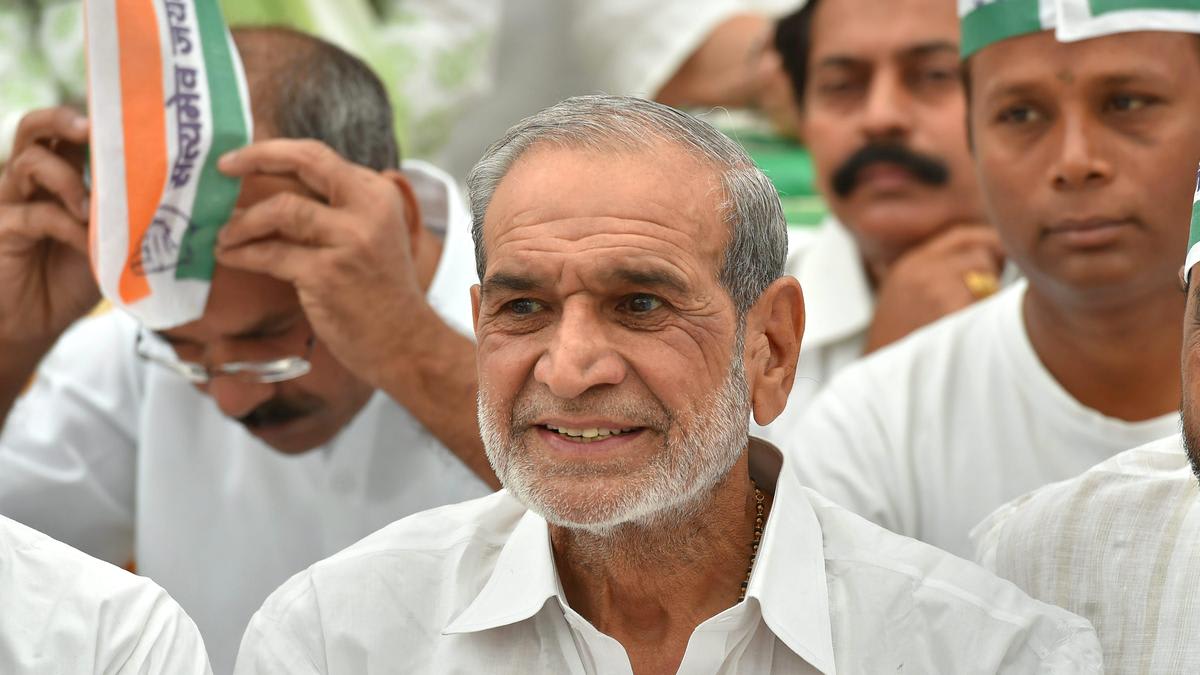
The Delhi High Court has abated the appeal of convicted 1984 anti-Sikh riots figure Sajjan Kumar following his death in Tihar jail. The legal closure coincides with political controversy surrounding public tributes paid to him by a sitting Congress MP.
The Legal and Political Aftermath of Sajjan Kumar's Death
Judicial Abatement of a Landmark Case
On August 25, 2026, the Delhi High Court officially closed the appeal filed by former Congress MP Sajjan Kumar against his conviction for his role in the 1984 anti-Sikh riots. A division bench comprising Justices Prathiba M. Singh and Vikas Mahajan ruled that the legal proceedings must abate following Kumar's death on August 20, 2026. This judicial decision marks the formal end of a protracted legal battle concerning the gruesome murders of Jaswant Singh and his son, Tarundeep Singh, in Saraswati Vihar on November 1, 1984.
The Historical Weight of the 1984 Riots
The 1984 anti-Sikh riots remain a deeply traumatic chapter in Indian history, triggered by the assassination of Prime Minister Indira Gandhi on October 31, 1984, by her Sikh bodyguards. The subsequent violence in Delhi led to widespread loss of life and property, leaving a legacy of communal tension that has persisted for over four decades. The conviction of Sajjan Kumar in February 2025—resulting in two life sentences—was seen by many as a long-awaited, albeit delayed, pursuit of justice for the victims' families.
The Controversy of Political Tributes
Despite the gravity of his conviction, the death of Sajjan Kumar has sparked a secondary controversy within the political sphere. A sitting Congress MP issued a public tribute, describing Kumar's passing as an "irreparable loss" and praising his "bond with the people of Delhi." This statement has drawn intense scrutiny, as it characterizes a man convicted of orchestrating communal violence as an exemplary figure, effectively clashing with the judicial findings of his guilt.
The Failure of Accountability and Apology
The incident highlights a recurring failure in the Indian political landscape regarding the handling of sensitive historical grievances. By choosing to eulogize a convicted figure in the 1984 riots, the MP in question has reignited debates regarding the Congress party's historical stance on the riots. The inability to distinguish between political loyalty and the moral imperative to condemn communal violence suggests a disconnect between political rhetoric and the judicial reality of the crimes committed.
Broader Implications for Political Discourse
The intersection of the High Court's abatement and the controversial tribute serves as a case study in the struggle for closure in post-conflict societies. While the legal system has reached a technical finality, the social and political wounds remain open. The incident suggests that future political discourse will continue to be haunted by the specter of 1984, as long as party leaders prioritize personal or factional ties over the acknowledgment of proven human rights abuses.
Conclusion: A Legacy of Unresolved Tensions
The abatement of Sajjan Kumar's appeal represents the conclusion of a specific legal chapter, but the reaction to his death underscores that the broader issue remains unresolved. The persistence of such tributes suggests that until there is a clear, institutionalized rejection of those involved in the 1984 violence, the cycle of political controversy and public outrage is unlikely to dissipate. The legacy of these riots will continue to influence Indian politics, serving as a reminder of the fragility of justice when confronted with entrenched political interests.
Verification Required?