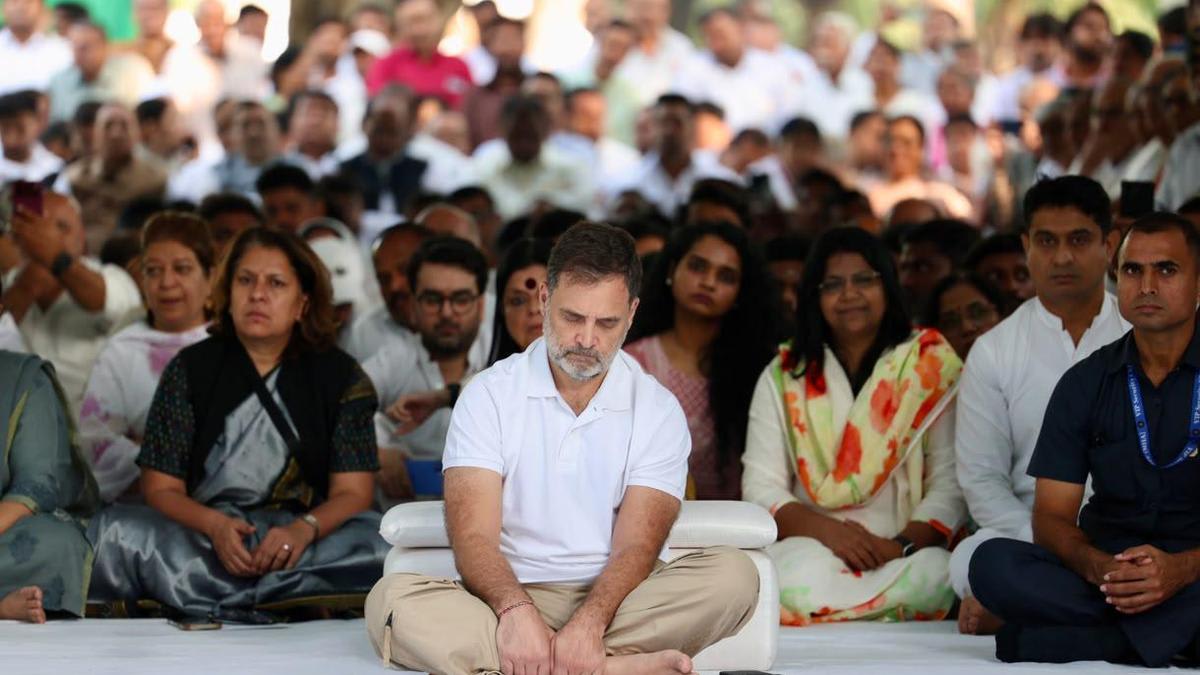
Rahul, Priyanka remember Indira Gandhi on her death anniversary
Source Entity
India Latest News: Top National Headlines Today & Breaking News | The Hindu
Sardar Vallabhbhai Patel's enduring legacy as the architect of modern India and Ahmedabad is honored through national tributes and historical reflection. His foundational contributions to municipal governance and national unification continue to be celebrated by current leadership.
The Lasting Legacy of the Iron Man of India
Sardar Vallabhbhai Patel remains a monumental figure in Indian history, often remembered for his role in unifying the nation. The recent tributes paid by Prime Minister Narendra Modi and Home Minister Amit Shah, who honored Patel as the 'Architect of Akhand Bharat' (United India), underscore his continued relevance in the contemporary political discourse. These commemorations, particularly at the Statue of Unity, highlight the transition of Patel’s memory from a historical figure to a cornerstone of modern national identity.
The Municipal Foundation in Ahmedabad
Beyond his national achievements, Patel’s impact on local governance in Ahmedabad was profound. On his 76th birthday, October 31, 1950, Patel addressed a massive crowd of over two lakh people near Lal Darwaja. This event was particularly significant as it occurred 22 years after he had stepped down as the president of the Ahmedabad municipality. During his tenure, he played a critical role in transforming the city’s administrative framework, setting the stage for its eventual evolution into a municipal corporation.
Selflessness and Public Service
Patel’s character was perhaps best illustrated by his reaction to the overwhelming generosity of the citizens of Ahmedabad. During that final speech in 1950, the public gifted him Rs 15 lakh in appreciation of his service. In a move characteristic of his dedication to public welfare, Patel immediately donated the entire sum to the Gujarat Provincial Congress Committee, mandating that the funds be utilized for public works. This gesture solidified his reputation as a leader who prioritized the needs of the collective over personal gain.
Historical Commemoration and Continuity
The site near Lal Darwaja holds deep historical significance. By December 1959, the location was further consecrated when then-President Rajendra Prasad unveiled a statue of Patel, which was subsequently developed into a municipal garden. This act of memorialization serves as a physical bridge between the post-independence era and the present day, mirroring the current government’s efforts to honor Patel’s contributions on a grander scale.
Broader Implications and Future Trends
As India continues to celebrate Patel’s 151st birth anniversary, the focus remains on his vision of a cohesive, unified nation. The recurring tributes from top-level leadership suggest that Patel’s ideology of 'Akhand Bharat' will continue to be a central pillar of India's political narrative. Future trends indicate that the government will continue to emphasize the 'Statue of Unity' as a focal point for national pride, ensuring that the foundational work laid by Patel in both local municipal governance and national integration remains etched in the public consciousness for generations to come.
Multiple Citing Sources
Verification Required?