Sauhardya Karnataka stages protest over NEET paper leak, expresses solidarity with Sonam Wangchuk
Source Entity
India Latest News: Top National Headlines Today & Breaking News | The Hindu
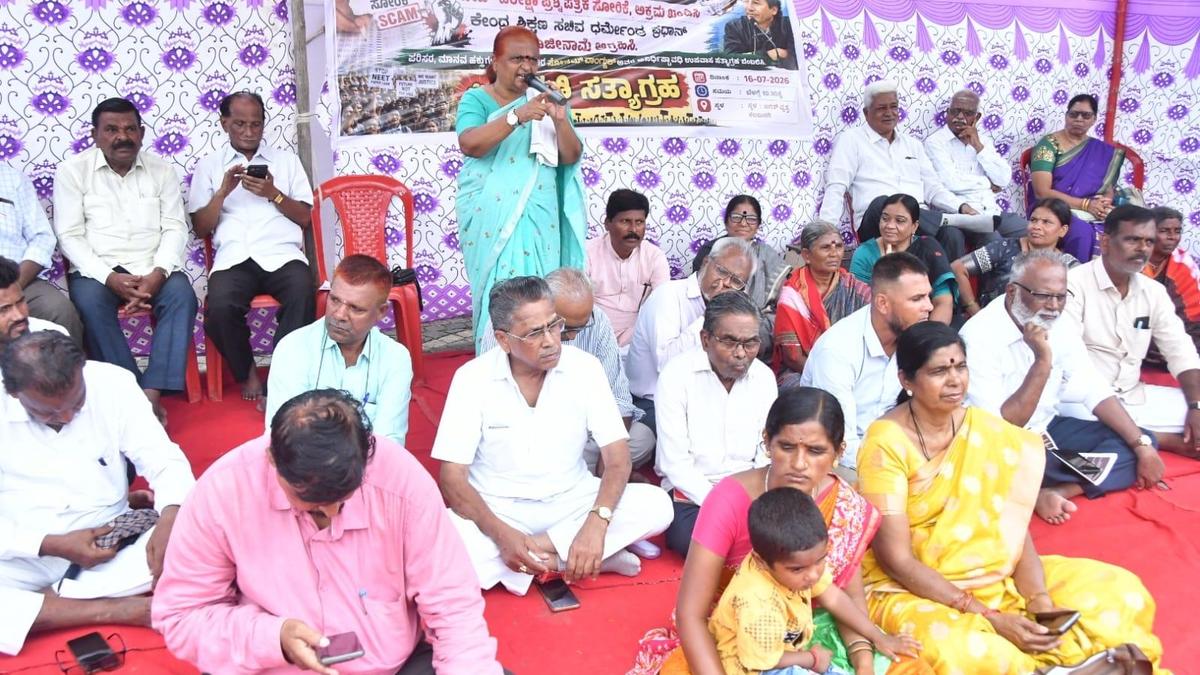
Members of Sauhardya Karnataka staged a protest in Kalaburagi on July 16, demanding the resignation of Union Education Minister Dharmendra Pradhan over NEET paper leak allegations. The protesters also expressed solidarity with Sonam Wangchuk's hunger strike, calling for a transparent investigation and systemic exam reforms.
Local Protest Signals National Discontent Over Educational Integrity
On July 16, the district unit of Sauhardya Karnataka organized a significant protest at Jagat Circle in Kalaburagi, highlighting a growing wave of indignation regarding the conduct of national-level competitive examinations. The demonstration was primarily centered on the alleged leak of the NEET examination papers, a crisis that has sparked widespread anger among students and parents across India. By demanding the resignation of Union Education Minister Dharmendra Pradhan, the protesters underscored a belief that the failure to secure the examination process represents a systemic leadership failure at the highest levels of the Ministry of Education.
The Intersection of Educational and Social Activism
One of the most striking aspects of this protest was the explicit expression of solidarity with environmentalist Sonam Wangchuk. Wangchuk's indefinite hunger strike has become a symbol of resistance against perceived administrative negligence. By linking their grievances over the NEET paper leak with Wangchuk's movement, the members of Sauhardya Karnataka are framing the issue not just as a technical failure of an exam body, but as part of a broader struggle for accountability and justice within the Union Government's administration. This alignment suggests a coalescing of diverse activist fronts, united by a common demand for transparency and government responsiveness.
Demands for High-Level Intervention and Accountability
Activist Meenakshi Bali's call for President Droupadi Murmu to intervene indicates that the protesters view the current executive response as insufficient. The demand for a facilitated dialogue between the Union Government, Sonam Wangchuk, and student organizations suggests that the protesters believe a stalemate has been reached that only the highest constitutional authority can break. Furthermore, the insistence on regular medical check-ups for those on hunger strike highlights the gravity of the situation and the desperation of the activists to bring their concerns to the forefront of the national agenda.
Erosion of Trust in Competitive Examinations
As noted by activist R.K. Hudgi, the repeated controversies surrounding national competitive exams have severely eroded the confidence of the youth. In the Indian context, examinations like NEET are high-stakes gateways to professional careers; any perception of unfairness or corruption doesn't just affect the results of a single year, but damages the perceived meritocracy of the entire system. The protesters' demand for a "fair and transparent investigation" and "stringent action" against those responsible is a direct response to the fear that systemic irregularities have become normalized, leaving hardworking students vulnerable to those who can manipulate the process.
The Path Toward Systemic Reform
Beyond the immediate demand for resignations, the Sauhardya Karnataka protest emphasizes the need for long-term structural changes. The call for "immediate measures to ensure transparency" and "accountability at every level" suggests that the current mechanisms for conducting large-scale exams are obsolete or compromised. To prevent a recurrence of such irregularities, the protesters are pushing for a paradigm shift in how the Union Government manages the security and distribution of examination materials, suggesting that without a total overhaul, public trust will continue to plummet.
Conclusion
The protest in Kalaburagi serves as a microcosm of a larger national frustration. By bridging the gap between student grievances and the activism of figures like Sonam Wangchuk, Sauhardya Karnataka has highlighted the urgent need for the Union Government to address the NEET controversy with absolute transparency. The event concludes that unless the government moves beyond rhetoric and implements verifiable reforms and accountability, the cycle of protests and hunger strikes is likely to intensify, further destabilizing the confidence of India's student population.
Verification Required?