Why is it difficult to ensure only green firecrackers are burst during Deepavali?
Source Entity
India Latest News: Top National Headlines Today & Breaking News | The Hindu
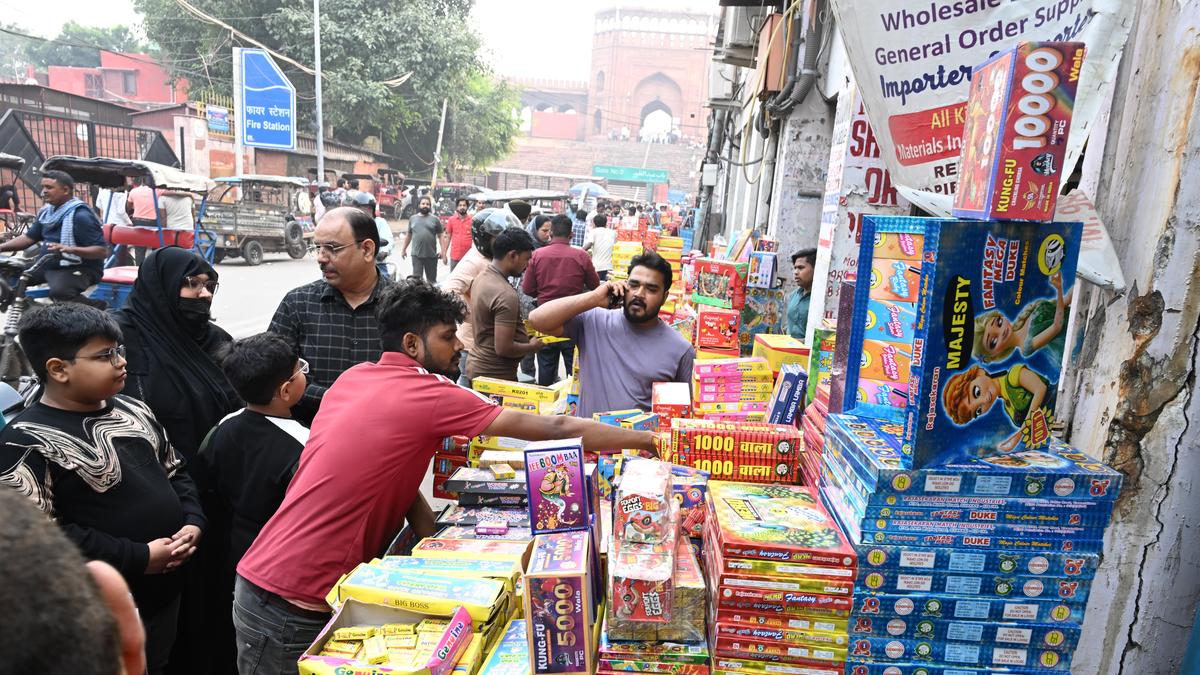
The Supreme Court has permitted the use of certified green firecrackers in Delhi-NCR during specific hours on November 7 and 8. Authorities are tasked with enforcing this limited window and ensuring that non-compliant, polluting crackers remain banned.
Supreme Court Balances Tradition and Environment in Delhi-NCR
A Nuanced Judicial Approach
In a recent development, the Supreme Court of India, led by a bench comprising Justices M.M. Sundresh and P.B. Varale, has issued a directive regarding firecracker usage in the Delhi-NCR region during the festival of Deepavali. Acknowledging the profound religious, social, psychological, and emotional significance of the festival, the Court has opted for a measured regulatory approach rather than a total prohibition. By permitting the use of certified 'green' firecrackers on November 7 and 8, the judiciary seeks to respect cultural sentiments while mitigating environmental harm.
Strict Temporal Constraints
To manage the inevitable spike in air pollution during the festive period, the Court has imposed rigid time slots for the bursting of these green firecrackers. Residents are permitted to engage in these activities only between 6:00 AM and 7:00 AM, and between 8:00 PM and 10:00 PM. These specific windows are designed to concentrate noise and smoke emissions, theoretically allowing for better atmospheric dispersion and adherence to established air quality safety protocols.
The Challenge of Enforcement
Despite these clear judicial mandates, the history of firecracker regulation in the national capital suggests a significant implementation gap. Activists and historical precedents indicate that both partial and total bans have been frequently flouted in the past. The reliance on local police and administrative authorities to ensure that only certified green crackers are utilized—and that polluting varieties remain off-limits—places a heavy burden on enforcement agencies, who must now monitor compliance in a highly congested urban environment.
Defining Green Crackers and Manufacturing
Crucially, the Supreme Court’s order also addresses the supply chain by allowing the temporary manufacture of these certified green crackers within the region. This move acknowledges the economic reality of the firecracker industry while attempting to transition the market toward less harmful alternatives. The court has clarified that this relaxation is strictly temporary; the comprehensive ban on conventional firecrackers is scheduled to be reinstated effective November 9.
Broader Environmental and Societal Implications
This decision highlights the ongoing tension between cultural tradition and the acute health crisis posed by seasonal smog in Delhi-NCR. By focusing on 'green' technology, the Court is attempting to foster a middle ground that does not entirely eliminate the festive experience but seeks to minimize the toxic impact on the city's vulnerable populations. The success of this policy depends entirely on the public's willingness to adhere to the designated timeframes and the effectiveness of law enforcement in preventing the sale of illegal, high-pollution fireworks.
Future Trends and Judicial Oversight
Looking ahead, this ruling serves as a template for future seasonal environmental management. The Court’s reliance on time-bound permissions suggests a preference for managed regulation over absolute prohibition. However, the recurring nature of these petitions indicates that until there is a fundamental shift in public behavior and a more robust supply of strictly non-polluting alternatives, the judiciary will likely remain the final arbiter of how Delhi celebrates its most significant festivals in the context of a changing climate.
Multiple Citing Sources
Verification Required?