Book review | Poetry and dictatorship collide in Margarita, How Beautiful the Sea by Sergio Ramírez
Source Entity
Latest News: Todays Latest News Headlines from India & World | Hindustan Times | Hindustan Times
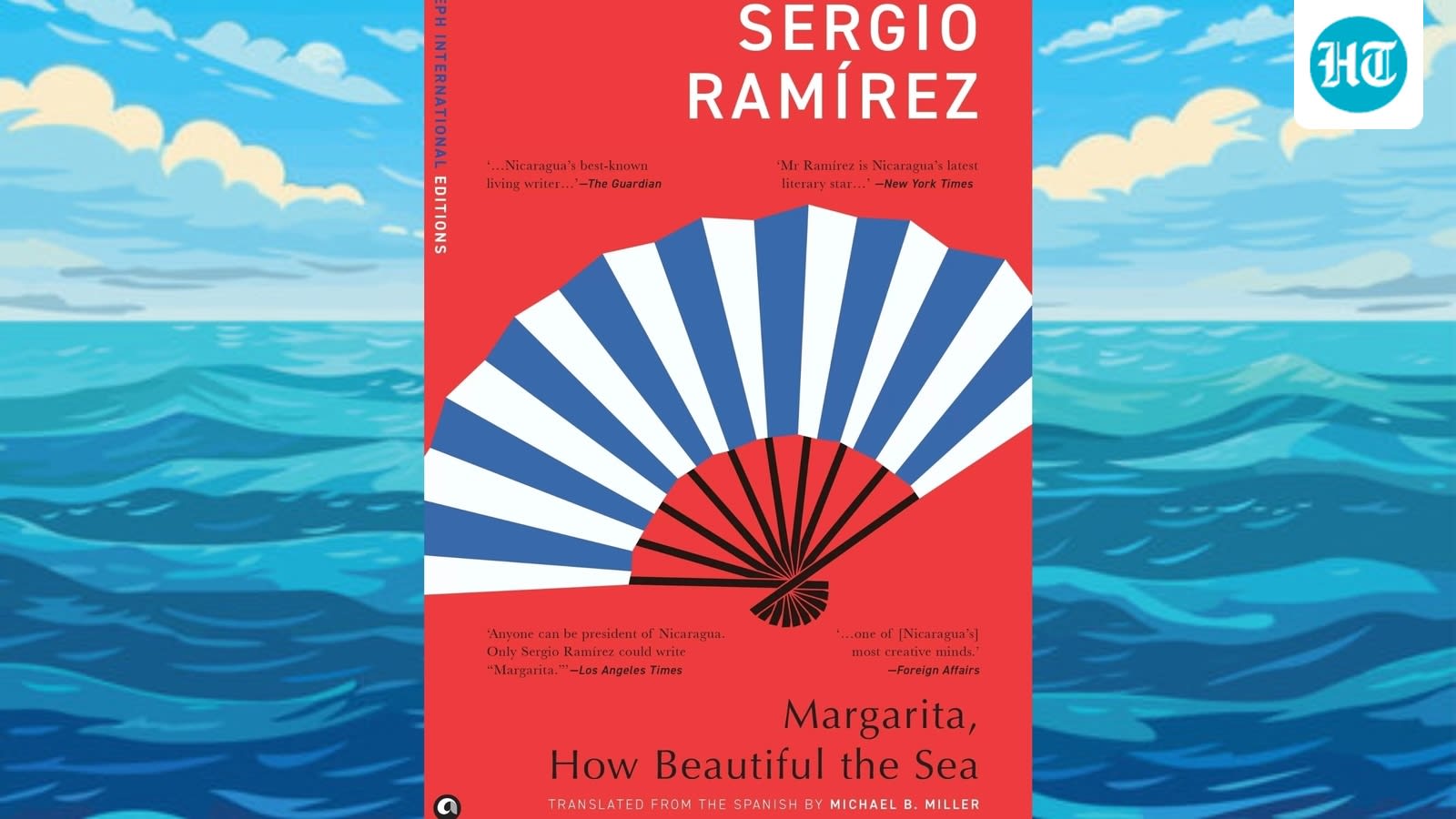
Sergio Ramírez’s novel 'Margarita, How Beautiful the Sea' masterfully intertwines Nicaraguan history with the myth of poet Rubén Darío. The narrative explores the cyclical nature of political memory and the intersection of art and authoritarianism.
The Intersection of Myth and History in Nicaraguan Literature
Sergio Ramírez’s Margarita, How Beautiful the Sea, recently translated into English by Michael B Miller, serves as a profound meditation on the fluidity of time and the weight of historical memory. By anchoring his narrative in the complex past of Nicaragua, Ramírez illustrates how history rarely follows a linear path. Instead, he posits that it is a cyclical force, collecting myths and resurfacing through the lives of individuals who may be unaware of the historical currents they carry.
The Genesis of an Urban Legend
The narrative framework is built upon a dual-timeline structure that highlights the persistence of cultural icons. The first anchor point is 1907, featuring the celebrated Nicaraguan poet Rubén Darío. In his hometown of León, Darío scribbles a poem on a young girl’s fan, an act of spontaneous creation that inadvertently births an enduring urban legend. This moment captures the power of art to imprint itself upon the collective consciousness, transcending the lifespan of the artist.
Intellectual Resistance and Dictatorship
Nearly five decades later, the novel shifts to a group of intellectuals gathered in a cafe, also in León. Their endeavor to reconstruct the legend of Darío serves as a poignant contrast to the political realities of their time. As they attempt to piece together the truth of the past, they operate under the shadow of a dictatorship. This juxtaposition highlights the friction between the romanticized myth of national icons and the harsh, often repressive, political climate of the mid-20th century.
Themes of Memory and Political Coherence
Ramírez utilizes the legend of the fan not merely as a literary device, but as a lens through which to examine the broader Nicaraguan experience. The act of remembering becomes a subversive act in a society governed by authoritarian structures. By focusing on how these intellectuals interact with the past, the author explores how memory is curated, manipulated, and eventually weaponized or protected within a political context.
Literary Significance and Legacy
The translation of this work into English is a significant development for global audiences, providing a bridge to understanding Nicaragua’s complex cultural heritage. Ramírez, himself a figure deeply embedded in the intellectual life of his nation, brings a level of authenticity to the text that bridges the gap between historical fact and the mythic retelling. The novel stands as a testament to the idea that literature is a primary vehicle for preserving the identity of a nation against the erosion of time and systemic suppression.
Conclusion: The Enduring Echo of the Past
Ultimately, Margarita, How Beautiful the Sea is a masterful exploration of how poetry and politics collide. By tracing the legend of Rubén Darío from its inception to its later reconstruction, Ramírez invites readers to consider their own relationship with history. The novel confirms that while dictatorships may attempt to control the present, the myths of a culture remain resilient, carried forward by those who refuse to let the past fade into obscurity.
Verification Required?