Should you wash your solar panels?
Source Entity
Hacker News
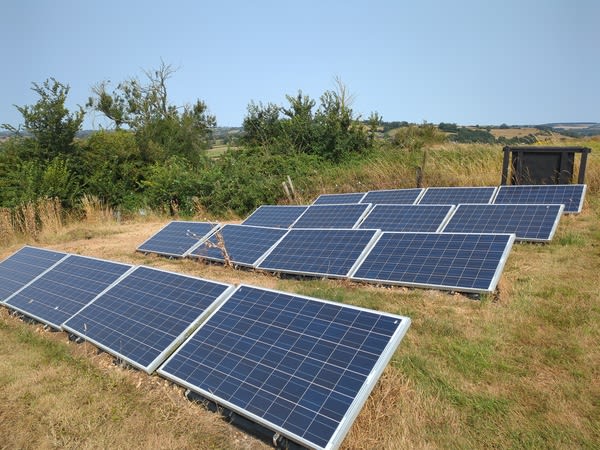
Cleaning solar panels can yield a modest 2%-5% increase in energy production, potentially adding £60-£150 in annual value. While maintenance is worthwhile, the efficiency gains diminish over time, suggesting a cost-benefit analysis is necessary for owners.
The Economics of Solar Panel Maintenance
For owners of residential solar farms, the question of whether to clean panels is often driven by visual inspection—seeing dust, grime, or debris accumulation. As highlighted by recent practical testing, while it is intuitive to assume that cleaner glass improves light absorption, the actual quantitative impact on energy yield is often smaller than many homeowners anticipate. A 2%-5% increase in power output suggests that while the impact is measurable, it is not transformative in the way that replacing a faulty inverter or upgrading panel technology might be.
Analyzing the Yield Gap
The methodology behind these findings involves monitoring specific banks of panels connected to an inverter, allowing for a comparative analysis between dirty and cleaned systems. By observing 16 panels split into two banks of eight, the data confirms that physical obstruction from environmental debris directly correlates to a drop in electricity generation. However, the decay of this benefit over time implies that once panels are cleaned, environmental factors—such as rain, wind, and local dust accumulation—quickly begin to degrade that performance gain, bringing the system back to its baseline within a few years.
Financial Implications and ROI
Translating these percentages into currency, an annual gain of £60-£150 provides a tangible benchmark for owners considering professional cleaning services or the time investment of doing it themselves. If the cost of cleaning exceeds this projected gain, the exercise becomes economically irrational. Owners must weigh the labor or service cost against the marginal increase in generation. Because the efficiency gains are modest, cleaning should likely be treated as low-frequency maintenance rather than a frequent operational necessity.
The Impact of Historical Neglect
It is common for solar installations to be neglected, especially during property transitions, such as the sale of a home. When a system has not been cleaned for several years, the initial increase in output post-cleaning may feel significant, but it is effectively recovering 'lost' potential that accumulated over the long term. This highlights a broader trend in renewable energy management: the 'set it and forget it' mentality often leads to minor, cumulative losses that are rarely noticed until a systematic check is performed.
Future Trends in Solar Maintenance
As the solar industry matures, the focus on 'Operations and Maintenance' (O&M) will likely shift toward automated monitoring and robotic cleaning solutions for larger arrays. For small-scale, residential solar farms, however, the current data underscores that manual intervention remains a cost-sensitive decision. The realization that gains are relatively small should encourage homeowners to prioritize safety and equipment longevity over constant, aggressive cleaning routines that could potentially damage delicate glass coatings or seals.
Conclusion
In summary, cleaning solar panels is a worthwhile endeavor, provided the maintenance costs remain below the value of the 2%-5% energy recovery. Owners should view this as a balancing act between environmental efficiency and financial prudence. Future maintenance strategies should be informed by localized climate data, as the rate of dust accumulation and the frequency of natural cleaning via rainfall will vary significantly by geography, ultimately dictating the ideal cleaning interval for each specific installation.