Producing ammonia and fertiliser using wind power in Morris, Minnesota
Source Entity
Hacker News
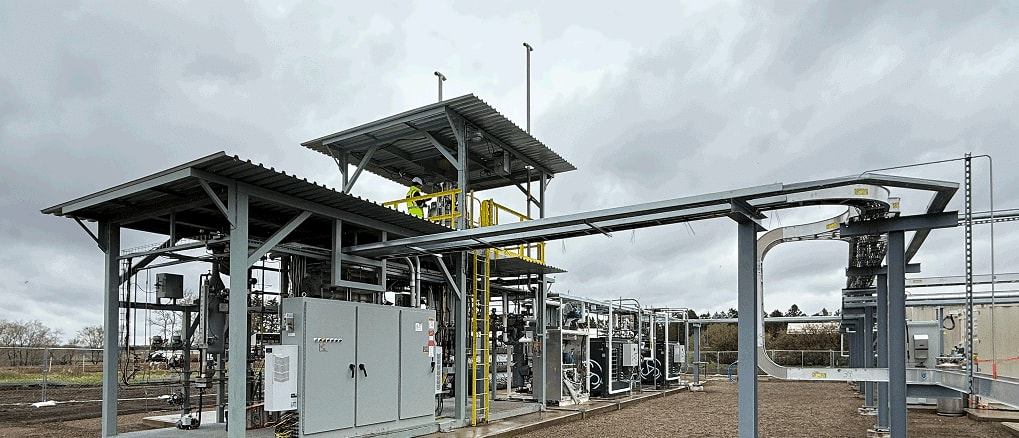
A pioneering facility in Morris, Minnesota, is successfully using wind energy to produce zero-carbon 'green ammonia' for fertilizer. This project aims to decarbonize agriculture while mitigating the risks of volatile international markets.
Revolutionizing Agriculture: The Green Ammonia Breakthrough
In Morris, Minnesota, a pioneering project at the University of Minnesota’s West Central Research and Outreach Center (WCROC) is redefining the relationship between renewable energy and food production. By utilizing on-site wind turbines to power electrolyzers, the facility is producing hydrogen to fuel a Haber-Bosch plant, effectively creating zero-carbon 'green ammonia' for local fertilizer. This project marks a significant shift in how agricultural inputs are manufactured, moving away from fossil-fuel-heavy traditional methods.
The Historical Context of the Haber-Bosch Process
For over a century, global food production has been inextricably linked to the Haber-Bosch process, a chemical reaction that allows for the industrial-scale synthesis of ammonia. While this innovation was essential for feeding a growing global population, it has historically relied heavily on fossil fuels, specifically natural gas, to provide the necessary hydrogen. The WCROC facility represents a critical evolution, demonstrating that this vital process can be decoupled from carbon-intensive energy sources.
Managing Renewable Fluctuations
One of the primary challenges of integrating wind energy with industrial chemical production is the inherent variability of weather-dependent power. To address this, the Morris facility utilizes sophisticated modeling and control systems that allow for the dynamic adjustment of ammonia production rates. By syncing the chemical plant's output with the fluctuating supply of renewable energy, the researchers are proving that industrial-scale agriculture can operate efficiently on a green power grid.
Economic Drivers and Market Volatility
Beyond the obvious climate benefits, the shift toward green ammonia is being fueled by economic necessity. The agricultural sector is highly susceptible to the volatility of international markets, where the price of traditional fertilizer is often tied to the fluctuating costs of natural gas. By producing fertilizer locally and sustainably, farmers may be able to insulate themselves from these global shocks, potentially lowering long-term operating costs while enhancing food security.
Implications for Global Decarbonization
Industries worldwide are currently racing to decarbonize their operations, but the agricultural sector has long been identified as a difficult-to-abate area. The success of this Minnesota-based collaboration—involving the University of Minnesota, RTI International, and Casale—serves as a scalable blueprint. If this model proves successful at a commercial scale, it could trigger a paradigm shift, transforming rural agricultural hubs into centers for clean energy production and self-sufficiency.
Future Trends and Outlook
As the project progresses through its first season of production, the focus will remain on refining the efficiency of the hydrogen-to-ammonia conversion. The long-term goal is to prove that 'going green' is not just an environmental imperative but a financially sound strategy for modern farming. Future trends will likely see an increase in localized, decentralized fertilizer production, reducing the carbon footprint associated with global logistics and transportation of agricultural chemicals.