Despite 35 minute delay Vikram-1 keeps date with Indian space history with Mission Aagaman success
Source Entity
SWATI BHARADWAJ
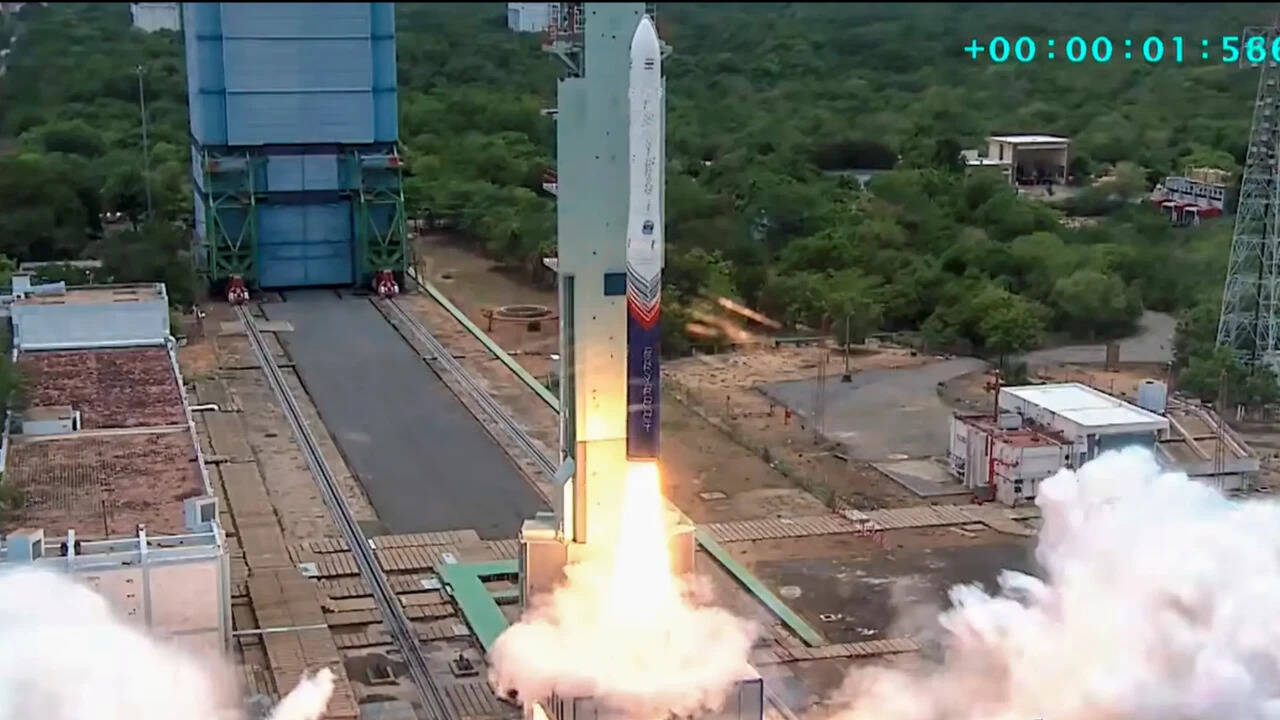
Skyroot Aerospace has successfully launched Vikram-1, India's first privately developed orbital rocket, placing technology payloads into low earth orbit. This achievement makes India only the third country globally to possess private orbital launch capabilities.
A New Era for Indian Space Exploration: The Success of Mission Aagaman
India has officially entered a new epoch in its aerospace journey with the successful execution of 'Mission Aagaman'. On July 18, 2026, Skyroot Aerospace achieved a monumental milestone by launching Vikram-1, the nation's first privately developed orbital rocket. This event signifies a paradigm shift in how India approaches space exploration, transitioning from a state-led monopoly under ISRO to a vibrant, competitive ecosystem where private enterprises drive innovation. The mission's success in placing multiple technology demonstration payloads and postcards—including a symbolic contribution from Prime Minister Narendra Modi—into low earth orbit serves as a definitive proof of concept for India's private space capabilities.
Breaking Global Barriers and Achieving Elite Status
One of the most significant takeaways from this launch is India's emergence as only the third country in the world to achieve orbital launch capability through a privately developed vehicle. By joining this elite group, India demonstrates that its private sector is now capable of handling the extreme complexities of orbital mechanics and rocket engineering. This achievement is not merely a technical victory but a strategic one, positioning India as a global hub for low-cost, high-efficiency satellite launches. The ability to leverage private capital and agility alongside government infrastructure allows India to scale its space ambitions far more rapidly than previously possible.
Technical Prowess of the Vikram-1 Vehicle
At the heart of this success is the Vikram-1, a sophisticated four-stage rocket specifically engineered for rapid launch services. The architecture of a four-stage vehicle allows for the precise incremental shedding of mass, ensuring that the payload reaches the required orbital velocity with maximum efficiency. The focus on 'rapid launch services' indicates a strategic move toward the 'on-demand' satellite deployment market, which is currently seeing a surge in demand due to the proliferation of small-satellite constellations for communication and earth observation. The successful deployment of technology demonstration payloads confirms that the vehicle can maintain the stability and precision required for commercial orbital missions.
Navigating the Challenges of Launch Day
The path to orbit was not without its tensions, highlighting the volatile nature of aerospace operations. Minutes before the scheduled takeoff from the Satish Dhawan Space Centre in Sriharikota, the launch was placed on a 'planned hold'. Such holds are common in high-stakes rocket launches to ensure all telemetry and weather parameters are optimal. The subsequent successful liftoff at the rescheduled time of 12:05 p.m. underscores the operational maturity of Skyroot Aerospace and the robustness of their ground control systems. The ability to manage a hold and still execute a 'grand success' demonstrates a level of professional rigor essential for commercial viability.
Socio-Political Impact and the 'Youth Talent' Narrative
Prime Minister Narendra Modi's active endorsement of the mission, hailing it as a 'historic new frontier', emphasizes the government's commitment to the 'Make in India' initiative within the high-tech sector. By specifically praising the 'talent of youth', the administration is framing the success of Skyroot as a victory for the next generation of Indian engineers and entrepreneurs. The inclusion of postcards in the payload serves as a powerful symbolic gesture, bridging the gap between complex orbital physics and national pride, effectively communicating the accessibility of space to the general public and inspiring future STEM aspirants.
Future Outlook for India's Private Space Sector
Looking forward, the success of Vikram-1 is expected to trigger a surge in private investment within the Indian space-tech landscape. With the barrier to orbital entry now broken, other Indian startups are likely to accelerate their development of launch vehicles and satellite components. This democratization of space will likely lead to more frequent launches, lower costs for academic and commercial research, and a strengthened partnership between the public sector (ISRO) and private entities. As India continues to expand its footprint, the focus will likely shift toward heavier payloads and perhaps eventually reusable launch systems, following the trajectory of global leaders in the private space race.
Conclusion
In summary, Mission Aagaman is a watershed moment that validates India's technical maturity and entrepreneurial spirit. By successfully deploying the Vikram-1 rocket, Skyroot Aerospace has not only achieved a corporate milestone but has elevated India's standing in the global space economy. The transition to private orbital capability ensures that India will remain a dominant force in the exploration and utilization of space for decades to come.
Multiple Citing Sources