'I was discouraged to privatise sector': PM lauds Skyroot after Vikram-1 success
Source Entity
SURENDRA SINGH
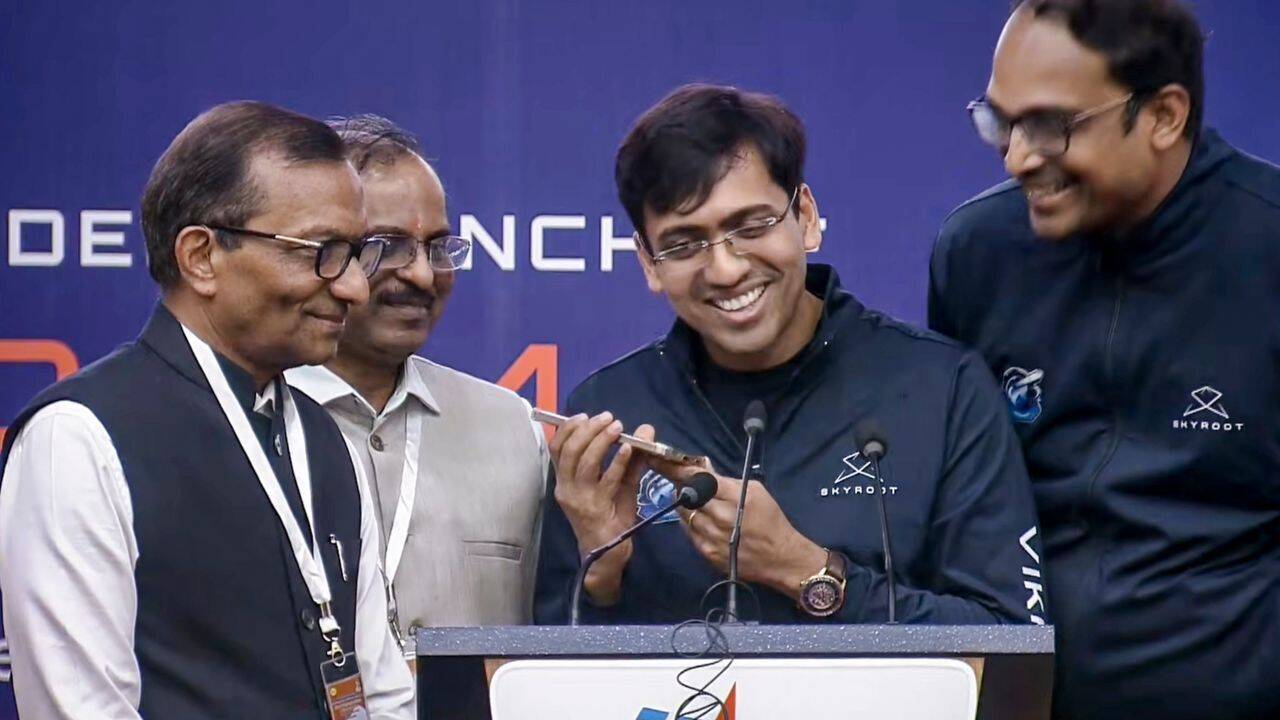
Skyroot Aerospace successfully launched Vikram-1, India's first privately developed orbital rocket, under 'Mission Aagaman'. This achievement makes India the third nation globally to possess private orbital launch capabilities.
A New Era for Indian Space Exploration: The Success of Mission Aagaman
On July 18, 2026, India achieved a monumental milestone in its aerospace journey with the successful launch of Vikram-1, the country's first privately developed orbital rocket. Dubbed 'Mission Aagaman'—meaning 'arrival'—the mission saw the rocket lift off from the Satish Dhawan Space Centre in Sriharikota. Despite a brief moment of tension when the launch was put on a "planned hold" minutes before takeoff, the vehicle successfully ascended at the rescheduled time of 12:05 p.m., placing multiple technology demonstration payloads and symbolic postcards, including one from Prime Minister Narendra Modi, into a low earth orbit.
Technical Prowess and Operational Execution
The Vikram-1 rocket is a sophisticated four-stage vehicle specifically engineered for rapid launch services, highlighting a shift toward efficiency and agility in space access. The success of the mission validates the technical viability of Skyroot Aerospace's design, proving that a private entity in India can manage the complexities of an orbital trajectory. The inclusion of technology demonstration payloads suggests that this launch was not merely a proof-of-concept for the rocket itself, but a testbed for new space-based technologies that could drive future commercial and scientific ventures.
Breaking the State Monopoly: Global and National Significance
This achievement catapults India into an elite global circle, making it only the third country in the world to successfully execute an orbital launch via a privately developed vehicle. Historically, orbital launches have been the exclusive domain of powerful state agencies. By breaking this barrier, India has signaled a fundamental shift in its space policy, moving from a centralized model to a more open, entrepreneurial ecosystem. This transition is likely to accelerate the pace of innovation, as private companies are often more agile in adopting new materials and propulsion technologies than traditional government bureaucracies.
The Role of Youth and Political Will
Prime Minister Narendra Modi's vocal support for the mission, specifically his praise for the "talent of youth," underscores the strategic importance of this launch. By framing the event as a "historic new frontier," the Indian government is actively encouraging a new generation of engineers and entrepreneurs to enter the space sector. The symbolic gesture of sending postcards into orbit serves as a powerful communication tool, democratizing the concept of space travel and framing it as an attainable goal for the Indian populace, rather than a distant government project.
Broader Implications for the Private Space Sector
The success of Vikram-1 is expected to trigger a surge in private investment within India's space-tech landscape. With the proven ability to reach orbit privately, the barrier to entry for satellite startups and research institutions has been significantly lowered. The "rapid launch services" capability of the Vikram-1 suggests a future where satellite deployment is no longer subject to the long queues of state-run launch vehicles, potentially making India a global hub for small-satellite launches.
Conclusion: Towards a Commercial Space Economy
Mission Aagaman represents more than just a successful rocket launch; it is the arrival of a commercial space economy in India. As Skyroot Aerospace paves the way, the focus will likely shift from demonstration missions to sustainable, commercial orbital services. This milestone ensures that India remains competitive in the global space race, blending the reliability of its state institutions with the dynamism of private innovation to explore the final frontier.
Multiple Citing Sources