Despite 35 minute delay Vikram-1 keeps date with Indian space history with Mission Aagaman success
Source Entity
SWATI BHARADWAJ
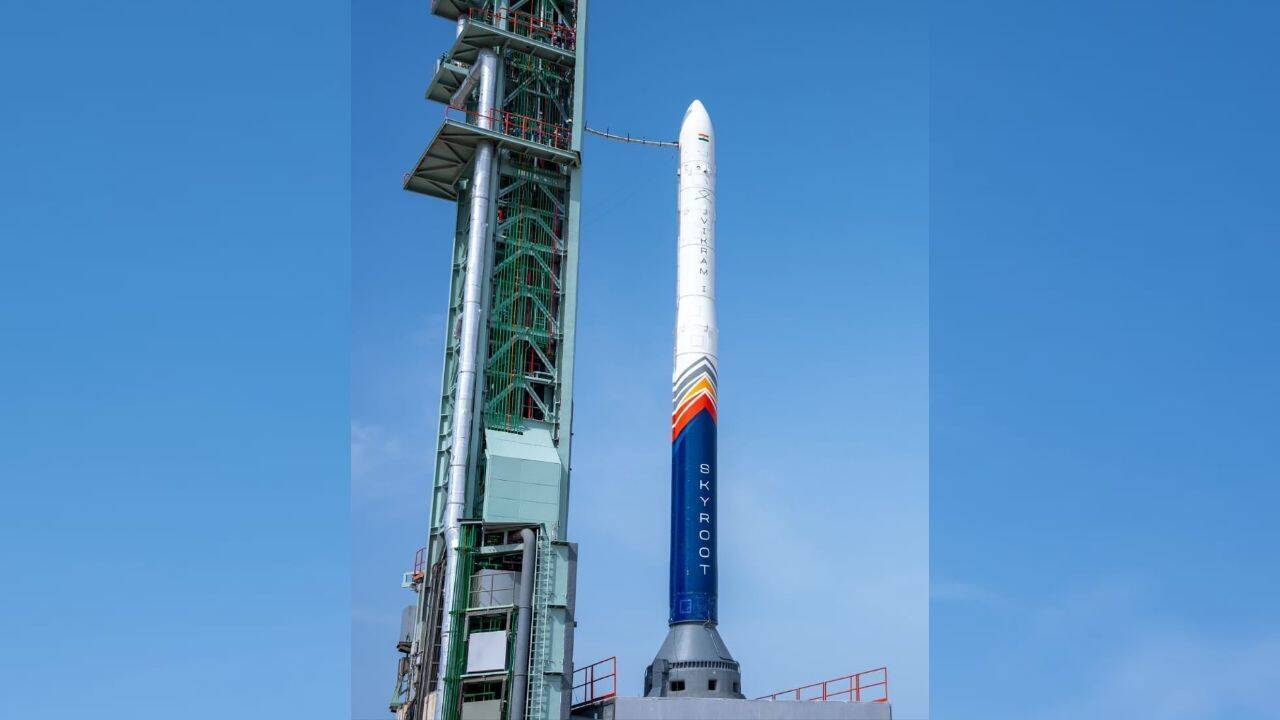
Skyroot Aerospace has successfully launched Vikram-1, India's first privately developed orbital rocket, under 'Mission Aagaman'. This achievement makes India only the third country globally to possess private orbital launch capabilities.
A New Era for Indian Space Exploration: The Success of Mission Aagaman
India has reached a pivotal milestone in its aerospace journey with the successful maiden orbital launch of the Vikram-1 rocket, developed by Skyroot Aerospace. Dubbed 'Mission Aagaman' (meaning arrival), the mission culminated on Saturday, July 18, 2026, when the vehicle successfully placed multiple technology demonstration payloads and symbolic postcards—including one from Prime Minister Narendra Modi—into a low earth orbit. This event represents more than just a technical achievement; it signals the dawn of a commercial space age for India, shifting the paradigm from purely state-led initiatives to a collaborative ecosystem involving private enterprise.
Technical Prowess and Operational Precision
The Vikram-1 is a sophisticated four-stage rocket specifically engineered to provide rapid launch services, catering to the growing demand for agile satellite deployment. The launch process, conducted from the Satish Dhawan Space Centre in Sriharikota, demonstrated both the technical capability of the vehicle and the operational discipline of the Skyroot team. Despite a tense moment where the launch was put on a "planned hold" minutes before the scheduled takeoff, the mission proceeded flawlessly at the rescheduled time of 12:05 p.m. This ability to manage real-time anomalies and execute a successful lift-off underscores the maturity of India's private aerospace engineering.
Global Standing and Strategic Significance
With the success of Mission Aagaman, India has entered an elite global circle, becoming only the third country in the world to achieve orbital launch capability through a privately developed launch vehicle. Historically, orbital launches were the exclusive domain of superpowers and massive government agencies. By breaking this barrier, India has proven that its private sector can compete at the highest levels of aerospace technology. This achievement reduces the nation's sole reliance on the Indian Space Research Organisation (ISRO) for orbital access and positions India as a competitive hub for the global commercial satellite launch market.
Empowering Youth and Innovation
Prime Minister Narendra Modi has hailed this achievement as a "historic new frontier," specifically praising the "talent of youth" that drove the development of Vikram-1. The inclusion of postcards in the payload serves as a powerful symbolic gesture, bridging the gap between high-level science and national aspiration. By championing the role of young entrepreneurs and engineers, the Indian government is signaling a broader policy shift toward fostering a culture of innovation and risk-taking within the STEM fields, encouraging more startups to venture into deep-tech sectors.
Future Implications for the Private Space Sector
The success of the Vikram-1 launch is expected to trigger a surge in private investment and development within India's space sector. As a four-stage rocket designed for rapid deployment, Vikram-1 sets the stage for a new business model where small-to-medium satellites can be launched with shorter lead times and lower costs. This capability will likely attract international clients and domestic startups, accelerating the deployment of communication, observation, and research satellites. The transition from experimental launches to reliable, rapid-service orbital delivery will be the next critical phase for Skyroot and the wider Indian private space industry.
Conclusion
Mission Aagaman is a "grand success" that redefines India's trajectory in space. By successfully orbiting technology payloads and postcards, Skyroot Aerospace has not only validated the Vikram-1's design but has also cemented India's status as a global leader in private space exploration. This milestone paves the way for a more diverse, competitive, and innovative aerospace landscape, ensuring that India remains at the forefront of the final frontier.
Multiple Citing Sources