‘Shows the govt is heartless’: AISA activists on parallel hunger strike with Sonam Wangchuk ‘at high risk’
Source Entity
Latest News: Today's Latest News Headlines from India & World | Hindustan Times | Hindustan Times
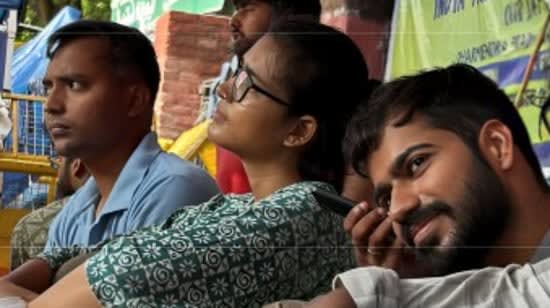
Sonam Wangchuk and AISA activists are engaged in critical hunger strikes at Jantar Mantar, facing severe health risks including potential organ failure. While Wangchuk vows to survive until a planned July 20 Parliament march, AISA activists are demanding the resignation of Union Education Minister Dharmendra Pradhan.
Crisis at Jantar Mantar: Parallel Hunger Strikes and the Fight for Accountability
The political atmosphere at Jantar Mantar has reached a critical juncture as educator and climate activist Sonam Wangchuk, alongside student activists from the All India Students' Association (AISA), undergo grueling indefinite hunger strikes. These parallel protests, though driven by different specific grievances, converge in their condemnation of the Union government's perceived indifference. The situation has escalated from a political demonstration to a medical emergency, with doctors warning that the participants are entering a high-risk phase where their bodies are beginning to fail.
The Critical State of Sonam Wangchuk
Sonam Wangchuk's health has deteriorated significantly over the course of his 20-day fast. According to medical bulletins, Wangchuk has lost approximately 9.5 kg, bringing his weight down to 56.55 kilograms. While he remains mentally alert, Dr. Satish Lamba has issued grave warnings that Wangchuk's body has likely transitioned to consuming its own muscle mass, with the risk of organ failure looming. Despite a blood pressure of 108/68 mm Hg and oxygen saturation at 96%, the cumulative physical toll is severe. The Delhi High Court has recognized the gravity of this situation, ordering both the Union and Delhi governments to ensure the regular monitoring of his health to prevent a fatal outcome.
Strategic Goals and the July 20 Deadline
Wangchuk’s resolve is anchored to a specific political timeline: the opening of the monsoon session of Parliament. Under the banner of the Cockroach Janta Party (CJP), he has vowed to "stay alive till July 20 at any cost" to facilitate a peaceful march to Parliament. This deadline transforms the hunger strike into a high-stakes countdown, where the activist's survival is tied to the visibility of his cause during a key legislative window. The support from political figures, such as AAP national convenor Arvind Kejriwal, underscores the broader political solidarity surrounding Wangchuk's demands for reform.
AISA's Parallel Struggle and Educational Grievances
Simultaneously, AISA activists Manish, Neha, and Aameen are conducting a parallel fast, positioning their struggle as a reflection of a "heartless" government. Their demands are specifically targeted at the Union Education Minister, Dharmendra Pradhan, whose resignation they seek following recent exam leaks and irregularities. Neha Bora, the national president of AISA and a PhD scholar at Jawaharlal Nehru University (JNU), has used her platform to contrast the physical hunger of the protesters with the "hunger for power" within the government. This parallel strike highlights a growing intersection between climate activism and student-led demands for academic integrity.
Medical Risks and Human Cost
The medical condition of the AISA activists is equally precarious. An MBBS-MD doctor at the site has flagged that all three are in "high risk" condition, with Neha Bora's state being particularly concerning due to a steady decline in blood sugar levels. The warning of potential organ failure for these students mirrors the risks faced by Wangchuk, suggesting a systemic physical collapse resulting from prolonged fasting. The insistence of AISA to continue the strike despite these warnings emphasizes the depth of their desperation and the perceived urgency of the education crisis.
Conclusion and Future Implications
The convergence of these protests at Jantar Mantar represents a potent symbol of civil unrest focused on government accountability. With the Delhi High Court's intervention and the impending July 20 deadline, the next few days are critical. The outcome depends on whether the Union government chooses to engage with the demands regarding education irregularities and climate/regional reforms or remains steadfast, potentially risking a tragedy that could further galvanize opposition and public sentiment. The physical survival of Wangchuk and the AISA activists has now become the primary focal point of this political standoff.
Multiple Citing Sources
Verification Required?