Plain clothes, white sheets, 3 layers: How Delhi Police planned Wangchuk's shift to hospital
Source Entity
TOI CITY DESK
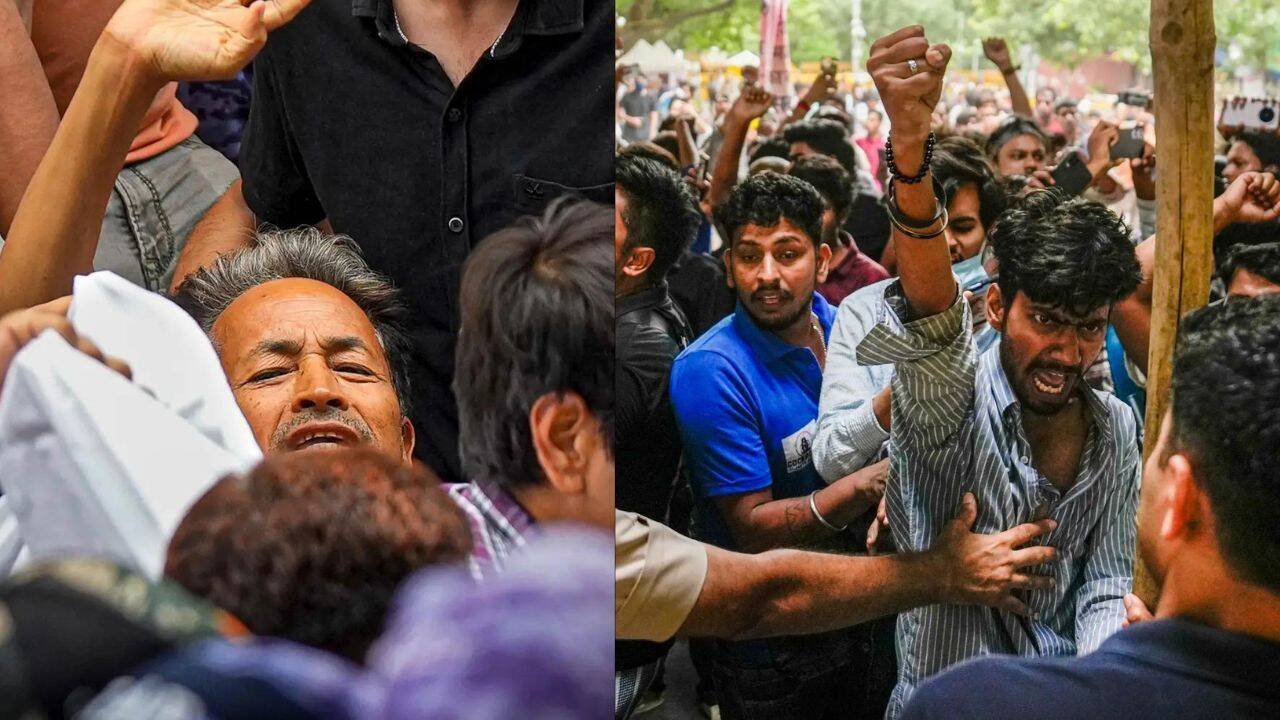
Climate activist Sonam Wangchuk has been shifted to Safdarjung Hospital following a 21-day hunger strike. His hospitalization follows Delhi High Court orders amid rising tensions and allegations of police force against protesters.
The Hospitalization of Sonam Wangchuk: A Critical Juncture
On July 18, 2026, climate activist and educator Sonam Wangchuk was moved by Delhi Police to Safdarjung Hospital. This development marks a significant escalation in his ongoing protest, as he had been observing an indefinite hunger strike for over 20 days. The move was officially characterized by the New Delhi Deputy Commissioner of Police (DCP) as a measure to provide 'essential medical care,' a decision reportedly backed by both Delhi High Court directives and expert medical advice citing his deteriorating physical condition.
The Intersection of Protest and State Intervention
The situation at the protest site has been marked by high volatility. Reports indicate that the 'Cockroach Janta Party'—a movement rooted in social media satire that has evolved into a substantial protest entity—has levelled serious accusations against the Delhi Police, specifically alleging that law enforcement lathi-charged students gathered at the Jantar Mantar site. The detention of figures like Abhijeet Dipke further underscores the intensifying friction between the state authorities and the protest participants.
Family Concerns and Medical Autonomy
In the wake of his hospitalization, Sonam Wangchuk’s wife, Gitanjali J. Angmo, has publicly asserted the necessity of medical transparency. Expressing significant caution, she has demanded that no oral or intravenous treatments be administered to the activist without explicit consent from his family and his primary medical team. This demand highlights the deep-seated distrust between the protesters and the state apparatus, reflecting fears that medical intervention might be used to prematurely terminate a protest that has already lasted three weeks.
Historical Context of Hunger Strikes in India
Hunger strikes have long served as a potent tool of civil disobedience in India, tracing their lineage back to the Gandhian tradition of Satyagraha. By choosing to abstain from food for over 20 days, Wangchuk has utilized his own body as a site of political contestation. This historical mode of protest forces the state into a difficult position: either allow the activist to suffer severe health consequences, which risks public outrage, or intervene to preserve his life, which risks being perceived as an attempt to suppress dissent.
Future Implications and Social Media Influence
The emergence of the 'Cockroach Janta Party' as a major protest force signifies a shift in how modern movements are organized in India. By leveraging social media satire to mobilize thousands, these movements bypass traditional gatekeepers, creating a digital-first approach to advocacy. The future of this protest will likely depend on whether Wangchuk’s health stabilizes and how the administration navigates the ongoing demands of the movement without further inflaming the public sentiment.
Conclusion
As the situation stands, Sonam Wangchuk remains under medical supervision with stable vitals. The coming days will be critical, as both his supporters and the authorities assess the next steps. The clash between the state’s duty to ensure public order and medical safety, and the protesters' right to dissent, remains the defining tension of this episode.
Multiple Citing Sources