Spanish reporter covering rough seas knocked off balance by giant wave on live TV
Source Entity
Latest News: Todays Latest News Headlines from India & World | Hindustan Times | Hindustan Times
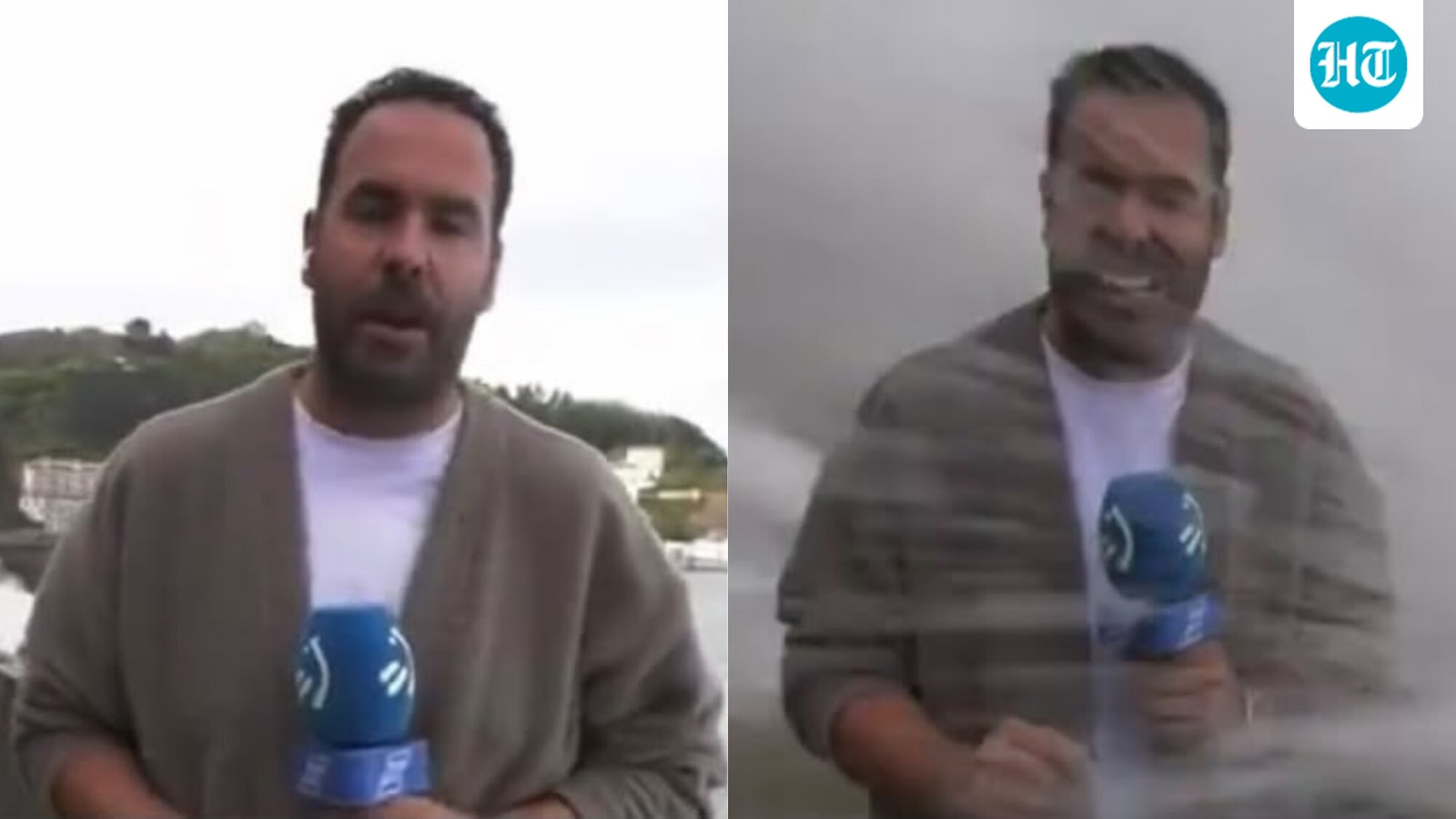
Spanish reporter Sergio Ovejero and his camerawoman were struck by a massive wave during a live broadcast in Ondarroa. The incident occurred while reporting on dangerous sea conditions along the Basque Country coast.
Dangerous Reporting: The Ondarroa Wave Incident
On October 22, a routine live broadcast turned into a perilous situation in the Basque Country town of Ondarroa, Spain. Reporter Sergio Ovejero, working for the ETB2 program Euskadi Quédate, was in the midst of a segment documenting volatile sea conditions when a powerful wave breached a protective sea wall. The surge of water struck both Ovejero and his camerawoman, Raquel Vidal, with enough force to knock them off balance and disrupt the live transmission.
The Risks of Meteorological Journalism
Reporting from coastal areas during extreme weather events presents inherent dangers that are often overlooked by the viewing public. Journalists are frequently tasked with providing visceral, on-the-ground visual evidence of environmental hazards. This incident highlights the thin line between capturing compelling footage and ensuring the safety of media personnel. The sudden nature of the wave in Ondarroa demonstrates how quickly static environments—like a sea wall—can become life-threatening zones when oceanic energy is high.
Technical and Human Impact
During the live feed, the physical impact of the wave resulted in an immediate camera shake and a temporary loss of signal. This interruption provided a stark reminder of the technical vulnerability of broadcast equipment during natural events. In the studio, presenter Odei Esnaola’s visible concern underscored the gravity of the moment, as the connection to the field crew was severed precisely when the danger manifested. The incident forced a sudden pivot from professional reporting to an emergency management scenario for the production team.
Environmental Context in the Basque Country
Ondarroa, known for its rugged coastline and proximity to the Cantabrian Sea, is no stranger to intense maritime weather. The Basque Country's geography often creates scenarios where high tides and storm surges converge, making sea walls essential, yet sometimes insufficient, defenses. This event serves as a case study for why media organizations must continually re-evaluate safety protocols for field reporters, especially as climate patterns shift and coastal weather events potentially increase in volatility.
Future Implications for Field Media
As live reporting technology becomes more portable and ubiquitous, the pressure to get closer to the "action" increases. However, the Ondarroa incident may prompt a shift toward more cautious reporting practices. Broadcasters may increasingly rely on remote cameras or elevated positions to capture the power of the sea without exposing personnel to direct physical danger. The safety of the crew remains paramount, and this event will likely be referenced in future discussions regarding journalistic safety standards during environmental crises.
Verification Required?