BJP, NC march against each other in Srinagar; CM alleges police bias
Source Entity
NASEER GANAI
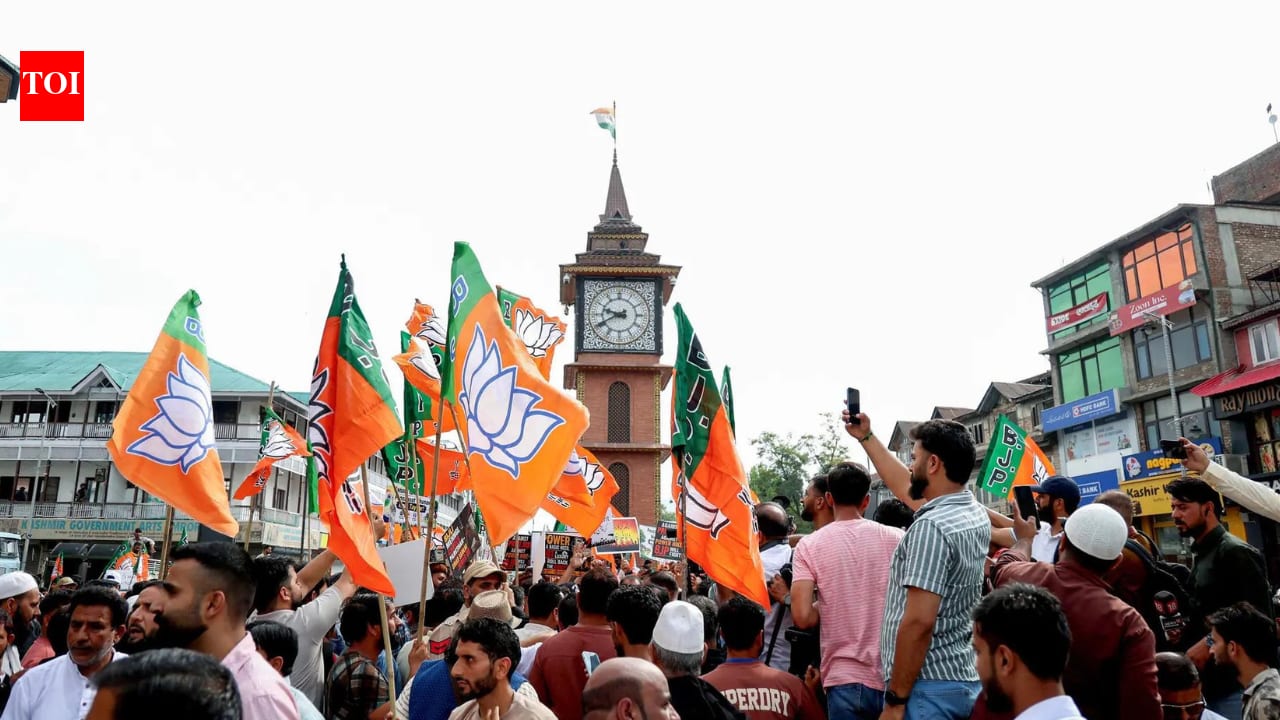
Tensions escalated in Srinagar as BJP and National Conference activists held competing protests, leading to police intervention and mutual accusations of bias. Former CM Mehbooba Mufti labeled the unrest a 'fixed match,' while CM Omar Abdullah alleged administrative partiality.
Political Unrest in Srinagar: A Clash of Narratives
The political landscape in Srinagar witnessed a significant escalation of tension this Wednesday as the Bharatiya Janata Party (BJP) and the National Conference (NC) engaged in competing street protests. Demonstrations occurred near the iconic Ghanta Ghar at Lal Chowk, resulting in a heavy deployment of police and paramilitary forces to cordon off key areas and prevent potential physical confrontations between the opposing political factions.
Core Grievances and Mobilization
At the heart of the BJP’s agitation was a call for a 'Secretariat Gherao,' a protest strategy designed to highlight the party's dissatisfaction with the current National Conference-led government. The BJP protesters specifically cited concerns regarding rising unemployment, the outsourcing of jobs, and allegations of corruption within the administration. Conversely, the National Conference organized a counter-protest near the BJP’s offices, setting the stage for a volatile political standoff in the heart of the city.
Allegations of Administrative Bias
The situation took a complex turn when J&K Chief Minister Omar Abdullah publicly accused the Union Territory administration of bias. Abdullah alleged that his party’s protesters were unfairly blocked from reaching the BJP office, suggesting that the security apparatus was not operating neutrally. This accusation highlights the ongoing friction between the regional government and the central administrative oversight in the Union Territory, a recurring theme in the region's current political governance.
The 'Fixed Match' Accusation
Adding a third dimension to the conflict, former Chief Minister and Peoples Democratic Party (PDP) president Mehbooba Mufti characterized the entire day’s events as a 'fixed match.' By accusing the police of facilitating both protests, Mufti suggests that the spectacle of these competing marches may be a strategic theater intended to polarize the electorate or delegitimize opposing political narratives. This skepticism reflects the deep-seated mistrust among the major political players regarding the role of state machinery in public demonstrations.
Broader Implications and Future Trends
These events underscore the fragility of the political climate in Srinagar. The convergence of economic grievances—such as power tariffs and recruitment policies—with high-stakes political posturing indicates that the coming months will likely see continued instability. As both the BJP and NC attempt to solidify their influence, the reliance on street-level protests suggests a shift toward more aggressive political engagement. Moving forward, the effectiveness of the current administration will be measured by its ability to manage these public displays of dissent while addressing the underlying socio-economic concerns that continue to fuel such unrest.