‘Right to vote has nothing to do with delimitation’: Supreme Court refuses to hear plea
Source Entity
The Indian Express
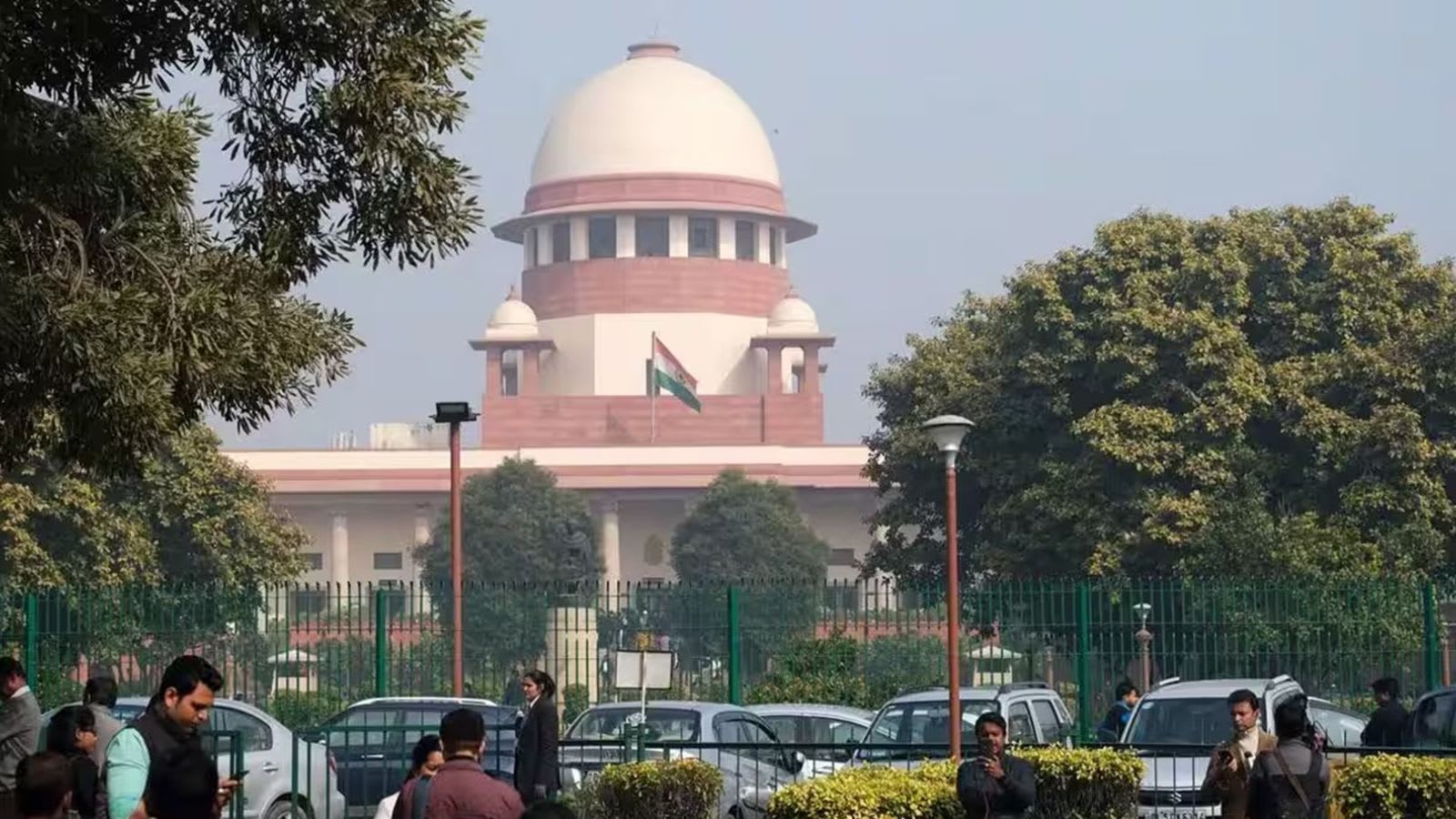
The Supreme Court of India has declined to entertain a petition that sought to link the fundamental right to vote with the process of delimitation, directing the petitioner to seek redress from the competent authority instead.
Judicial Clarification on Electoral Processes
In a significant observation regarding the intersection of constitutional rights and administrative procedures, the Supreme Court of India recently declined to hear a plea that attempted to establish a direct legal link between the 'right to vote' and the process of 'delimitation.' The Court, led by the Chief Justice of India (CJI), emphasized that these two concepts operate in different legal and functional spheres. Rather than dismissing the petition outright, the Court advised the petitioner to submit a representation to the competent authority, indicating that the judiciary is not the primary forum for challenging the technicalities of boundary redistribution unless a clear constitutional violation is proven.
Understanding Delimitation and its Complexity
To understand the gravity of this ruling, one must first understand what delimitation entails. Delimitation is the act of redrawing the boundaries of Lok Sabha and State Assembly seats to ensure that each seat represents a roughly equal population, thereby upholding the principle of "one vote, one value." This process is typically carried out by a Delimitation Commission, an independent body. In India, delimitation is a highly sensitive political issue because it often pits states with high population growth (primarily in the North) against states that have successfully implemented population control measures (primarily in the South), as the former stand to gain more parliamentary seats at the expense of the latter.
The Legal Distinction: Voting Rights vs. Electoral Mapping
The core of the Supreme Court's refusal lies in the distinction between a statutory/constitutional right and an administrative process. The right to vote is a fundamental pillar of democracy, ensuring that every eligible citizen can participate in the electoral process. However, delimitation is the structural framework within which that right is exercised. By stating that the right to vote "has nothing to do with delimitation," the Court is clarifying that the act of casting a ballot remains intact regardless of how the boundaries of a constituency are drawn. As long as a citizen is registered and allowed to vote in their assigned district, the specific geography of that district does not infringe upon the right to vote itself.
Implications of Judicial Restraint
This decision reflects a broader trend of judicial restraint regarding the internal workings of electoral administration. By directing the petitioner to the "competent authority," the Supreme Court is reinforcing the doctrine of exhaustion of remedies. The Court is signaling that it will not intervene in the technicalities of the Delimitation Commission's mandate unless there is a gross miscarriage of justice or a violation of basic structure. This prevents the judiciary from becoming a tool for political maneuvering every time constituency boundaries are shifted, which could otherwise lead to endless litigation and the paralysis of the electoral cycle.
Future Trends in Electoral Representation
Looking forward, the issue of delimitation is expected to become one of the most contentious political debates in India as the freeze on seat reallocation (implemented decades ago) eventually expires. As the population continues to shift, the demand for fairer representation will clash with the fear of political marginalization for certain regions. The Supreme Court's current stance suggests that it will likely maintain a hands-off approach toward the technical execution of delimitation, provided the process follows the established legal framework. This places the onus on the legislative and administrative bodies to ensure that the process is transparent and equitable.
Summary
The Supreme Court's refusal to link the right to vote with delimitation underscores the legal separation between the individual's right to participate in democracy and the state's power to organize electoral boundaries. By steering the petitioner toward administrative channels, the Court has avoided a potentially volatile political entanglement while upholding the functional autonomy of the delimitation process.