Ram Temple corruption episode biggest proof of BJP govt. failure: U.P. Congress chief Ajay Rai
Source Entity
India Latest News: Top National Headlines Today & Breaking News | The Hindu
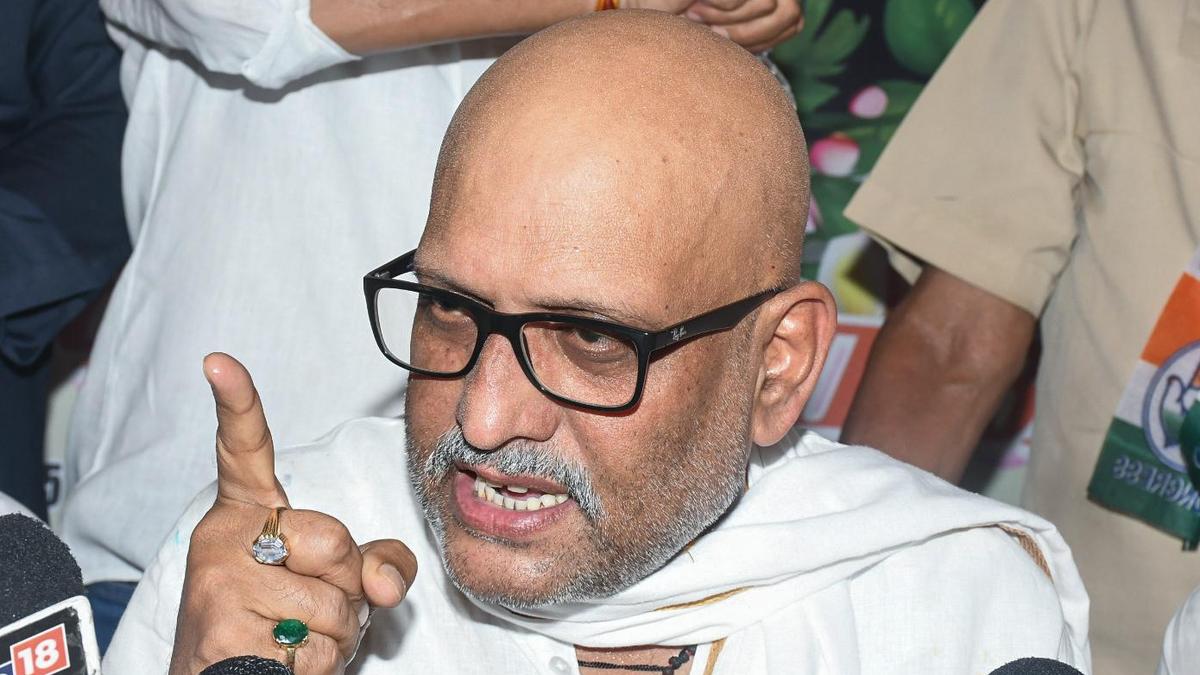
Uttar Pradesh Congress chief Ajay Rai has criticized the BJP government, claiming that reports of corruption and theft at the Ram Temple serve as evidence of governance failure by Prime Minister Narendra Modi and CM Yogi Adityanath.
Political Friction Over the Ram Temple: Analysis of Ajay Rai's Allegations
In a sharp political maneuver, Uttar Pradesh Congress chief Ajay Rai has leveraged reports of corruption and theft at the Ram Temple to challenge the administrative record of the Bharatiya Janata Party (BJP). By labeling the 'corruption episode' as the 'biggest proof' of government failure, Rai is attempting to pivot the narrative surrounding one of the most significant cultural and political achievements of the current administration. This statement underscores the volatile intersection of faith, governance, and political accountability in India.
The Logic of Political Accountability
At the core of Ajay Rai's argument is the principle of accountability. He posits that because Prime Minister Narendra Modi and Chief Minister Yogi Adityanath have positioned themselves as the primary architects and beneficiaries of the temple's realization, they must also inherit the responsibility for any lapses in its management. By stating that they are 'always at the forefront' when taking credit, Rai argues that the same visibility necessitates their ownership of the 'heinous crime and theft' reported at the site. This strategy aims to strip the BJP of its monopoly over the temple's narrative, transforming a symbol of triumph into a symbol of administrative negligence.
Strategic Positioning of the Congress Party
For the Congress party in Uttar Pradesh, this critique serves a dual purpose. First, it allows the opposition to engage with the Ram Temple—a topic that is highly emotive and central to the BJP's electoral appeal—without appearing anti-temple. Instead of attacking the existence or the sanctity of the temple, the Congress is attacking the governance of the institution. This nuanced approach allows them to appeal to a broader demographic, including devotees who may be concerned about corruption and mismanagement within a sacred space.
Broader Implications for Governance and Symbolism
The Ram Temple is not merely a religious structure but a potent symbol of the 'New India' narrative promoted by the BJP. Consequently, any allegation of financial irregularity or theft is magnified. If the opposition can successfully link the temple's administration to broader themes of corruption, it threatens to tarnish the ideological purity of the project. The term 'heinous crime' used by Rai suggests that the theft is not just a legal matter but a moral failing of the state's security and oversight mechanisms in a high-profile zone.
Historical Context and Political Precedents
Historically, the construction of the Ram Temple has been a central pillar of the BJP's political identity for decades. Having finally achieved the goal of the temple's inauguration, the party now faces the challenge of transitioning from the 'struggle' phase to the 'management' phase. Ajay Rai's comments highlight the inherent risk in this transition: the higher the pedestal upon which a project is placed, the more visible the cracks become when failures occur. This follows a pattern in Indian politics where monumental projects are often scrutinized for cost overruns or mismanagement once the initial euphoria fades.
Future Trends and Potential Fallout
Looking forward, this episode is likely to trigger a series of defensive responses from the BJP, likely dismissing the claims as politically motivated attempts to defame a sacred institution. However, if the Congress and other opposition parties continue to press for transparency and investigations into the 'corruption episode,' it could force the state government into a defensive posture. We can expect an increase in rhetoric surrounding the 'sanctity of management' as the BJP seeks to reassure the public that the temple remains untainted by administrative lapses.
Summary
Ajay Rai's critique represents a calculated attempt to hold the BJP accountable for the administrative failings at the Ram Temple. By tying the credit for the temple's construction directly to the responsibility for its corruption, the UP Congress chief is attempting to turn a BJP victory into a liability, signaling a shift in how the opposition intends to challenge the ruling party's narrative in Uttar Pradesh.
Verification Required?