How Supreme Court’s new ruling changes the definition of ‘industry’ | Explained
Source Entity
India Latest News: Top National Headlines Today & Breaking News | The Hindu
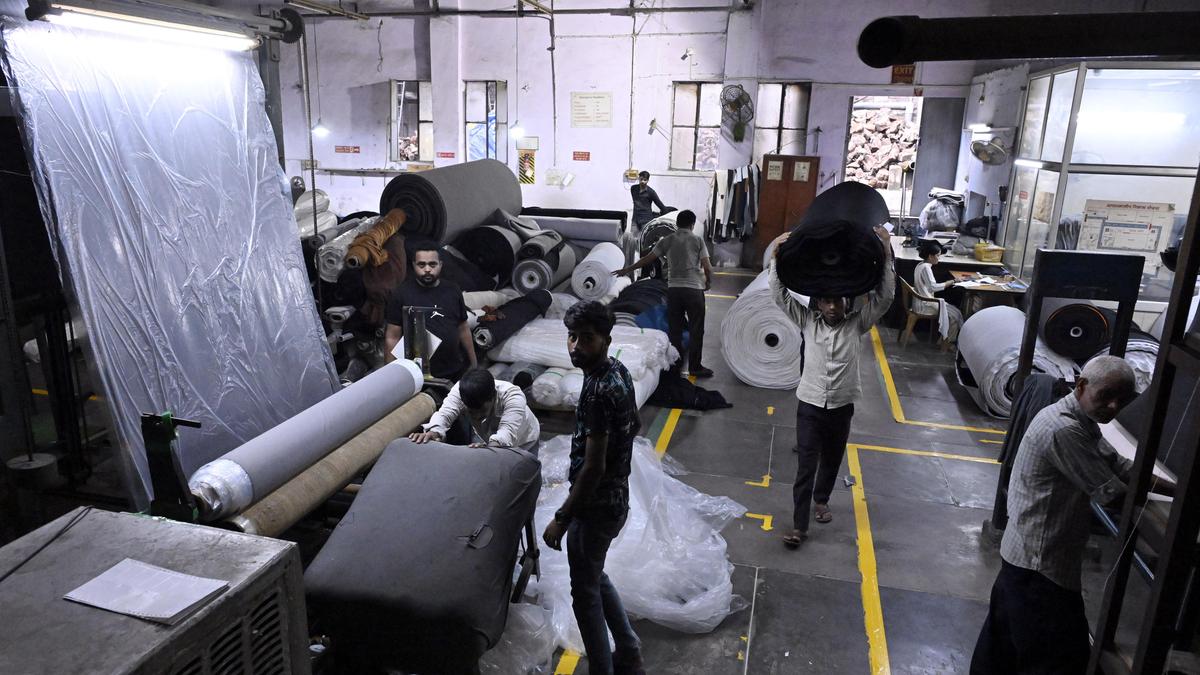
The Supreme Court of India has ruled that the expansive 1978 'industry' definition will not automatically apply to the new Industrial Relations Code, 2020. While the ruling changes the future legal framework for labour disputes, the court specified it will not serve as a 'sheet anchor' for pending cases.
The Shift in Labour Jurisprudence: Analyzing the Supreme Court’s Verdict
On August 20, 2026, a nine-judge Constitution Bench of the Supreme Court of India, led by Chief Justice Surya Kant, delivered a landmark judgment that marks a pivotal departure from nearly half a century of labour law precedent. The central issue revolved around the interpretation of the term 'industry'—a definition that has historically served as the cornerstone for determining which employees are entitled to legal protections against unfair labour practices and retrenchment.
The Legacy of the 1978 Precedent
For nearly 50 years, the legal landscape was dominated by the 1978 judgment in Bangalore Water Supply and Sewerage Board v. A. Rajappa. Authored by Justice V.R. Krishna Iyer, this ruling established an expansive, worker-friendly definition of 'industry.' By including a wide range of entities—such as government public works agencies, hospitals, temples, and NGOs—the court ensured that millions of workers had access to collective bargaining and legal recourse. This precedent functioned as a shield for employees, ensuring that the nature of their work, rather than the profit-motive of their employer, dictated their rights.
Transitioning to the Industrial Relations Code, 2020
The recent verdict addresses the transition from the legacy Industrial Disputes Act, 1947, to the new Industrial Relations Code (IRC), 2020, which came into effect in November 2025. The Supreme Court has now held that the expansive 1978 interpretation will not automatically apply to the new code. Instead, the term 'industry' must be interpreted based on the specific text and context of the 2020 legislation. This effectively creates a 'clean slate' for future labour disputes, moving away from the judicial activism that defined the previous era.
Dissent and Judicial Caution
The ruling was not unanimous, reflecting deep-seated concerns within the judiciary regarding the protection of workers' rights. A minority of judges, including Justices B.V. Nagarathna, Dipankar Datta, and Ujjal Bhuyan, argued that re-evaluating the 1978 judgment was unwarranted. Justice Nagarathna specifically cautioned that dismantling this established definition could lead to significant legal uncertainty and potentially disrupt industrial peace, as employers may seek to classify their organizations outside the scope of the new code.
Implications for Pending and Future Cases
Despite the shift in policy, the Court signaled a nuanced approach to implementation. It clarified that the ruling will not act as a 'sheet anchor' for all future litigation, and the broad definition remains applicable to cases currently pending under the 1947 Act. This suggests that while the legislative framework has shifted toward the IRC 2020, the judiciary is attempting to balance the need for new legal standards with the protection of workers already embroiled in ongoing legal battles.
Future Trends in Labour Relations
Looking forward, this decision signals a move toward a more rigid, text-based interpretation of labour laws in India. By requiring that 'industry' be defined strictly within the context of the new IRC, the Court has placed the burden of definition squarely on the statutory language provided by the legislature. This trend suggests that future labour rights may be more susceptible to the specific wording of new codes rather than judicial interpretation, placing a higher premium on the clarity and intent of parliamentary drafting in the coming years.
Verification Required?