Swinney insists 'stars are aligning' for Scottish independence
Source Entity
BBC News
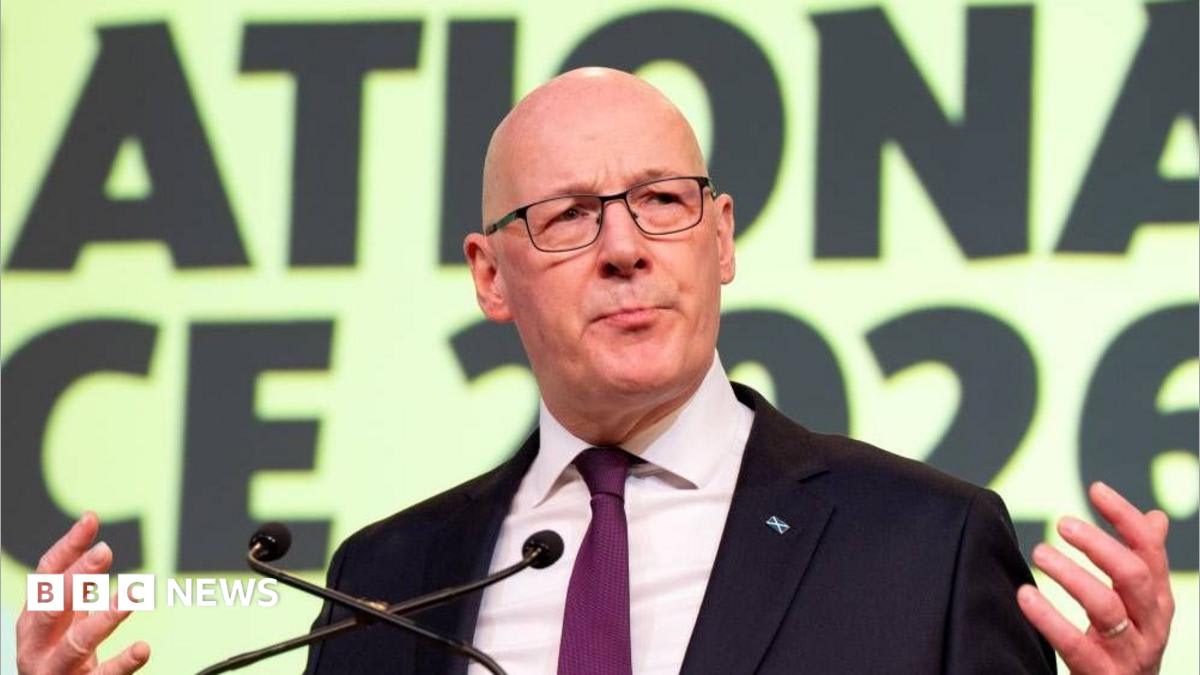
First Minister John Swinney is doubling down on the Scottish independence movement, framing 2026 as a pivotal year for the nation. Despite failing to secure a majority in the recent Holyrood election, Swinney insists the momentum for independence remains irreversible.
The SNP’s Strategic Pivot Toward 2026
First Minister John Swinney has signaled a definitive shift in the Scottish National Party’s (SNP) trajectory, positioning 2026 as a watershed moment in the country's "journey to nationhood." Speaking at the SNP conference in Aberdeen, Swinney’s rhetoric suggests that despite electoral hurdles, the party views the current political climate as a unique window of opportunity. By framing 2026 as a turning point, the SNP is attempting to consolidate its base and maintain the narrative that independence is an inevitable outcome of the current constitutional friction between Holyrood and Westminster.
The Constitutional Standoff and Inter-Regional Unity
The ambition for independence is being bolstered by a new, albeit non-binding, alignment between the nationalist leaderships of Scotland, Wales, and Northern Ireland. The recent summit in Cardiff, where these leaders asserted that no Westminster government has the authority to "block democracy," represents a significant escalation in the regional challenge to central British governance. This coalition serves as a strategic effort to frame the independence movement not as a localized Scottish issue, but as a broader democratic imperative shared across the devolved nations, challenging the traditional limits of Parliamentary sovereignty.
Electoral Reality vs. Political Rhetoric
Swinney’s messaging acknowledges a complex reality: while the SNP secured victory in the Holyrood ballot, they failed to achieve the overall majority Swinney had specifically set as the mandate for demanding a second independence referendum. This shortfall creates a significant tactical dilemma. Swinney’s insistence that "there is no turning back" acts as a defense mechanism against potential internal party disillusionment, particularly since he admitted that losing the May election would have set the cause back by decades. The party is now tasked with managing the gap between the aspiration for a referendum and the current lack of a clear legislative mandate to force one.
A Personal and Emotional Appeal
Beyond policy, the conference speech marked a notable shift in Swinney’s public persona. His emotional testimony, where he linked his commitment to independence to the future of his 15-year-old son, Matthew, served to humanize the political struggle. The moment of vulnerability, underscored by a technical failure of the autocue, was met with a supportive standing ovation from the crowd. This display of raw emotion appeared to be a calculated, or perhaps reactionary, counter-narrative to recent appeals for the Union, specifically echoing the emotional rhetoric used by Andy Burnham at the Labour conference.
Future Trends and the Road Ahead
The SNP’s strategy moving forward is clearly focused on "making the weather"—an attempt to dictate the political agenda despite being constrained by Westminster’s opposition. By focusing on the "alignment of stars," Swinney is banking on the hope that external political pressures will eventually force the UK government into a position of weakness. However, the path ahead remains treacherous. Without a clear majority, the SNP must navigate a landscape where they must prove that their mandate remains robust enough to challenge the status quo, ensuring that the movement does not lose the momentum they believe they have built toward 2026.