Tej Pratap Yadav arrested in Patna NEET protest case, sent to judicial custody
Source Entity
TOI CITY DESK
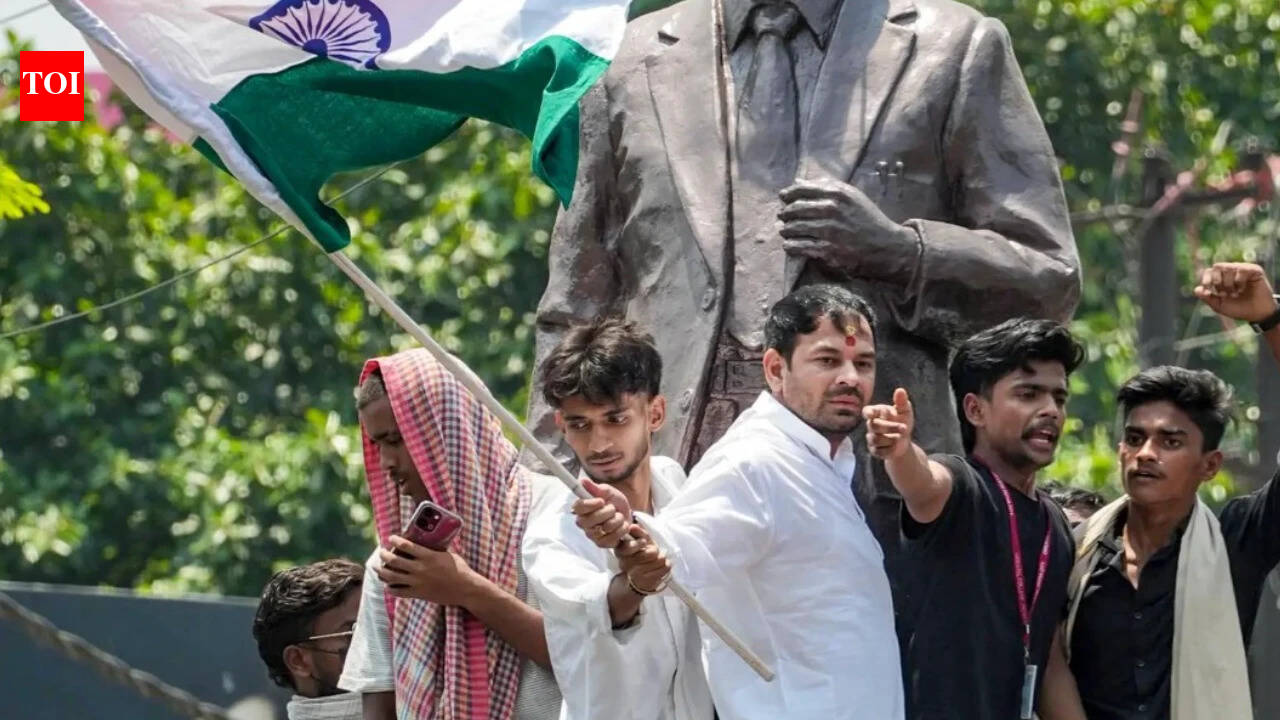
Tej Pratap Yadav has been remanded to 14 days of judicial custody following violent protests in Bihar over the NEET-UG paper leak. The demonstrations, which included a statewide bandh, resulted in injuries and internet restrictions across the region.
Turmoil in Bihar: NEET Protests Lead to High-Profile Arrest
The political landscape in Bihar has been severely strained following the arrest of Tej Pratap Yadav, the son of RJD chief Lalu Prasad Yadav, in connection with ongoing protests against the NEET-UG paper leak. Yadav was remanded to 14 days of judicial custody and transported to Beur Central Jail after being produced before a judicial magistrate. Authorities have alleged that his participation in the demonstrations contributed directly to civil unrest and the destruction of public property near Patna’s Gandhi Maidan.
Escalation of the 'Bihar Bandh'
The arrest occurred during a tense statewide shutdown, or 'Bihar Bandh,' orchestrated by the All India Students Association (AISA) and various left-wing student organizations. These groups mobilized to voice deep-seated grievances regarding the alleged irregularities in the NEET-UG examination and to protest against prior police actions taken in Patna on Wednesday. The presence of high-profile political figures like Tej Pratap Yadav during these protests elevated the stakes, drawing a sharp divide between student-led advocacy and state-enforced law and order.
Violence and Public Safety Concerns
The situation turned volatile across the state, with reports of stone-pelting in Patna and more severe confrontations in Siwan. In Siwan, three students were reportedly injured during clashes, with allegations surfacing that the injuries resulted from police gunfire. Officials have confirmed that an investigation is underway to verify the nature of these injuries and the circumstances surrounding the use of force. The escalation of violence prompted the state home department to impose partial internet restrictions, specifically targeting social media platforms to curb the mobilization of protestors.
Legal and Procedural Disputes
Following the detention and subsequent remand of Tej Pratap Yadav, his legal team has vehemently criticized the procedural handling of the arrest. His attorney has characterized the actions taken by the police as excessive and is currently pursuing a bail hearing scheduled for Monday. Yadav himself has maintained that his involvement was rooted in solidarity with the students, arguing that their claims regarding the NEET paper leak are legitimate and necessitate immediate government intervention rather than punitive measures.
Broader Implications and Future Trends
The NEET-UG paper leak controversy has become a flashpoint for political mobilization in Bihar, highlighting a significant disconnect between student aspirations and administrative transparency. The state's decision to implement internet curbs and resort to judicial custody for political figures suggests a hardening stance by the administration. As the legal battle for Yadav’s bail commences, the situation remains fluid. Future trends indicate that unless there is a clear, transparent investigation into the NEET allegations, student-led movements are likely to continue, potentially drawing more political leaders into the fray and further challenging the state’s ability to maintain public order.
Multiple Citing Sources