Bihar: Water cannon used as RJD leaders march to Raj Bhavan; Tejashwi, Misa detained
Source Entity
AADRITA HALDER
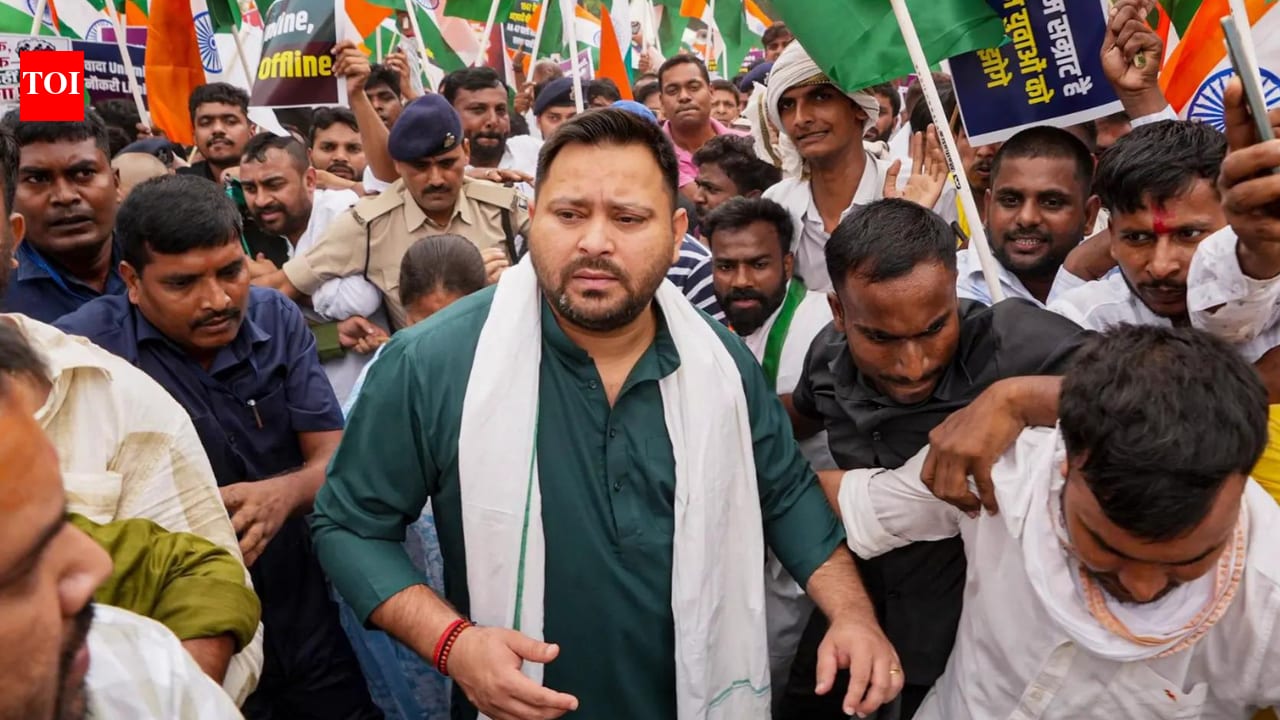
RJD leaders, including Tejashwi Yadav and Misa Bharti, were detained by Patna police during a protest march against NEET paper leaks and student crackdowns. The protest escalated at the Income Tax chouraha where police utilized water cannons to disperse the crowd.
Political Unrest in Bihar: RJD Protest Leads to Mass Detentions
The Catalyst for Conflict
On August 19, 2026, the political atmosphere in Patna reached a boiling point as senior Rashtriya Janata Dal (RJD) leaders, including Leader of Opposition Tejashwi Yadav and MP Misa Bharti, were detained while leading a protest march toward the Lok Bhawan. The demonstration was organized to voice deep-seated grievances regarding the state's handling of the NEET question paper leak crisis and the subsequent police treatment of protesting students.
Escalation and Police Intervention
The march, which commenced near J.P. Golumbar, quickly turned confrontational as protesters reached the Income Tax chouraha. In an effort to maintain public order and prevent the group from breaching security barricades, law enforcement authorities deployed water cannons against the demonstrators. The visual of party leaders being rounded up and placed into police vehicles highlights the widening rift between the opposition and the ruling government regarding administrative accountability.
The Core Issues: Paper Leaks and Youth Unemployment
At the heart of the RJD's agitation is a severe indictment of the current government's inability to secure examination processes. The NEET paper leak controversy has caused widespread distress among the youth in Bihar, leading to protests that have reportedly been met with heavy-handed police responses. Tejashwi Yadav’s rhetoric, which criticized the government’s approach to student dissent, reflects a broader narrative that the current administration is failing the Gen-Z demographic.
Symbolic Protests and Historical Context
The protest was further fueled by indignation over an incident in Siwan district last month, where reports surfaced regarding the alleged use of an AK-47 assault rifle during a student-led agitation. To highlight this perceived militarization of police responses, some RJD supporters carried toy replica guns during the march. This symbolic gesture served to amplify the opposition's claim that the government is suppressing academic concerns through intimidation rather than institutional reform.
Broader Implications for Bihar Politics
The detention of key opposition figures signifies a hardening of political battle lines in Bihar. As the government attempts to stabilize the region through administrative transfers and security measures, the RJD is positioning itself as the primary champion of student welfare. The slogan chanted during the march, “Jo Gen-Z ki baat karega, wohi desh mein Raj karega,” suggests a strategic pivot by the opposition to capture the youth vote by framing the government’s inaction as a generational betrayal.
Conclusion
The events in Patna underscore the volatile intersection of student activism and partisan politics in Bihar. With the NEET paper leak issue remaining unresolved and the opposition intensifying its outreach to the youth, the political landscape is likely to remain turbulent. The government faces the dual challenge of addressing systemic educational failures while managing a growing public perception of authoritarian overreach.
Multiple Citing Sources