Just because Tesla’s Optimus is in production doesn’t mean it’s actually ready
Source Entity
Rani Molla
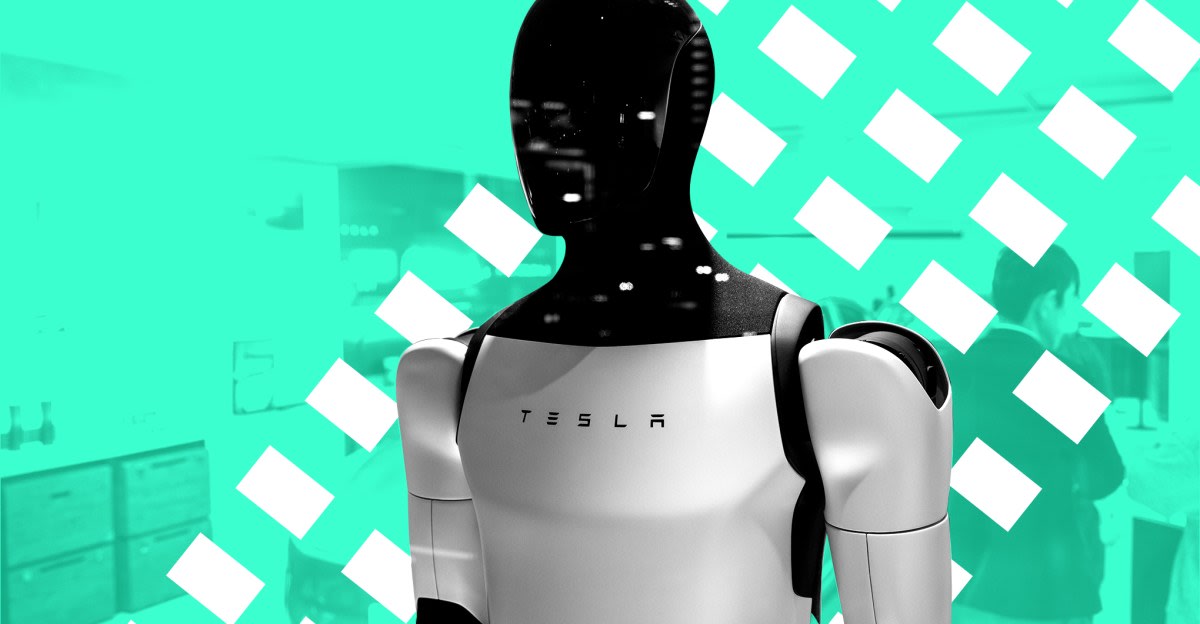
Tesla has initiated early production of its Optimus humanoid robot at its Fremont facility, though Elon Musk acknowledges significant technical hurdles remain. Full-scale utility for the robot is not expected until at least 2027 as the company refines AI, hardware, and safety features.
The Ambitions and Realities of Tesla’s Optimus
Tesla’s recent announcement that its Optimus humanoid robot has entered early production at the company’s high-volume manufacturing line in Fremont, California, marks a pivotal moment in the evolution of industrial robotics. While the move signals Tesla's commitment to scaling its robotics division, the transition from a prototype to a functional, high-volume product remains fraught with complex engineering challenges that CEO Elon Musk has candidly acknowledged.
Critical Technical Hurdles
Despite the commencement of production, the Optimus platform is currently facing significant developmental gaps. Musk highlighted that the robot’s hands, overall reliability, durability, and safety protocols require substantial refinement. These components are not merely secondary features but are the foundational elements required to transition a robot from a controlled lab environment to a chaotic, real-world workspace. Without high-fidelity tactile feedback and robust mechanical longevity, the robot cannot perform the nuanced, open-ended tasks necessary for true commercial viability.
The AI Bottleneck
Perhaps the most significant challenge lies in the artificial intelligence powering Optimus. Musk admitted that there is still a massive amount of work to be done to ensure the robot can handle tasks that are not pre-programmed or static. For a humanoid robot to be truly useful in an industrial or domestic setting, it must possess a degree of autonomy and situational awareness that current AI models are only beginning to approximate. The software must evolve from executing specific, repetitive motions to interpreting and reacting to unpredictable human environments.
Long-Term Vision vs. Current Capacity
Musk’s long-term projection—that there will eventually be more humanoid robots on Earth than humans—underscores his belief in the transformative power of general-purpose robotics. However, this visionary rhetoric is currently tempered by a realistic timeline. Tesla has set its sights on 2027 for potential deliveries to outside companies, a goal that necessitates overcoming the aforementioned hardware and software hurdles within the next few years. This timeline reflects the difficulty of scaling robotics, which has historically proven more complex than scaling automotive manufacturing.
The Path Toward Industrial Integration
The decision to utilize Tesla’s high-volume production line in Fremont suggests an attempt to apply automotive-scale manufacturing efficiencies to robotics. If Tesla can successfully integrate its production expertise with advancements in AI, the potential for market disruption is immense. However, the company must first prove that its machines are not only manufacturable but also safe and reliable enough to work alongside humans in factory settings. The coming years will be a definitive test of whether Tesla can bridge the gap between ambitious product design and functional, mass-market utility.