News in Frames: The weight of a nation’s food
Source Entity
India Latest News: Top National Headlines Today & Breaking News | The Hindu
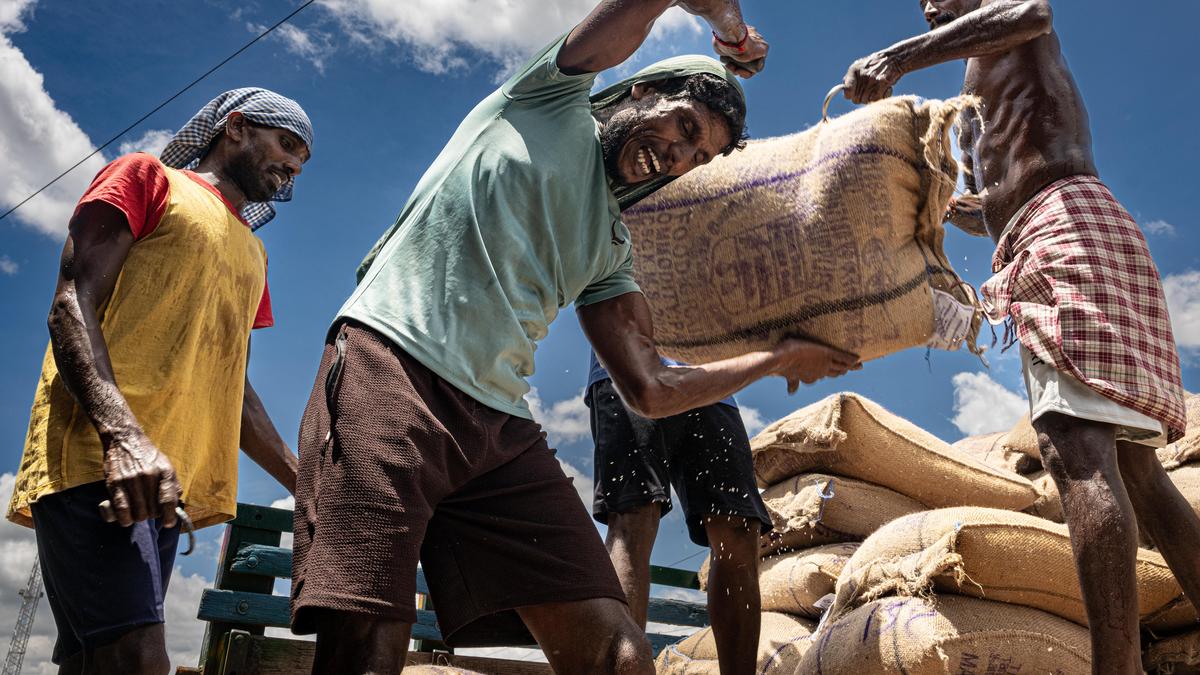
Loadmen at the Thanjavur railway goods shed perform the grueling manual labor necessary to move grain from the 'rice bowl of Tamil Nadu' to markets across India. Their invisible yet essential role ensures the continuity of the nation's agricultural supply chain.
The Invisible Pillars of India's Food Security
Thanjavur, widely recognized as the "rice bowl of Tamil Nadu," serves as a critical epicenter for paddy production and agricultural distribution in Southern India. While the fertile lands and the farming process often receive the most attention, the narrative of food security extends far beyond the harvest. The railway goods shed in Thanjavur acts as a vital logistical artery, where the transition from raw agricultural produce to consumable food begins. At the heart of this operation are the loadmen, a workforce that embodies the physical grit required to sustain a nation's food supply.
The Grit of Manual Logistics
The daily routine of these laborers is defined by extreme physical endurance and a commitment to grueling schedules. Working from dawn until dusk, these men engage in the repetitive and exhausting tasks of lifting, carrying, stacking, and unloading heavy sacks of grain and other agricultural commodities. Their toolkit is minimal yet functional: a simple cloth wrapped around the head to protect against the weight of the sacks and a metal hook used to grip and maneuver the heavy bags. This reliance on raw physical strength highlights a stark reality of the logistics sector in regional hubs, where manual labor remains the primary engine of movement.
Bridging the Gap: From Field to Table
Every grain of rice that reaches a dining table or a restaurant kitchen in India passes through an intricate supply chain, and the loadmen are among its most crucial links. By facilitating the movement of paddy from the farms of Thanjavur into the railway network, they ensure that the surplus of the "rice bowl" can be distributed to regions facing deficits. This process is not merely about transport; it is about the essential flow of commodities that prevents market stagnation and ensures food availability across diverse geographies. Without this manual intervention, the bridge between rural production and urban consumption would effectively collapse.
The Paradox of Essential Invisibility
Despite their indispensable role, these workers remain some of the least visible participants in the food economy. There is a poignant contrast between the high value placed on the food they carry and the low visibility afforded to the people carrying it. The "weight of a nation's food" is felt most acutely on the shoulders of these laborers, who navigate narrow spaces and harsh conditions to keep the supply chain moving. This invisibility reflects a broader socio-economic trend where the manual labor underpinning essential services is often overlooked in favor of the end product or the high-level logistics of the trade.
Regional Significance and Economic Impact
The efficiency of the Thanjavur railway goods shed directly impacts the economic viability of the region's farmers. When the flow of grain is seamless, farmers can move their produce more quickly, reducing spoilage and ensuring a steady income. The loadmen, therefore, are not just laborers but facilitators of regional economic stability. Their ability to maintain the pace of unloading and loading determines how quickly Thanjavur's agricultural wealth can be converted into liquid assets for the farming community and food for the general public.
Future Trends in Agricultural Logistics
Looking forward, the reliance on manual labor in hubs like Thanjavur presents a complex challenge. While there is a global trend toward the automation of warehouses and the use of mechanized loading systems, the current infrastructure in many Indian goods sheds still favors the flexibility and low overhead of manual labor. However, as the volume of agricultural trade increases, there will likely be a push toward semi-automation to reduce the physical toll on workers. The transition will require a delicate balance between increasing efficiency and preserving the livelihoods of the thousands of loadmen who currently sustain the system.
Conclusion
In summary, the story of Thanjavur's loadmen is a testament to the human endurance that powers India's agricultural backbone. From the metal hooks in their hands to the cloth wraps on their heads, these workers represent the essential, though often ignored, labor that transforms a harvest into a meal. Recognizing their contribution is vital to understanding the true cost and effort involved in maintaining the nation's food security.
Verification Required?