Speeding train fatally knocks down tiger near Shencottai
Source Entity
India Latest News: Top National Headlines Today & Breaking News | The Hindu
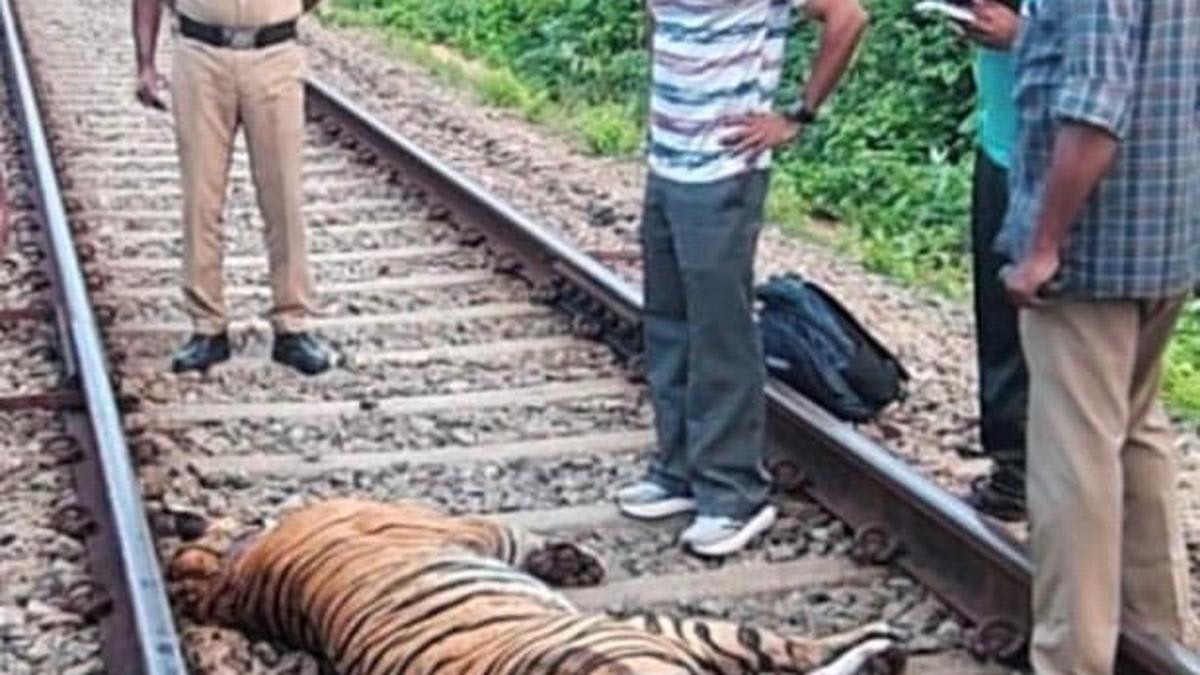
A 4-to-5-year-old tiger was killed by the Palaruvi Express near Shencottai after being struck on the tracks early Wednesday. Forest officials are currently investigating the incident following the discovery of the carcass near the Tamil Nadu-Kerala border.
Wildlife Tragedy: Tiger Fatally Struck by Train in Shencottai
In a distressing incident for conservationists, a healthy tiger, estimated to be between four and five years old, was killed after being struck by a speeding train in the early hours of Wednesday, November 4, 2026. The collision occurred on the Shencottai–Ariyankaavu ghat section, a sensitive ecological corridor that traverses the border regions of Tamil Nadu and Kerala. The animal was reportedly hit by the Palakkad–Thoothukudi Palaruvi Express around 1 a.m. while attempting to cross the tracks near Poolankudiyiruppu.
The Discovery and Immediate Response
The grim reality of the accident was only discovered two hours later, at approximately 3 a.m., when local passersby noticed the carcass lying on the tracks. The animal had sustained a severe head injury, indicative of the high-impact collision with the locomotive. Upon receiving the notification, District Forest Officer R. Rajmohan, accompanied by Assistant Conservator of Forest Nellainayagam and other forest department personnel, rushed to the site to conduct a preliminary investigation and secure the area.
Ecological Significance of the Ghat Section
The Shencottai–Ariyankaavu stretch is a critical mountain pass that serves as a vital movement corridor for wildlife traversing the Western Ghats. The presence of a healthy, prime-aged tiger in this region underscores the importance of the area for biodiversity. However, the intersection of heavy railway infrastructure with established wildlife migratory paths creates a persistent danger. This incident highlights the ongoing friction between critical transportation logistics and the preservation of endangered species that rely on these transit routes for hunting and territorial movement.
Challenges in Wildlife-Rail Coexistence
This incident brings into sharp focus the broader challenge of mitigating wildlife-train collisions. When trains pass through forest divisions, especially during night hours, wild animals are frequently blinded by headlights or fail to perceive the speed of the approaching machinery. Because the tiger was struck between Bhagavathipuram and Ariyankavu—an area with significant forest cover—the risk of animal-human-machine conflict remains high. Conservation experts have long advocated for stricter speed restrictions or the installation of early warning systems in such high-risk zones.
Future Implications and Conservation Trends
Moving forward, the death of this tiger necessitates a comprehensive review of safety protocols along the Shencottai–Ariyankaavu ghat section. The Tenkasi Forest Division is currently tasked with documenting the event, which will likely feed into future policy discussions regarding wildlife corridors. As habitat fragmentation continues to increase across India, balancing the connectivity of protected areas with the necessity of interstate rail transport remains a primary concern for forest management authorities. The loss of a young, healthy tiger is a significant setback for the local population and serves as a somber reminder of the need for enhanced preventative measures in sensitive ecological zones.
Verification Required?