3 students killed after train rams school van in Bengal’s Murshidabad
Source Entity
Sweety Kumari
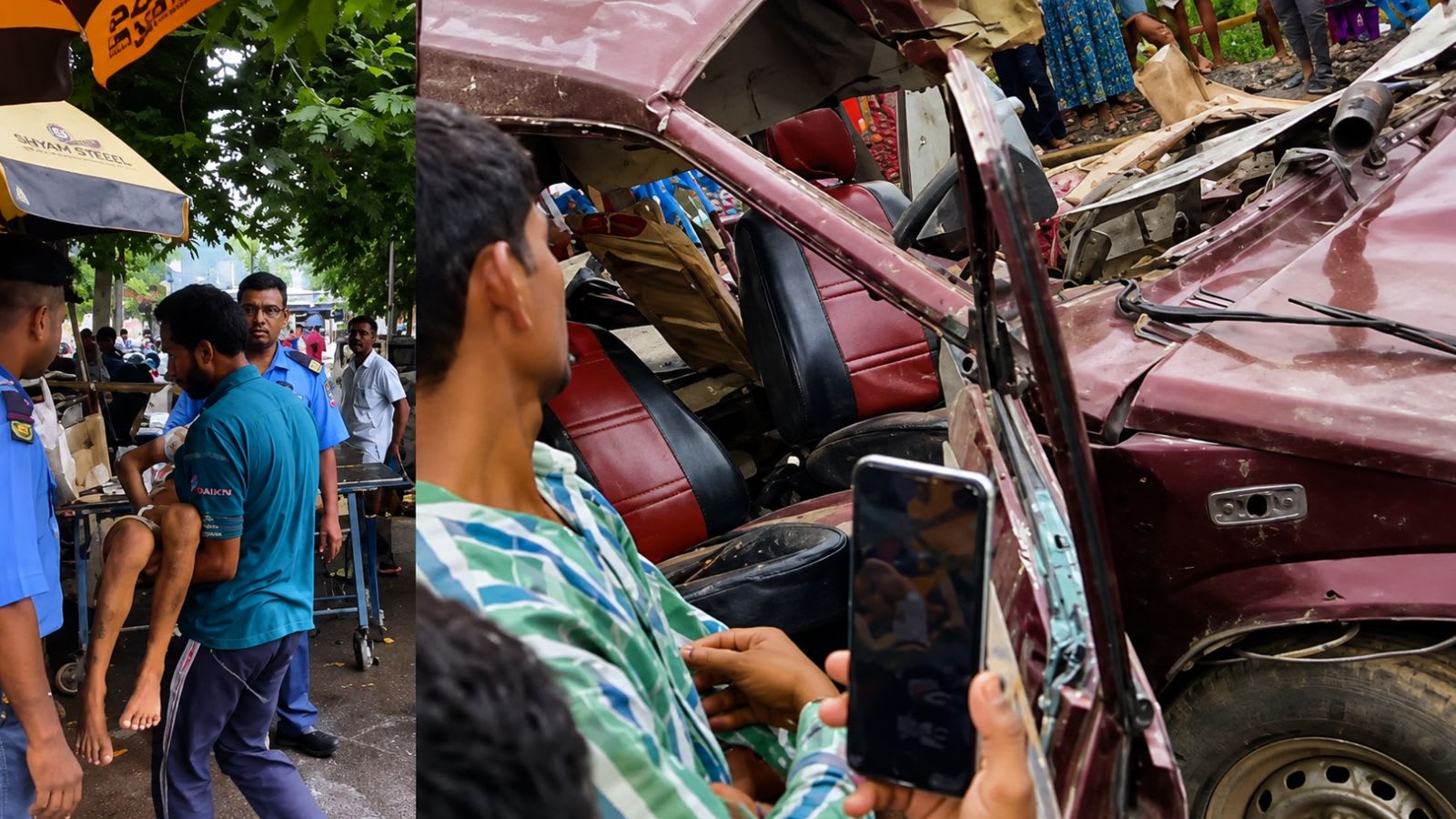
Three school students and a cyclist died in Murshidabad, West Bengal, after a passenger train rammed a school van. The accident occurred at the Gobindpur railway gate due to the premature opening of the crossing after an express train had passed.
Tragedy at Gobindpur: Analysis of the Murshidabad Rail Accident
In a devastating incident early Friday morning in the Murshidabad district of West Bengal, a catastrophic collision occurred at the Gobindpur railway gate, resulting in the deaths of three school students and a cyclist. The accident, which also left four other individuals critically injured, underscores the lethal risks associated with railway crossing management and the vulnerability of school transport systems in high-traffic rail corridors.
The Sequence of Fatal Errors
The tragedy was not a random occurrence but the result of a critical failure in operational timing. According to police reports, the railway crossing was initially shut to allow the Howrah-bound Nabadwip Dham Express to pass safely. However, the fatal error occurred immediately following this; the crossing was opened to road traffic despite the fact that another train, the Nimtita-Katwa local, was scheduled to pass through the same section shortly thereafter. This premature opening created a deadly window of opportunity that misled commuters into believing the tracks were clear.
Analysis of the Collision
Driven by the visual cue of the open gate, the driver of a school van attempted to cross the tracks, alongside a cyclist. At that precise moment, the Nimtita-Katwa local train, described by officials as "hurtling at high speed," rammed into the van. The high kinetic energy of the passenger train against the lightweight structure of a school van ensured a high casualty rate. The fact that the train was traveling at high speed through a zone where students are frequently transported suggests a precarious intersection between rail efficiency and local safety.
Systemic Safety Implications
This incident highlights a recurring systemic issue in regional rail infrastructure: the reliance on manual or semi-automated gate operations that are prone to human error. When a gate is opened prematurely—especially when multiple trains are scheduled in quick succession—it creates a "false sense of security" for drivers. In this case, the gap between the Nabadwip Dham Express and the Nimtita-Katwa local was mismanaged, transforming a routine crossing into a death trap for young students.
Broader Context and Future Trends
Historically, level crossings have been one of the most dangerous points of the Indian railway network. The Murshidabad tragedy reflects a broader need for the acceleration of the "elimination of level crossings" policy, moving toward the construction of Road Over Bridges (ROBs) and Under Bridges (RUBs). As train speeds increase to improve connectivity, the margin for error at manual gates vanishes. Future safety trends must prioritize the integration of automated warning systems that are synchronized directly with train GPS tracking to prevent gates from opening until the track is verified clear.
Conclusion
The loss of three young lives and a cyclist at the Gobindpur railway gate is a stark reminder of the fragility of safety protocols at railway intersections. The incident was a direct consequence of a timing failure in gate operation, exacerbated by the high speed of the local train. Until infrastructure is upgraded to remove human error from the equation, such tragedies will continue to threaten the lives of commuters and students alike.