3 killed after train hits car carrying school kids at manned level crossing in WB
Source Entity
Latest News: Today's Latest News Headlines from India & World | Hindustan Times | Hindustan Times
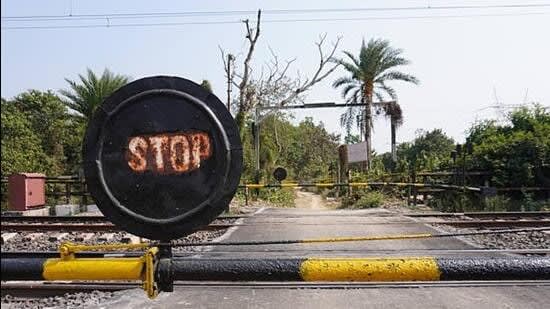
Three school children were killed and five others injured after a train struck their vehicle at a manned level crossing in West Bengal's Murshidabad district. The accident occurred Friday morning near Berhampore, despite the crossing gates being closed.
Tragedy in Murshidabad: Analysis of the School Transport Rail Accident
On a Friday morning in the Murshidabad district of West Bengal, a devastating accident occurred that claimed the lives of three school children and left five others injured. The incident took place around 7:30 AM at a manned level crossing situated between the Karnasubarna and Gobindopur railway stations, near the town of Berhampore. According to eyewitness reports and local residents, the impact was severe, resulting in two immediate fatalities at the scene, while a third child succumbed to injuries while being transported to the hospital. This tragedy underscores the persistent dangers associated with rail-road intersections in densely populated regions of India.
The Paradox of the Manned Level Crossing
A critical detail provided in the reports is that the accident occurred at a manned level crossing where the gates were explicitly closed to allow a scheduled train to pass. This detail is pivotal for the investigation, as it suggests a breach of safety protocols either by the driver of the vehicle or a failure in the enforcement of the barrier. In many rural and semi-urban areas of West Bengal, the pressure of morning commutes—especially for school-going children—often leads to risky behavior where drivers attempt to bypass closed gates to save time. The fact that the gates were closed indicates that the railway signaling system was functioning, shifting the analytical focus toward the behavioral patterns of local transport operators.
Systemic Vulnerabilities in School Transit
This incident highlights a broader, systemic issue regarding the safety of school transportation in India. Many students rely on private vehicles or contracted vans that may not always adhere to strict safety regulations or driver training standards. When these vehicles navigate high-risk zones like railway crossings during peak morning hours, the margin for error is razor-thin. The vulnerability of these children is compounded by the haste often associated with school drop-off timings, which can lead to lapses in judgment by drivers navigating manned crossings.
Historical Context of Level Crossing Accidents
Historically, level crossings have been one of the most significant points of failure in Indian railway safety. While the Indian Railways has made strides in eliminating unmanned crossings, manned crossings still present risks due to human error or the tendency of motorists to ignore warnings. The geography of the Murshidabad district, characterized by a network of smaller stations like Karnasubarna and Gobindopur, creates multiple points of intersection between pedestrian/vehicular traffic and high-speed rail lines, increasing the statistical likelihood of such collisions if strict discipline is not maintained.
Legal and Administrative Implications
From a legal standpoint, the Murshidabad police district has already initiated a response, with officers rushing to the scene to manage the casualties and secure the area. The subsequent investigation will likely scrutinize the timing of the gate closure relative to the train's arrival and whether there was any negligence on the part of the crossing staff or the vehicle driver. Such incidents typically trigger a review of safety audits for the specific stretch of track, potentially leading to demands for increased policing or the installation of more robust physical barriers to prevent vehicles from circumventing closed gates.
Future Trends and Preventative Infrastructure
Looking forward, this tragedy reinforces the urgent need for the complete segregation of rail and road traffic. The long-term solution lies in the transition from level crossings to Road Over Bridges (ROBs) and Road Under Bridges (RUBs). By removing the point of intersection entirely, the risk of human error—such as ignoring a closed gate—is eliminated. Until such infrastructure is fully implemented in the Berhampore region, there will likely be increased calls for stricter penalties for gate-jumping and the implementation of automated warning systems that provide more aggressive alerts to motorists.
Conclusion
The loss of three young lives in Murshidabad is a harrowing reminder of the volatility of rail-road interfaces. While the technical systems (the manned gates) were reportedly in place, the tragedy occurred regardless, pointing to a need for a dual approach: the rapid expansion of grade-separated crossings and a rigorous campaign to improve the safety culture among school transport providers. The recovery of the five injured students and the legal aftermath of this event will likely serve as a catalyst for local safety reforms.
Verification Required?