Why NBC and ABC skipped Trump’s primetime address despite severe threats of sanctions
Source Entity
The Indian Express
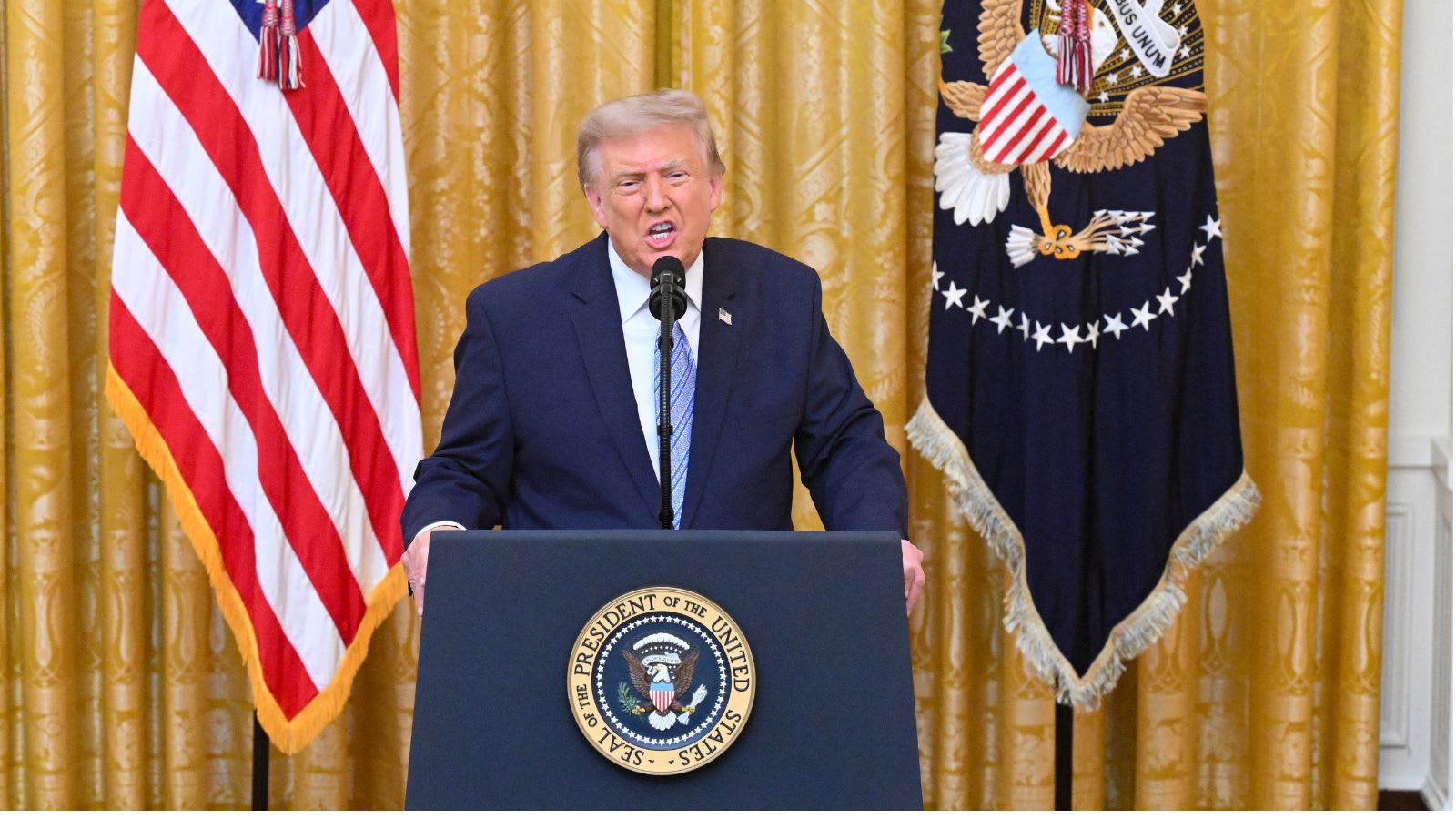
Donald Trump has called for the revocation of ABC and NBC's broadcasting licenses after the networks declined to air his speech on election integrity. The move has sparked a heated national debate regarding press freedom and the First Amendment rights of media organizations.
Media Conflict and Executive Power: Trump vs. Broadcast Networks
In a significant escalation of the ongoing tension between the executive branch and mainstream media, Donald Trump has demanded the revocation of broadcasting licenses for ABC and NBC. This demand follows the networks' decision to decline the live airing of a primetime address focused on election integrity and security. The conflict underscores a deepening divide in the United States regarding the role of the press, the boundaries of editorial independence, and the perceived political bias within major news organizations.
The Catalyst: A 'Rare Move' in Broadcasting
Historically, major broadcast networks have carried presidential primetime addresses as a matter of public importance, regardless of the political climate. However, the decision by ABC and NBC to skip the speech on election security—coupled with CNN's choice not to carry it live on its main channel—represents a departure from traditional protocol. Trump characterized this as a "rare move" and a coordinated "plot," suggesting that the refusal was not an editorial choice but a deliberate act of censorship. By framing the networks' actions as collusion, Trump has positioned the event as a direct attack on his ability to communicate with the American public.
Legal Realities and the First Amendment
From a legal standpoint, the threat to revoke broadcasting licenses faces steep constitutional hurdles. As noted by legal experts, media networks possess broad latitude under the First Amendment to determine their own content and programming. While the Federal Communications Commission (FCC) oversees broadcast licenses, these licenses are generally not subject to revocation based on editorial decisions or the refusal to air a specific political speech. The tension here lies between the government's desire for a platform to disseminate official information and the private sector's right to exercise editorial judgment, a cornerstone of a free press in a democratic society.
The Narrative of 'Fake News' and Political Bias
This incident is not an isolated event but rather a continuation of Trump's long-standing criticism of the "mainstream media," often labeled as "Fake News." By accusing ABC and NBC of political bias, Trump is leveraging a narrative that resonates with a significant portion of the electorate who feel alienated by traditional media outlets. The claim that the networks are engaged in a plot to suppress information on election integrity further fuels the perception that the media is an active political opponent rather than an objective observer, thereby polarizing the public's trust in news reporting.
Broader Implications for Election Coverage
The focus of the skipped speech—election integrity—is one of the most sensitive and contentious issues in contemporary American politics. The networks' hesitation to air the address live may reflect a cautious approach to broadcasting claims that are highly disputed or potentially inflammatory. However, this caution is interpreted by the Trump administration as an attempt to shield the public from the truth. This dynamic creates a feedback loop where the more the media scrutinizes the narrative of election integrity, the more the administration views that scrutiny as evidence of bias, further eroding the shared factual baseline necessary for national discourse.
Conclusion and Future Trends
The clash between Donald Trump and the major networks signals a future of increased volatility in media-government relations. As the boundaries of press freedom are tested, we can expect more frequent threats of regulatory retaliation and a continued shift toward alternative media platforms that bypass traditional gatekeepers. Ultimately, this event highlights a critical stress test for the First Amendment: the balance between an administration's right to be heard and a network's right to choose what it broadcasts. The resolution of these tensions will likely define the trajectory of American journalism and political communication for years to come.
Multiple Citing Sources