‘Donald Trump’ behind bars: Iran humiliates POTUS live, ‘President locked behind bars’ in Tehran
Source Entity
Latest News: Todays Latest News Headlines from India & World | Hindustan Times | Hindustan Times
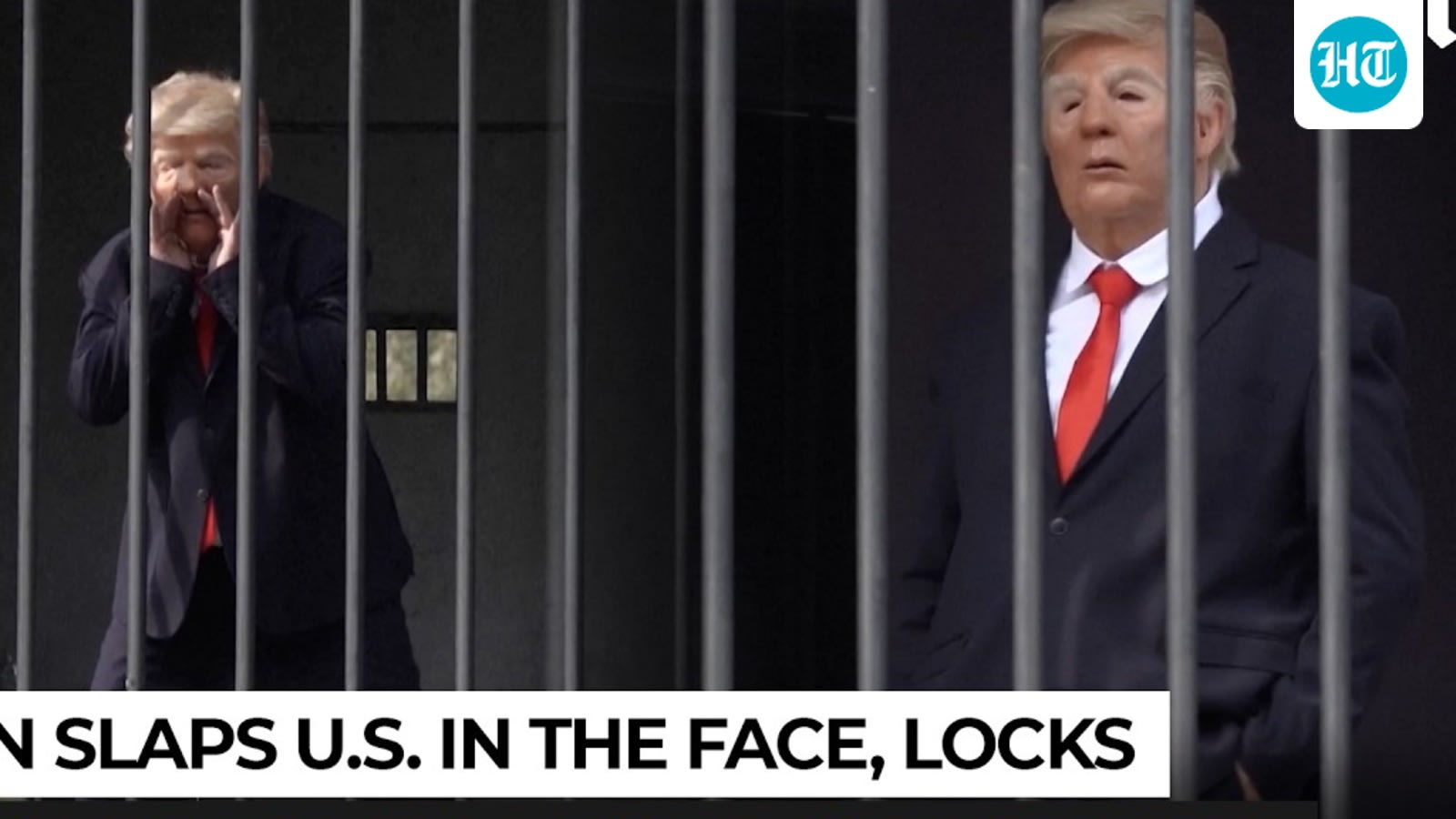
A street performance in Tehran featuring a Donald Trump impersonator in a cage highlights escalating geopolitical tensions. The display reflects ongoing frustrations over stalled nuclear negotiations and regional instability.
The Symbolism of Protest in Tehran
In a provocative display of anti-American sentiment, an art installation in Tehran’s Tajrish Square recently featured a performer dressed as Donald Trump, complete with a signature dark suit and red tie, confined within a cage. The public spectacle, accompanied by the slogan “It is a crime not to see this scene,” serves as a potent visual manifestation of the deep-seated ideological divide between the Islamic Republic of Iran and the United States. Such performances are a common tool in the Iranian political repertoire, intended to project strength and defiance to both domestic audiences and the international community.
Stalled Diplomacy and Nuclear Deadlock
The timing of this installation is far from coincidental, occurring as indirect negotiations between Washington and Tehran regarding the nuclear program remain effectively deadlocked. The Joint Comprehensive Plan of Action (JCPOA) has faced years of turbulence, and the lack of a clear pathway forward has fueled public displays of hostility. By portraying the former U.S. President as a prisoner, Iranian organizers are signaling a rejection of U.S. foreign policy influence and asserting that Tehran will not be coerced into concessions through economic or political pressure.
Regional Instability and Maritime Tensions
Beyond the symbolic performance, the broader geopolitical landscape is characterized by significant volatility. Reports of attacks on tankers near the Strait of Hormuz—a critical chokepoint for global oil transit—have heightened concerns regarding security in the Persian Gulf. These incidents, combined with the theatrical protests in Tehran, illustrate a multifaceted strategy of resistance. The uncertainty surrounding maritime safety has direct implications for global markets, as evidenced by the corresponding rise in crude oil prices, which exacerbates regional economic instability.
Economic Impacts and Global Markets
The intersection of political posturing and physical threats to energy infrastructure creates a precarious environment for international stakeholders. As crude oil prices fluctuate in response to regional tensions, the cost of global trade increases, placing additional strain on an already fragile post-pandemic economic recovery. The use of public art to mock global leaders acts as a barometer for the internal mood in Tehran, suggesting that there is little domestic appetite for diplomatic compromise under current conditions.
Future Trends in U.S.-Iran Relations
Looking ahead, it is unlikely that such performative acts will diminish as long as the nuclear negotiations remain frozen. Instead, these displays represent the new normal in a relationship defined by brinkmanship and asymmetric warfare. Future trends will likely continue to see a blend of cyber-activity, maritime posturing, and domestic propaganda as both sides attempt to gain leverage. The international community remains in a position of cautious observation, waiting to see if either party will move toward a substantive de-escalation of rhetoric and action.
Verification Required?