Watch: What was it like inside the Trump-Xi White House dinner?
Source Entity
BBC News
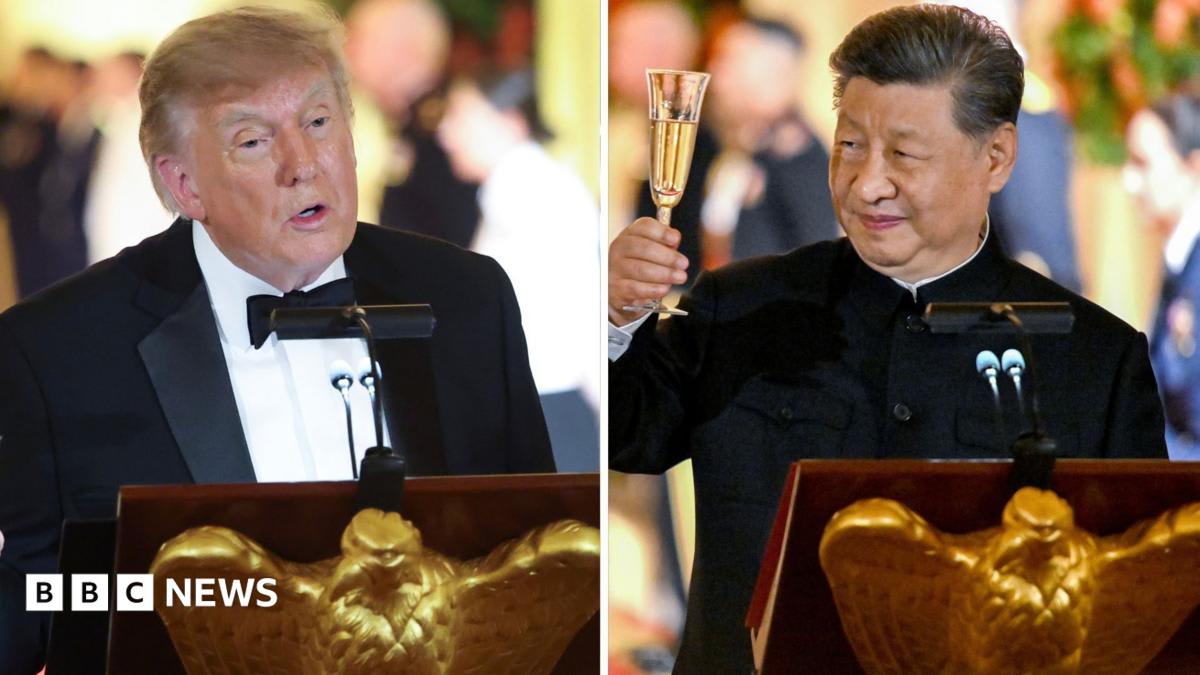
Presidents Trump and Xi held a high-stakes summit at the White House to address geopolitical tensions and trade relations. Despite the lavish atmosphere, the meeting highlighted critical disagreements over AI, Taiwan, and Iran while revealing a surprising surge in U.S. orders for Chinese goods.
The White House Summit: A Diplomatic Balancing Act
The recent meeting between U.S. President Donald Trump and Chinese President Xi Jinping at the White House represents a pivotal moment in modern international relations. Characterized by a lavish ceremony and formal military reviews in the Rose Garden, the summit was designed to project an image of stability between the world’s two largest economies. However, beneath the pageantry, the discourse remained focused on the precarious nature of the U.S.-China relationship.
Navigating the Thucydides Trap
Central to President Xi’s messaging was the concept of the “Thucydides Trap,” an international relations theory that posits that conflict is often inevitable when a rising power threatens to displace an established one. By invoking this term, Xi signaled a desire to move beyond the current cycle of friction. This diplomatic overture underscores the underlying anxiety in Beijing regarding the potential for competition to spiral into direct confrontation, particularly as both nations grapple with global leadership dynamics.
Economic Indicators and the 'Surprise' Rebound
Economic data provides a compelling counterpoint to the geopolitical friction. A private survey by the China Beige Book, which analyzed data from nearly 1,300 Chinese firms, revealed a surprising uptick in U.S. orders for Chinese goods in the weeks leading up to the summit. This surge suggests that despite public rhetoric, private sector actors were hedging their bets on continued stability. The improvement in China’s relative tariff position likely acted as a catalyst for this rebound, indicating that market forces remain deeply intertwined with political maneuvering.
The Shadow of Complex Disagreements
Despite the economic optimism reflected in the export data, the policy agenda remained fraught with tension. The discussions encompassed a wide array of volatile issues, including the geopolitical status of Taiwan, the complexities of the Iranian nuclear framework, and the rapidly evolving race for dominance in artificial intelligence. These topics represent systemic disagreements that are unlikely to be resolved through a single summit, highlighting the persistent divide between the two powers.
Future Trends and Strategic Outlook
Looking ahead, the summit serves as a litmus test for whether the U.S. and China can manage a "managed competition" model. The juxtaposition of high-level diplomatic dialogue and the tangible increase in trade volume suggests that both nations are attempting to decouple economic interests from security concerns. However, the success of this approach will depend on whether the commitment to dialogue can outlast the structural disagreements over AI and regional security, which remain the most significant hurdles to long-term stability.
Multiple Citing Sources